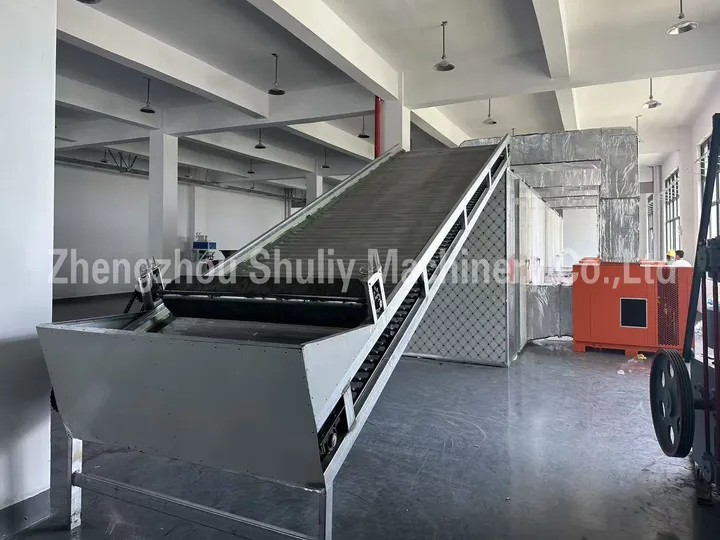
A cocoa bean belt dryer is industrial continuous drying equipment that removes moisture from fermented cocoa beans before roasting and chocolate production. The machine featured on this page is Shuliy’s mesh belt dryer, a multi-layer conveyor system that moves cocoa beans through heated air zones on a stainless steel belt. Standard models process 60 to 600 kg/h, with custom configurations reaching 14,000 kg/h for large cocoa processing plants.
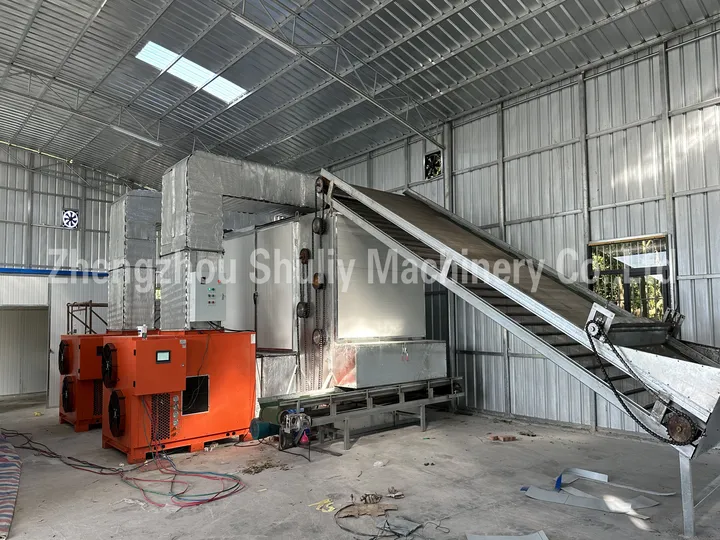
After fermentation, cocoa beans contain roughly 55–60% moisture. If they are not dried quickly to 6–8% moisture, mold grows, flavor quality drops, and entire batches can be lost. Sun drying takes 5–14 days and depends on weather. A cocoa bean dryer completes the process in 2–4 hours under fully controlled conditions, protecting the flavor compounds that determine the final chocolate quality.

Shuliy has manufactured drying equipment for over 20 years and exports to 30+ countries. Every cocoa bean drying line is backed by layout design, installation support, and a one-year warranty with lifetime technical service.
Technical Parameters of the Cocoa Bean Belt Dryer
| Modell | Belt Width | Drying Length | Schichten | Capacity (kg/h) | Gesamtleistung (kW) |
|---|---|---|---|---|---|
| SL-1.2-8 | 1.2 m | 8 m | 4 | 60–160 | 11.4 |
| SL-1.6-10 | 1.6 m | 10 m | 5 | 95–250 | 13.6 |
| SL-2-10 | 2 m | 10 m | 5 | 120–300 | 15.8 |
| SL-2-20 | 2 m | 20 m | 10 | 240–600 | 36.8 |
Standard machines are 6–12 m long with 4–6 layers. Custom lengths up to 19 m and multi-unit lines are available for higher capacity.
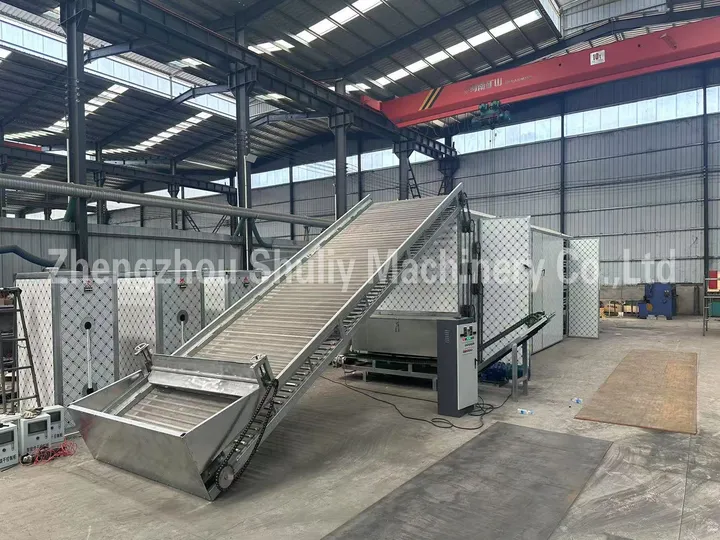
Optional Configurations
| Artikel | Options |
|---|---|
| Heat source | Heat pump / Natural gas / Diesel / Coal / Biomass / Steam / Electric |
| Belt material | 304 stainless steel mesh |
| Control system | PLC touchscreen with temperature, humidity, belt speed control |
| Feeding | Manual hopper or automatic elevator |
| Spannung | 220V / 380V / 415V / Custom |
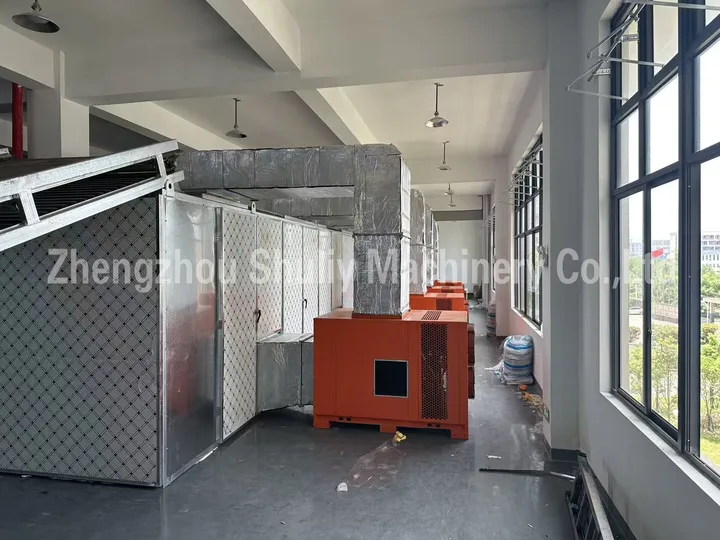
Why Cocoa Processors Need a Belt Dryer?
Fermented cocoa beans are one of the most moisture-sensitive agricultural products. Within 24–48 hours after fermentation, the beans must start drying. Delays cause:
- Mold growth and off-flavors
- Bean discoloration and quality downgrades
- Rejection by cocoa buyers and chocolate makers
- Price penalties of 20–40% for poor-quality lots
Sun drying on bamboo mats is the traditional method, but it has serious problems:
- Weather dependence: Rain interrupts drying and causes mold.
- Contamination: Dust, insects, and animals contact the beans.
- Uneven drying: Some beans over-dry while others stay wet.
- Labor cost: Beans must be turned by hand several times per day.
A cocoa bean belt dryer solves all of these problems with enclosed, continuous, automatic drying.
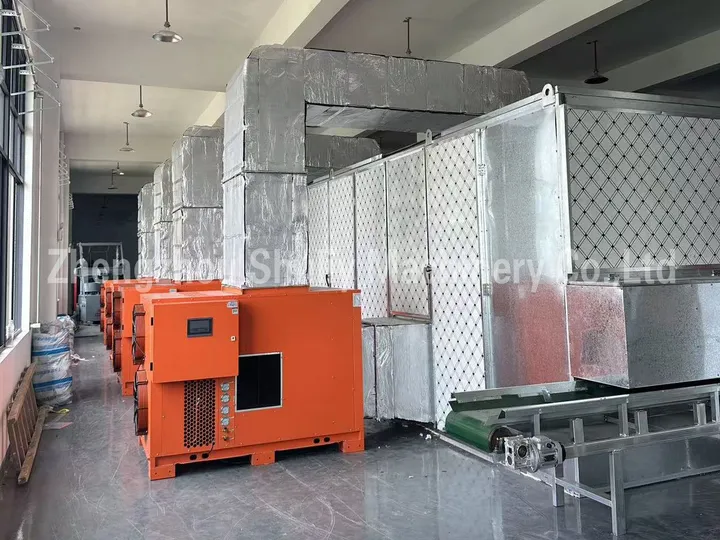
How to Dry Cocoa Beans with a Mesh Belt Dryer?
1. Raw Material Preparation
After fermentation, cocoa beans need to be screened and cleaned to remove moldy beans, husks, and other impurities. Then spread the beans evenly on the stainless steel mesh belt. A layer thickness of 2–6 cm is recommended to ensure hot air can fully penetrate the bean layer.

2. Preheating Stage (50–70 °C)
Slowly heat the beans at a low temperature to gradually evaporate surface moisture. This prevents the surface from drying too quickly and forming a hard shell, which can affect further dehydration.
3. Main Drying Stage (80–100 °C)
Hot air passes through the mesh belt from top to bottom or in a circulating manner, accelerating moisture diffusion and evaporation inside the beans. This stage is key to rapidly reducing the beans’ moisture content.
4. Equalizing Drying Stage (60–70 °C)
Lower the temperature to allow internal and external moisture to balance, ensuring even drying and consistent color.
5. Cooling and Discharge
After drying, beans enter the cooling section or cool naturally. Once the temperature drops below 40 °C, the beans are discharged. Cooled beans can go directly to packaging or storage.
6. Testing and Storage
Check moisture content with a moisture meter, keeping it below 7%. After cooling to room temperature, store the dried cocoa beans in sealed containers to prevent moisture absorption or rewetting.

Recommended Cocoa Bean Drying Temperature
| Bühne | Temperatur | Dauer | Ziel-Feuchtigkeit |
|---|---|---|---|
| Pre-drying | 50–60°C | 40–60 min | 55% → 35% |
| Main drying | 60–65°C | 60–90 min | 35% → 15% |
| Final drying | 65–70°C | 30–60 min | 15% → 6–8% |
| Total cycle | — | 2–4 Stunden | — |
Temperatures above 75°C should be avoided for extended periods, as excessive heat damages cocoa flavor precursors and can cause case hardening, a hard surface that traps moisture inside.
Empfohlene Trocknungsparameter für Kakaobohnen
| Artikel | Parameterbereich | Beschreibung |
|---|---|---|
| Trocknungstemperatur | 50–120 °C | Niedrige Temperatur schützt Kakao-Aroma |
| Trockenzeit | 4–8 Stunden | Anfangsmaterialfeuchte angepasst |
| Wärmquelle | Elektrisch, Heißluft, Biomasse | Anpassbar |
| Endfeuchte | ≤7% | Erfüllt Exportstandards |
| Bandmaterial | 304 Edelstahl | Lebensmittelgeeignet, korrosionsbeständig und temperaturbeständig |
| Netzgrößen | 3 mm | Verhindert das Herabfallen der Bohnen, belüftungssichernd |
| Schichten | 2–5 Schichten optional | Kann unterschiedliche Produktionskapazitäten erfüllen |
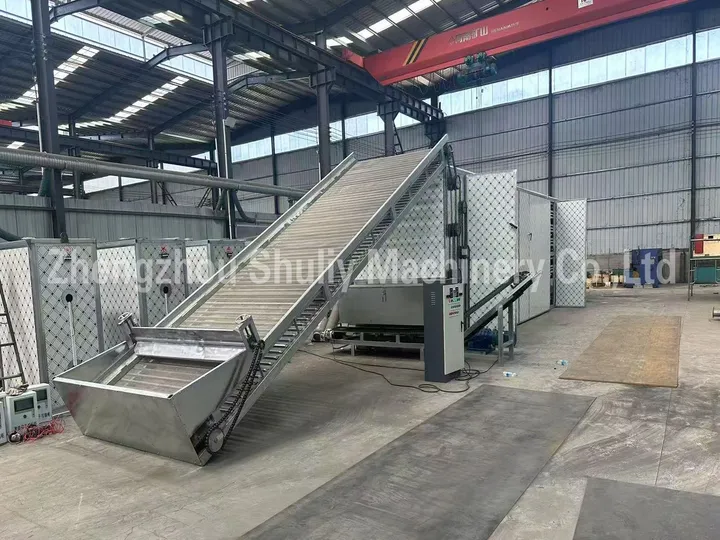
Vorteile der Lösung
Continuous Automatic Drying
Kann 24 Stunden nonstop betrieben werden, Arbeitskraft sparend.
Uniform Drying and Consistent Color
Mehrschichtige heiße Luft-Penetration sorgt für gleichmäßige Dehydratisierung innen und außen der Bohnen.
Energieeffizienz
Die Zirkulation heißer Luft reduziert den Energieverbrauch um über 30 % im Vergleich zu herkömmlichen Trocknern.
Hygienisch und sicher
Alle Kontaktflächen aus Edelstahl entsprechen den lebensmittelgeeigneten Standards.
Intelligent Control System
Automatische Temperatur- und Feuchtigkeitsregelung sorgt für gleichmäßige Trocknung jeder Charge.
Customizable Production Line
Kann flexibel je nach Werksgröße, Output und Energiebedarf gestaltet werden.
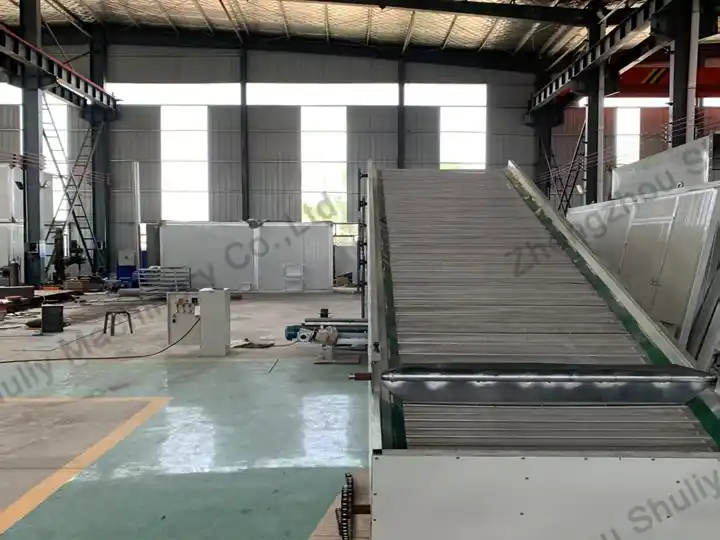
Konfigurationsliste der Kakaobohnen-Trocknungsanlage
| Ausrüstungsname | Funktion |
|---|---|
| Fermentationstank / Fermentationsbox | Kakaobohnen fermentieren, um gewünschtes Aroma zu entwickeln |
| Vibrationssieb / Siebmaschine | Beschädigte Bohnen und Verunreinigungen entfernen |
| Lufttrenn-/ Staubentferner | Leichte Verunreinigungen und Staub entfernen |
| Förderband für die Zuführung | Kakaobohnen gleichmäßig auf dem Trocknungsband verteilen |
| Mehrschichtiger kontinuierlicher Bandtrockner | Kern-Trocknungsgerät mit sektoraler Temperatursteuerung und Heißluftzirkulation |
| Heißluftofen / Wärmequelle System | Heiße Luft zum Trocknen bereitstellen |
| Abluftventilator-System | Feuchtigkeit entfernen, die während des Trocknens entsteht |
| Kühlsegment / Kühlförderband | Die getrockneten Kakaobohnen kühlen |
| Entladung-Förderband | Getrocknete Kakaobohnen zur Sammlung oder Verpackung transferieren |
| Feuchtigkeitsmessgerät | Bestimmen des Feuchtigkeitsgehalts der Kakaobohnen |
| Verpackungs-Schnittstelle / Sammelsystem | An Verpackung oder Lagerung anschließen |
| Elektrische Steuerungssysteme | PLC-zentrale Steuerung für Temperatur, Bandgeschwindigkeit, Luftdurchfluss und Trocknungszeit |
Notes: The above standard list is for reference only. The specific configuration should be adjusted according to the customer’s production plan. If you have any requirements, please contact our staff via the pop-up window or WhatsApp.

Warum Shuliy wählen?
- 20+ years of drying equipment manufacturing experience
- Exported to 30+ countries, including major cocoa regions
- Capacities from 60 kg/h to 14,000 kg/h
- Multiple heat sources: heat pump, gas, diesel, coal, biomass, steam
- Food-grade 304 stainless steel construction
- PLC automatic control with remote monitoring option
- 1-year warranty and lifetime technical support
- Free layout drawing and drying test service
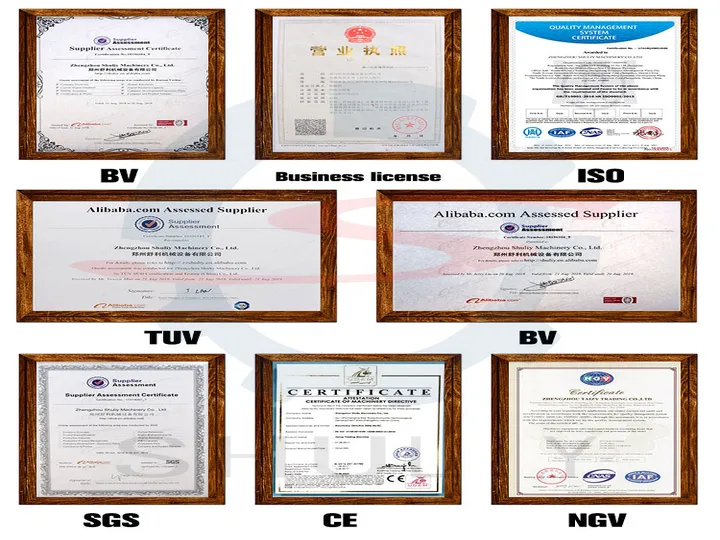
Mit Shuliy arbeiten
Shuliy’s cocoa bean belt drying machine, with its energy-saving, efficient, automated, and food-grade hygienic design, has become the ideal choice for many cocoa processing companies.
Wenn Sie die Trocknungsqualität verbessern, den Energieverbrauch senken und eine standardisierte Produktion erreichen möchten, kontaktieren Sie uns für eine maßgeschneiderte Lösung.
Frequently Asked Questions
Can the dryer handle wet fermented beans directly?
Yes. The belt and chamber are designed for high initial moisture. We recommend a vibrating feeder to spread sticky beans evenly.
What heat source is cheapest for cocoa regions?
Biomass (cocoa pod husks, firewood) and natural gas are usually cheapest in West Africa and Southeast Asia. We can calculate running costs for your local fuel prices.
Does machine drying affect cocoa flavor compared with sun drying?
No. Controlled low-temperature drying preserves flavor precursors better than sun drying, which exposes beans to uncontrolled heat and contamination.
What is the delivery time?
Standard models ship in 15–25 days. Custom lines take 30–45 days.
Can one machine dry cocoa and coffee?
Yes. The same belt dryer handles both by adjusting the temperature curve and belt speed.
How do I verify final moisture?
We recommend an inline moisture meter or handheld meter at discharge. The PLC can also stop the cycle at a set time-based target.
What spare parts should I stock?
Mesh belt sections, drive bearings, heating elements or burner nozzles, and temperature sensors.
Get a Quote for Your Cocoa Bean Drying Machine
Whether you process 100 kg/h on a single farm or 10 tons/h in a commercial plant, Shuliy can configure the right cocoa bean drying machine for your capacity, fuel source, and quality target.
Contact us today for a free layout design, drying test report, and equipment quotation.