

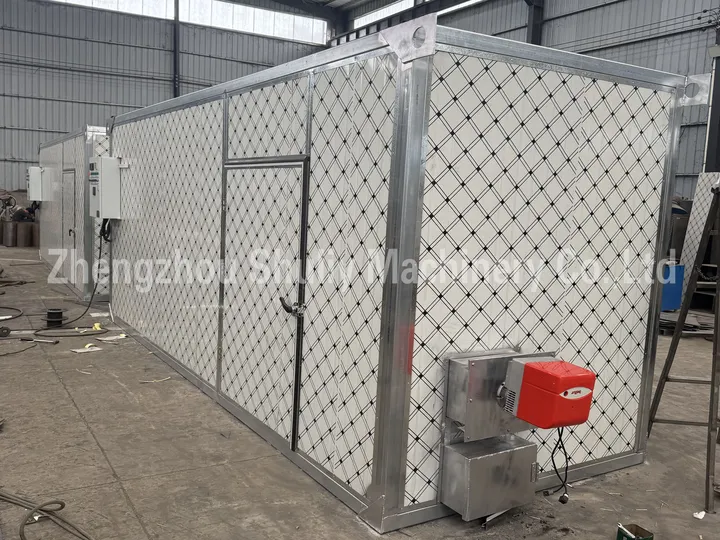
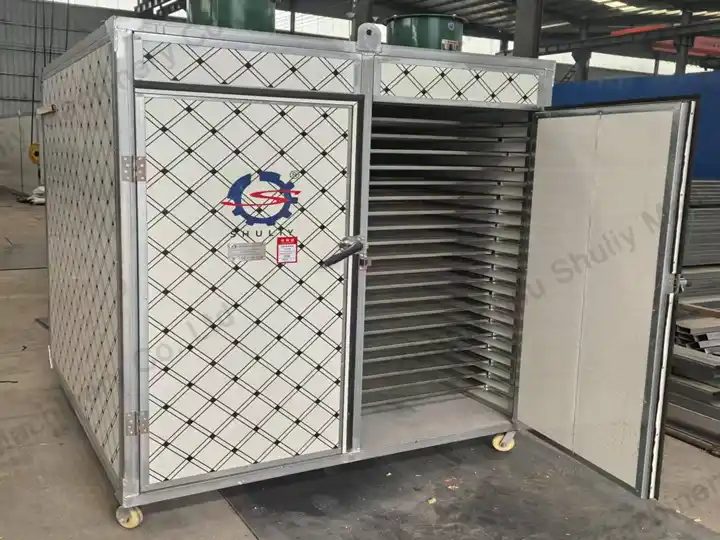
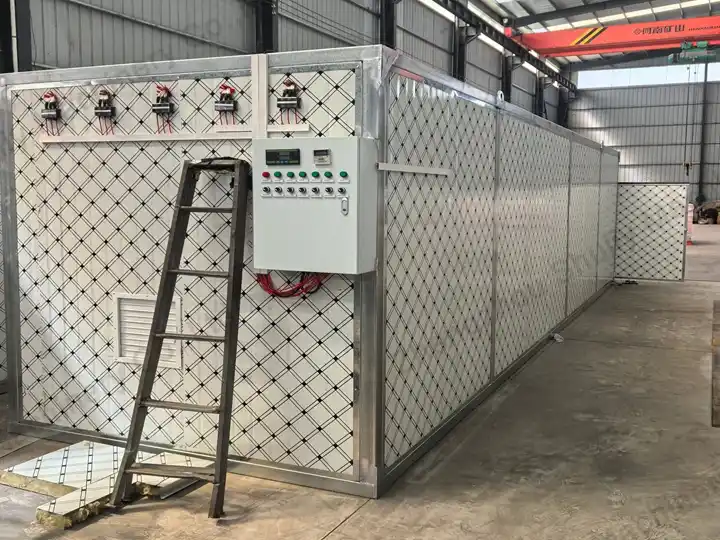
A mango dryer is an industrial batch drying system built to remove moisture from fresh mango slices, halves, or chunks and turn them into shelf-stable dried mango products. The equipment discussed on this page is Shuliy’s drying room for mango , a sealed box-type dryer that circulates hot air evenly across stacked trays. It can process 300 to 8,000 kg of fresh mangoes per batch, depending on the model, and delivers uniform dehydration without darkening or case-hardening.
Compared with open-air sun drying or small domestic units, this mango drying machine gives processors full control over temperature, humidity, and airflow. The stainless steel chamber, PLC temperature control, and forced hot-air circulation protect the fruit’s natural color, sweetness, and texture. It is the right choice for farms, cooperatives, dried-fruit factories, and exporters that need consistent commercial output.
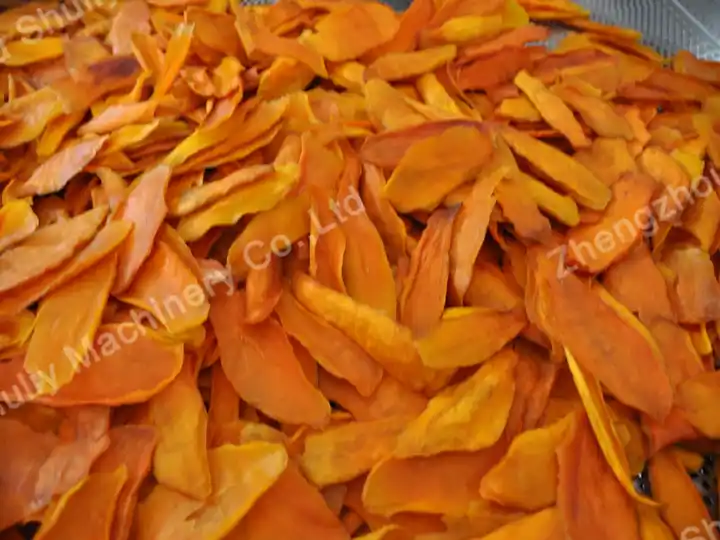
This article will cover the reasons for drying mangoes, drying methods, how to choose a dryer, and further processing options.
Mango Dryer Technical Specifications
| Model | Dimensions (mm) | Drying Crews | Capacity per Batch (kg) | Heat Source Options |
|---|---|---|---|---|
| SL-2 | 4000 × 1860 × 2500 | 2 | 300–600 | Heat pump / Electric / Coal / Hybrid |
| SL-4 | 6000 × 1860 × 2500 | 4 | 500–1000 | Heat pump / Electric / Coal / Hybrid |
| SL-6 | 7200 × 2300 × 2500 | 6 | 800–1500 | Heat pump / Electric / Coal / Hybrid |
| SL-8 | 8500 × 2300 × 2500 | 8 | 1000–2000 | Heat pump / Electric / Coal / Hybrid |
| SL-10 | 10000 × 2300 × 2500 | 10 | 1200–2500 | Heat pump / Electric / Coal / Hybrid |
| SL-12 | 8500 × 3300 × 2500 | 12 | 2500–4000 | Heat pump / Electric / Coal / Hybrid |
| SL-18 | 8500 × 5000 × 2500 | 18 | 4000–6500 | Heat pump / Electric / Coal / Hybrid |
| SL-24 | 12000 × 5000 × 2500 | 24 | 5000–8000 | Heat pump / Electric / Coal / Hybrid |
Optional voltage, tray material (304/316 stainless steel), and heat-pump configuration can be customized for local power standards and food-safety requirements.
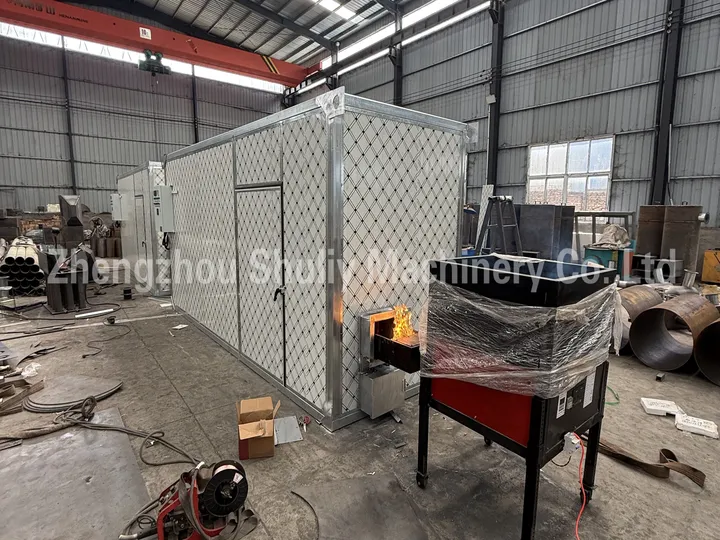
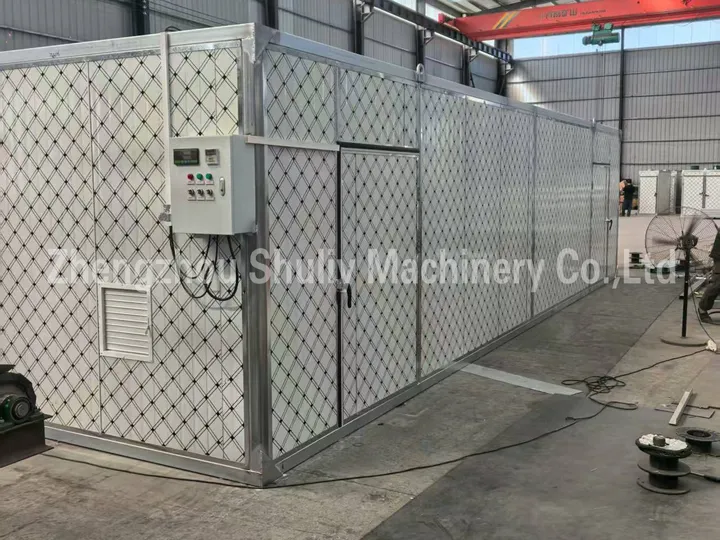
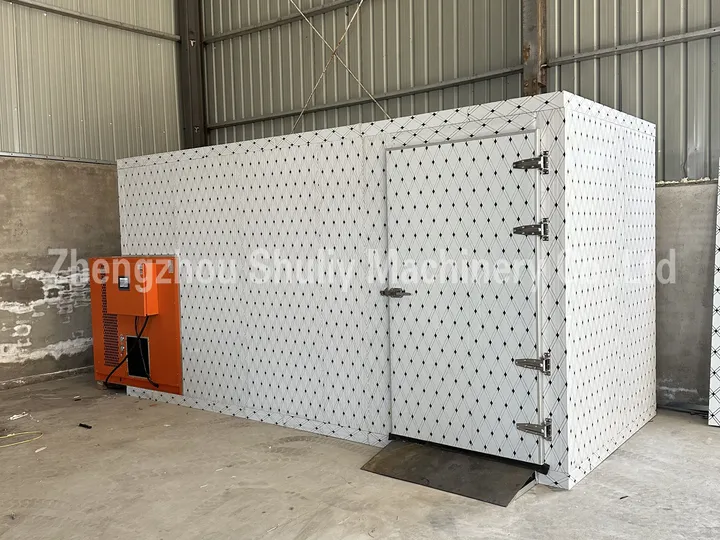
Key Features of Our Mango Drying Machine
Sealed Stainless Steel Chamber
The inner walls and trays use corrosion-resistant stainless steel. This protects the fruit from contamination, meets food-hygiene standards, and allows quick cleaning between batches.
Precise Temperature & Humidity Control
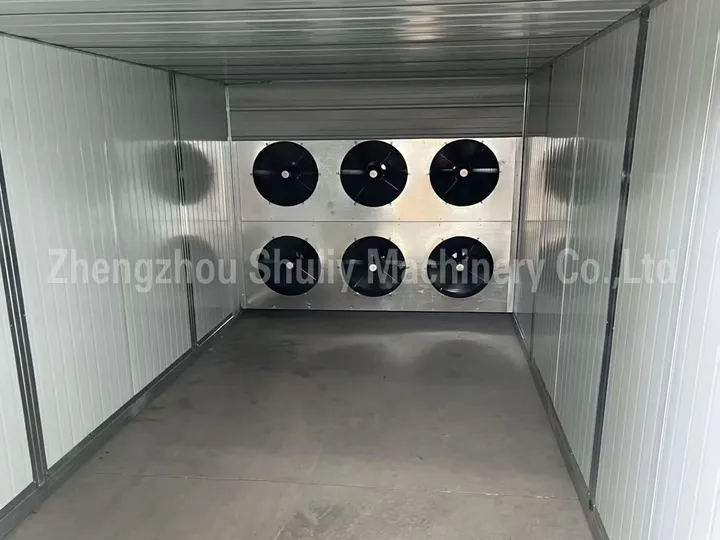
A PLC controller manages drying temperature, humidity, and cycle time automatically. Operators set the curve once and the mango dehydration equipment maintains stable conditions throughout the batch.
Forced Hot-Air Circulation
High-power circulating fans distribute heated air evenly through every tray layer. Slices on the top, middle, and bottom dry at the same rate, so rework and tray rotation are minimized.
Flexible Heat Sources
Choose air-source heat pump, electric heating, sulfur-free coal, or hybrid energy. Heat-pump operation typically cuts energy use by 30–50% compared with pure electric heating.
Modular, Expandable Layout
Units from SL-2 to SL-24 share the same core design. You can start with a small mango dryer and scale up by adding drying crews or selecting a larger model.
Compact Footprint & Quick Installation
The box-type structure needs no complex civil works. Most models arrive pre-assembled and can be installed and commissioned within one to two days.
What Can You Process in a Drying Room for Mango?
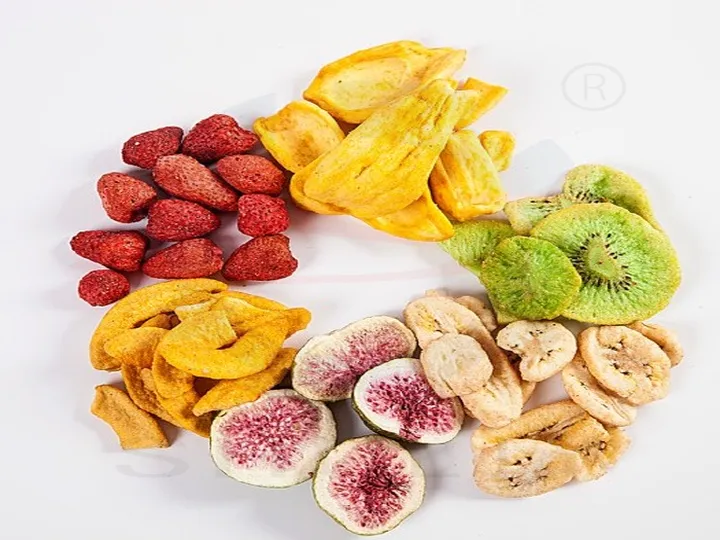
Although built for mango, this industrial fruit dryer handles many commercial crops:
- Tropical fruits: pineapple, papaya, banana, jackfruit, passion fruit
- Temperate fruits: apple, pear, peach, apricot, kiwi
- Berries: strawberry, blueberry, mulberry, raspberry
- Vegetables: chili, carrot, onion, garlic, ginger, mushroom
- Herbs & flowers: mint, rose, chrysanthemum, honeysuckle
This makes the machine useful year-round, not only during mango harvest season.
Why Dry Mangoes?
1. Extend Shelf Life
Fresh mangoes have high water content and spoil easily. Drying removes moisture, extending shelf life from a few days to several months and reducing losses.
2. Easier Storage and Transport
Dried mangoes are smaller, lighter, and less prone to damage, making them easier to package, transport, and sell over long distances — ideal for export or cross-region sales.
3. Increase Product Value
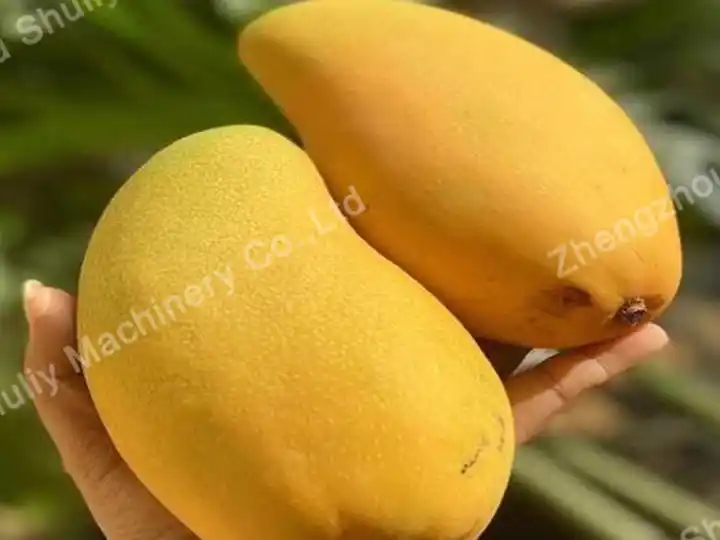
Dried mango is a high-value product, priced higher than fresh fruit. It can be sold as a snack, baking ingredient, or beverage ingredient.
4. Meet Market Demand
With the rise of healthy snacks and convenience foods, consumer demand for dried mango continues to grow.
5. Reduce Seasonal Pressure
Mangoes have a short harvest season. Drying allows year-round sales, balancing supply and demand.
6. Prepare for Further Processing
Dried mango can be used for further processing, such as making candied fruit, jam, or fruit powder, expanding product lines and market applications.
How to Dry Mango Slices?
Prepare the Raw Material
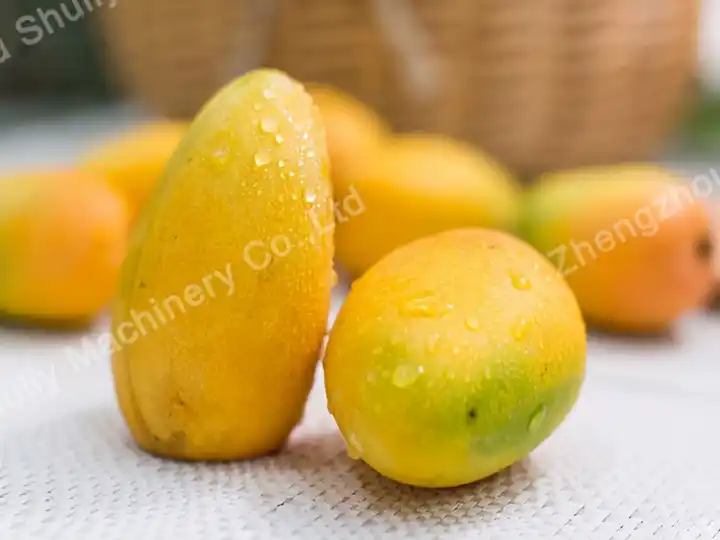
Choose mangoes that are ripe but firm, with full flesh and no pests or damage. Wash them thoroughly to remove dust and impurities. Remove any damaged or spotted fruit to ensure uniform, attractive dried slices.
Slice the Mango
Remove the pit and cut the mangoes into 3–5 mm thick slices. Even thickness is important: too thick slices dry unevenly, while too thin slices can become hard and lose texture.
Pre-Dehydration
To speed up drying, pre-dehydrate the slices. Common methods include air drying or using a low-temperature fan. Maintain 40–45°C for 30–60 minutes to evaporate surface moisture.
Drying Process
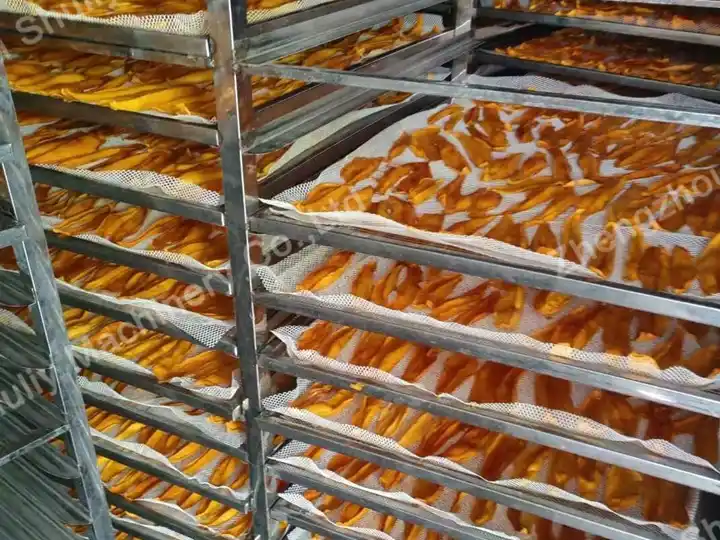
Drying removes the remaining moisture and is the key step. Use hot air circulation or a drying room. Control temperature, time, and humidity carefully:
- Temperature: 55–65°C is ideal. Too high can darken or burn slices; too low slows drying and risks mold.
- Time: Usually 6–12 hours, depending on thickness and moisture. Turn slices halfway for even drying.
- Humidity: Keep air humidity around 15–25% to help moisture evaporate quickly.
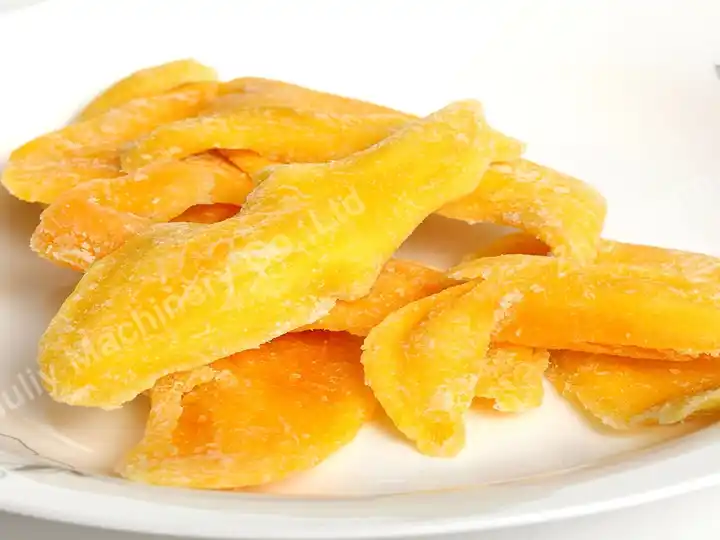
After drying, mango slices should be flexible, golden, and mold-free. Let them cool and rest to stabilize moisture.
Packaging and Storage
Pack fully dried mango slices immediately to prevent moisture absorption. Sealed, cool, and dark storage can extend shelf life to 6–12 months.
How to Choose a Mango Dryer?
1. Production Capacity
First, determine your production scale. Different models suit different capacities:
- SL-2: Small-scale production, handles 300–600 kg per batch.
- SL-4: Medium-small scale, handles 500–1000 kg per batch.
- SL-24: Large-scale production, handles 5000–8000 kg per batch.
Choose a model that matches your production needs for efficient operation.
2. Drying Method and Temperature Control
Drying mangoes requires precise temperature control. Select a dryer with efficient hot air circulation and a temperature control system to ensure even heat distribution, avoiding over- or under-drying.
3. Operation and Maintenance
Consider ease of use and maintenance. A dryer with a user-friendly interface and low maintenance requirements reduces training time and operating costs.
4. Energy Efficiency and Environmental Impact
Choose energy-saving and eco-friendly dryers. Efficient hot air circulation and insulation reduce energy consumption and meet modern environmental standards.
5. After-Sales Service and Technical Support
Pick a manufacturer that provides reliable after-sales service and technical support. This ensures timely help in case of malfunctions or when technical guidance is needed, keeping your production line running smoothly.
Mango Further Processing
Recommended Processing Methods:
- Direct Packaging: After drying, package as dried mango snacks.
- Grinding: Grind into mango powder for use in beverages, pastries, and candies.
- Composite Processing: Combine with sugar or honey to make candied mango or preserved fruit.
Customer Pain Points & Solutions
| Pain Point | Shuliy Solution | Result |
|---|---|---|
| Fresh mangoes spoil within days | Batch drying removes 80–90% of moisture, extending shelf life to 6– 12 months | Lower post-harvest loss |
| Sun drying causes uneven color and mold risk | Sealed chamber with forced airflow and humidity control | Consistent golden color, no mold |
| Small dryers cannot handle harvest peaks | Models from 300 kg to 8,000 kg per batch | Match production scale |
| High electricity bills | Air-source heat pump option (1 kW → 3–6 kW heat) | 30–50% energy savings |
| Operators lack technical experience | PLC touchscreen control + remote guidance | Short learning curve |
Why Choose Shuliy for Your Mango Dryer?
- 20+ years of drying machinery manufacturing experience
- Exported to 30+ countries across Africa, Asia, Europe, and the Americas
- ISO, CE, SGS, TUV certifications available
- 1-year warranty with lifetime technical support
- Multi-language service team for installation, training, and spare parts
- Customized voltage, tray size, and heat source based on your project
Partnering with Shuliy
We offer a complete mango drying solution, providing one-stop support from raw material preparation, slicing, drying, to further processing equipment.
Whether for small-scale trial production or large-scale commercial production, we have suitable drying room models and professional technical support to help you efficiently and safely produce high-quality dried mango.
Contact us now to customize your mango drying production line and achieve year-round supply with high added-value returns!

Frequently Asked Questions
Is the voltage customizable for my country?
Yes. We can configure the electrical system for 220V, 380V, 415V, or other local standards. Tell us your voltage and frequency when requesting a quote.
How long does shipping usually take?
Delivery to most African, Asian, and European ports takes 30–45 days after production. We provide full shipping documents and customs support.
Do you offer installation and operator training?
Yes. We supply English manuals, video guides, and online support. On-site engineer service is available for an additional fee.
What spare parts should I keep in stock?
We recommend keeping circulating fan belts, heating elements, and temperature sensors as backup parts. Shuliy supplies original spare parts with fast dispatch.
What is the typical payback period for a commercial mango dryer?
Most customers recover the machine cost within 12–24 months through reduced spoilage, higher dried-fruit prices, and year-round sales.