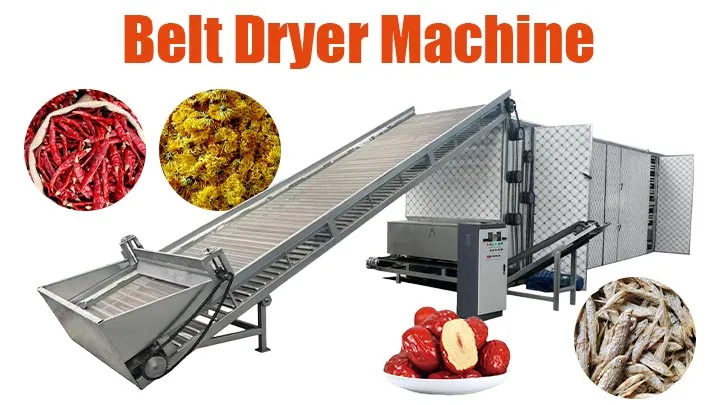
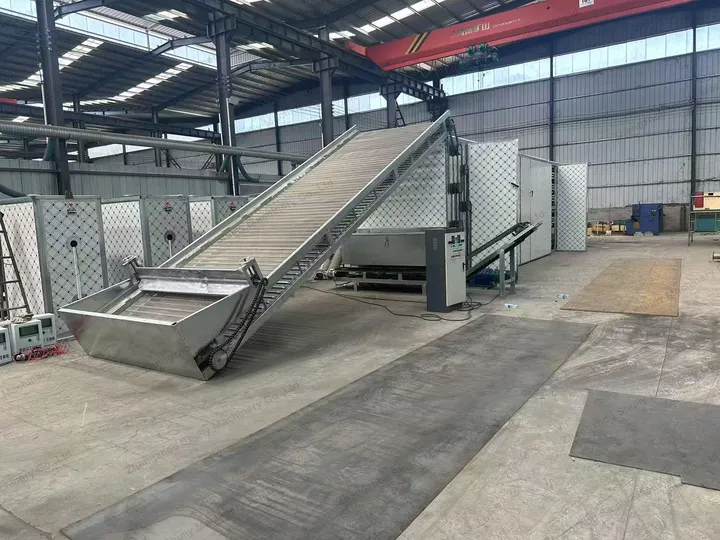
Belt dryer machine, just as its name implies, the materials are transferred to the drying box by the band carrier. The hot air flows through the drying box, taking away the moisture of the material to achieve the drying effect.
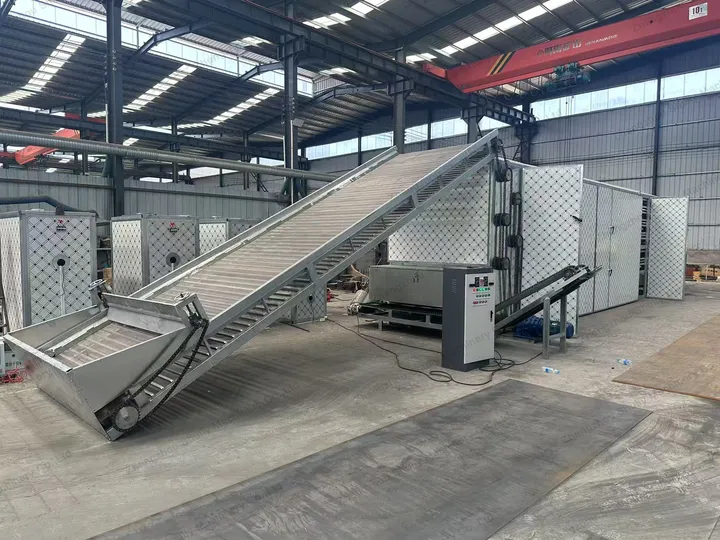
The biggest advantage of a belt dryer is that it can realize automatic continuous drying. The belt dryer can do continuous feeding and discharge, while the whole dryer is in the open state.
When the amount of drying material is large, the belt dryer is your best choice. It has a wide range of applications, especially suitable for flake, strip, and granular materials with good permeability.
Shuliy’s belt dryer, depending on the number of drying belts, can handle materials with a drying capacity ranging from 400 to 14,000 kg. It offers three heating options: electric heating, air-source heating, and hot air heating. Multiple specifications are available, and customization is supported.
Applications of continuous belt dryer
Main raw material: Use the pure hot air produced by the hot air stove, the temperature of the hot air is controllable from 50℃ to 160℃, the drying and dehydration are rapid, and the operation is efficient, especially for drying sheets, strips, and granular materials with good air permeability.
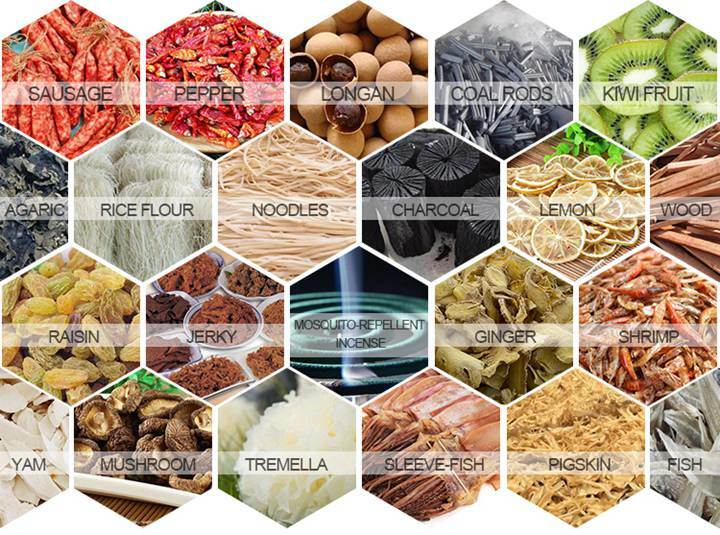
- Food industries: Eggplant, fruit, vegetable slices, dried fruit slices, red pepper, pepper, strawberries, walnuts, hawthorn slices, etc.
- Medicinal materials: Honeysuckle, Nasturtium, Scutellaria, Salvia, Ginseng, Codonopsis, Raw Rehmannia, Rehmannia, Atractylodes, etc.
- Chemical industries: Organic pigment, compound rubber, acrylic fiber, etc.
Technical parameters of the belt dryer
Approximate Technical Parameters
| Item | Parameter |
|---|---|
| Name | Mesh Belt Dryer Machine |
| Drying Medium | Hot Dry Air |
| Material Layer Thickness (mm) | 50–200 |
| Drying Area (m²) | 40–104 |
| Drying Cycle (h) | 2–8 |
| Mesh Belt Speed Control | Stepless Speed Regulation |
| Compatible Heat Sources | Air Source Heat Pump, Electric Heating, Natural Gas, Coal, Biomass Pellet Hot Air Furnace, Steam Heat Exchanger |
| Operators per Shift | 2–3 persons |
Detailed Specifications (For Reference)
| Model | SL-1.2-8 | SL-1.2-10 | SL-1.6-8 | SL-1.6-10 | SL-2-8 | SL-2-10 | SL-2-20 |
|---|---|---|---|---|---|---|---|
| Layers | 4 | 5 | 4 | 5 | 4 | 5 | 10 |
| Belt Width (m) | 1.2 | 1.2 | 1.6 | 1.6 | 2 | 2 | 2 |
| Drying Length (m) | 8 | 10 | 8 | 10 | 8 | 10 | 20 |
| Material Thickness (mm) | 10–80 | 10–80 | 10–80 | 10–80 | 10–80 | 10–80 | 10–80 |
| Service Temperature (°C) | 50–140 | 50–140 | 50–140 | 50–140 | 50–140 | 50–140 | 50–140 |
| Steam Pressure (MPa) | 0.2–0.8 | 0.2–0.8 | 0.2–0.8 | 0.2–0.8 | 0.2–0.8 | 0.2–0.8 | 0.2–0.8 |
| Steam Consumption (kg/h) | 120–130 | 150–375 | 150–375 | 170–470 | 180–500 | 225–600 | 450–1200 |
| Drying Time (h) | 0.2–1.2 | 0.25–1.5 | 0.2–1.2 | 0.25–1.5 | 0.2–1.2 | 0.2–1.5 | 0.5–3 |
| Drying Capacity (kg/h) | 60–160 | 80–220 | 75–220 | 95–250 | 100–260 | 120–300 | 240–600 |
| Total Power (kW) | 11.4 | 13.6 | 11.4 | 13.6 | 14.7 | 15.8 | 36.8 |
| Length (m) | 9.56 | 11.56 | 9.56 | 11.56 | 9.56 | 11.56 | 21.56 |
| Width (m) | 1.49 | 1.49 | 1.9 | 1.9 | 2.32 | 2.32 | 2.32 |
| Height (m) | 2.3 | 2.3 | 2.4 | 2.4 | 2.5 | 2.5 | 2.5 |
| Total Weight (kg) | 4500 | 5600 | 5300 | 6400 | 6200 | 7500 | 14000 |
Notes: The 6 m, 8 m, 9 m, 10 m, 11 m, and 12 m models are standard sizes. The standard configuration is 4 layers, while 5-layer and 6-layer designs are also available. Machines longer than 12 m require customized production. At present, the largest mesh belt dryer we have manufactured is 19 m.
Detailed Specifications of SL-2×7 Four-Layer Mesh Belt Dryer
| Item | Specification |
|---|---|
| Model | SL-2×7 |
| Dryer Type | Four-Layer Mesh Belt Dryer |
| Installation Size | 12 m × 4 m × 2.8 m |
| Drying Chamber Size | 7 m × 2.1 m × 2.2 m |
| Mesh Belt Width | 2 m |
| Mesh Belt Length | 60 m |
| Mesh Belt Material | 304 Stainless Steel |
| Mesh Hole Size | 3 mm |
| Material Layer Thickness | 10–80 mm |
| Drying Temperature | 50–140 °C |
| Heating Method | Tube-type reburn hot air furnace |
| Insulation Material | 75 mm high-temperature resistant rock wool |
| Frame Structure | Galvanized steel frame |
| Circulating Fan Power | 15 kW |
| Boiler Induced Draft Fan Power | 2.2 kW |
| Motor & Reducer Power | 2.2 kW (adjustable speed) |
| Screw Feeder Power | 0.75 kW |
| Control System | Instrument temperature control, automatic humidity control, automatic moisture exhaust |
| Operators Required | 2–3 persons |
Notes: We will recommend the most suitable mesh belt dryer based on your actual trial production needs, tailor a dedicated production solution for you, help you save costs, and provide the best drying service.
Why choose our mesh belt drying machine?
High production efficiency
Supports large-batch, continuous drying with a multi-layer circulation structure; daily fresh material processing capacity ranges from 2 tons to dozens of tons.
Superior drying quality
Hot air penetrates the material layer from bottom to top, with uniform material turning, ensuring consistent and stable finished product quality.
High automation level
Intelligent and automated operation with electric control and temperature control systems; only 2-3 operators are needed per shift.
Mature & reliable technology
Improved and optimized over nearly 20 years, serving tens of thousands of customers with proven stability and practicality.
Customizable models
Standard models: 6–12m (4–6 layers); maximum custom length up to 19m, matching diverse production capacity requirements.
Diverse material options
Optional main frame and door panel materials; food-grade stainless steel mesh belt as standard, complying with food industry hygiene standards.
Rich heat source compatibility
Supports combustion, energy, electric, and hydrothermal heat sources; flexible selection based on local energy conditions.
Remarkable economic value
Brings high returns to users, promotes regional economic development, and is highly recognized by the industry and customers.
Working principle of the continuous conveyor dryer
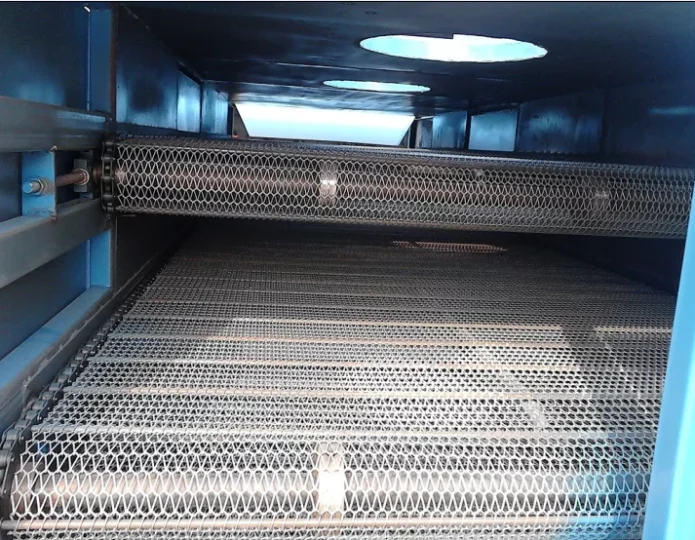
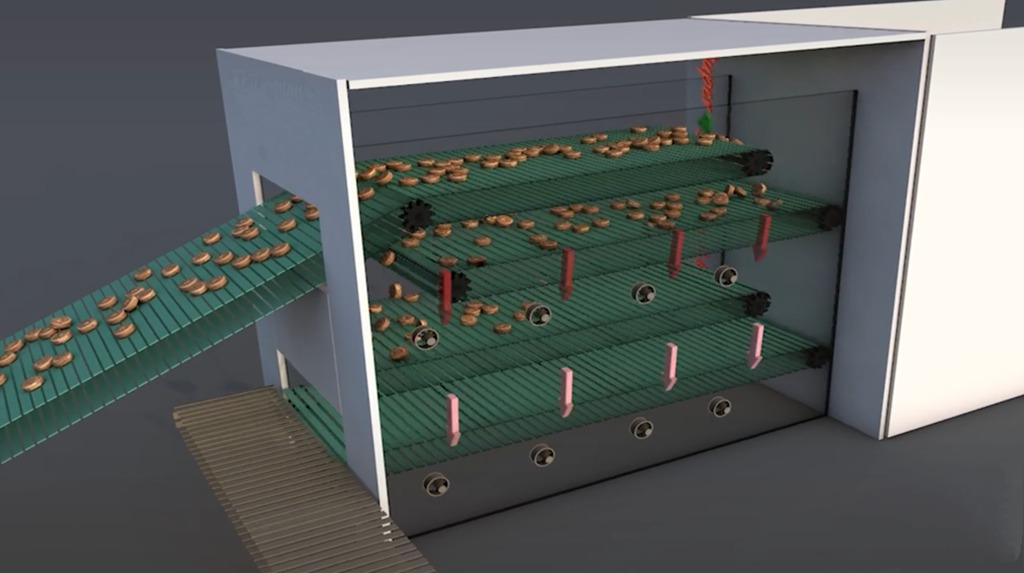
The main principle is spreading the material on the net belt through the conveyor, dragging the transmission device to move back and forth in the dryer, and the hot air flows through the material. Water vapor is discharged through the dehumidifying fan to achieve the purpose of drying.
There are baffles on both sides of the belt to prevent material leakage. There is a maintenance observation door outside the box to observe the drying of materials and the daily maintenance of equipment. The box wall is made of stainless steel, which can effectively improve thermal efficiency.
The standard mesh belt features 3 mm holes, which prevent small particles from falling while ensuring proper hot air circulation throughout the chamber. Made of stainless steel, it guarantees contamination-free drying and a longer service life. The drying length can be controlled between 8–20 meters, and the belt width ranges from 1.2–2 meters.
The structure of a belt dryer machine
The entire equipment consists of the feeding system, heating system, air circulation system, discharge system, moisture exhaust system, and control system.
- Feeding system – Delivers materials evenly onto the drying belt for processing.
- Heating system – Provides the required heat for drying; options include electric heating, air-source heating, or hot air heating.
- Air circulation system – Uses fans and ducts to ensure uniform airflow within the drying chamber for even drying.
- Discharge system – Collects or transfers the dried materials from the end of the belt to the next process.
- Moisture exhaust system – Removes the moisture generated during drying to maintain drying efficiency.
- Control system – Adjusts temperature, airflow, belt speed, and drying time, allowing for automatic or manual operation.
Introduction to key components of the belt dryer
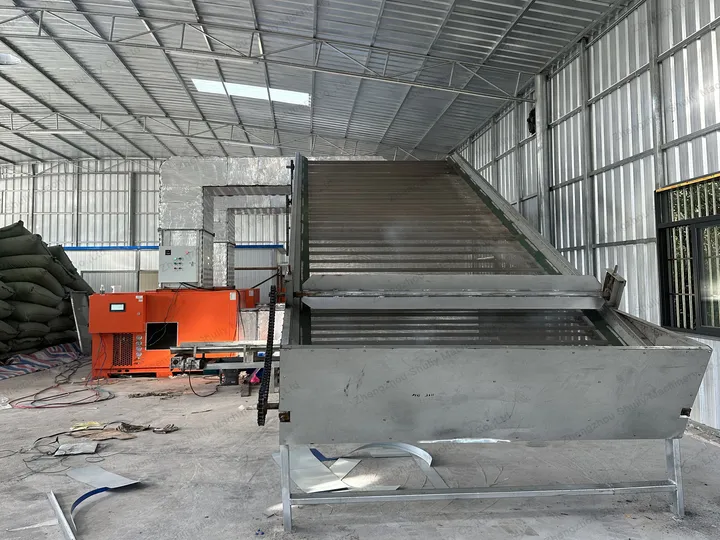
Drying Chamber
Made of 75mm high-temperature resistant rock wool, with a galvanized square tube frame and galvanized flat tube supports inside the frame.
Feeding Conveyor Belt
Frame made of galvanized pipes, with a 304 stainless steel mesh belt.
Discharge Small Conveyor Belt
Frame made of lightweight channel steel, with a food-grade conveyor belt.
Drying Mesh Belt
3 mm holes, made of 304 stainless steel.
Tube-type Recirculating Hot Air Furnace
Reinforced design, made of 10 mm thick steel plates; tubes made of 6 mm thick seamless pipes, with a refractory brick lining.
Electrical Control Cabinet
Equipped with instrument temperature control, automatic humidity control, and automatic moisture exhaust.
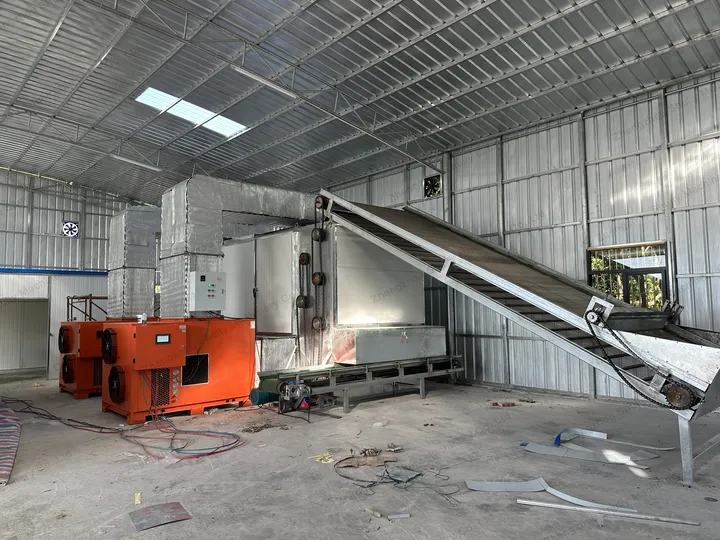
What are the different types of belt dryers?
The belt dryer is continuous drying equipment that uses a steel mesh as the conveyor to transfer the material. Because the conveyor is reticular, it is most suitable for regular or irregular lumps. (such as coal, various mineral powders, food, vegetables, etc.)
In addition to this belt dryer machine, we also have many different types of drying equipment for sale, such as grape dryers, pepper dryers, drying rooms, and more. Please click the link for more information.
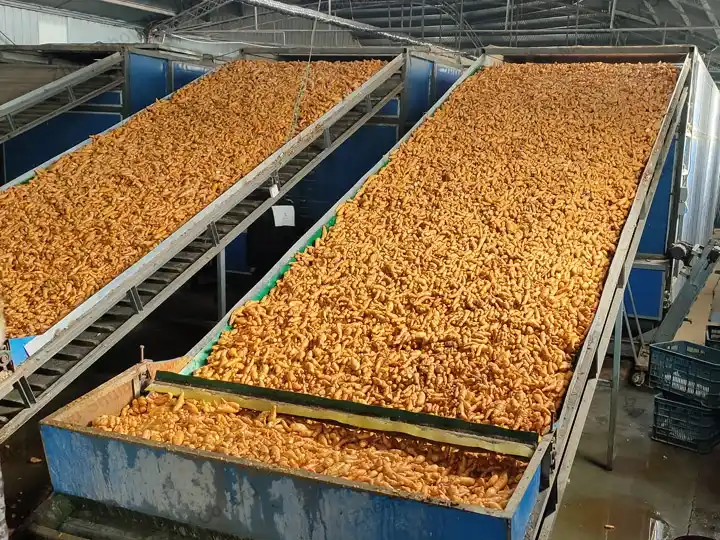
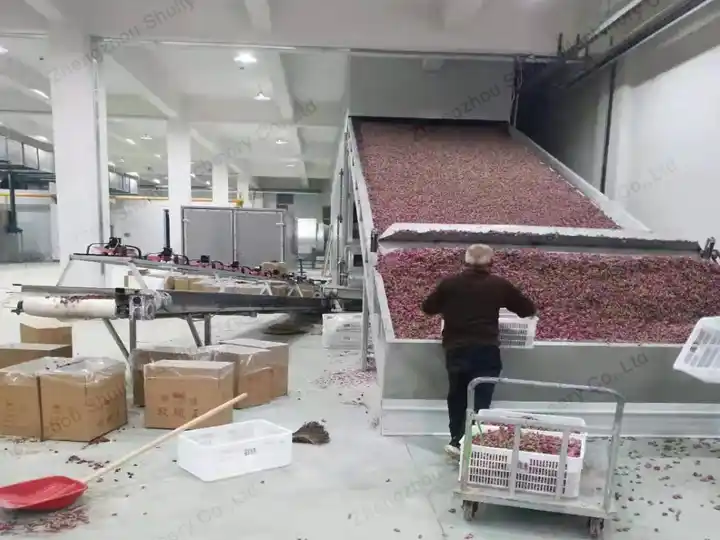
Singel-stage & Multi-stage belt dryer
According to the needs of the different customers, we will make some targeted improvements to the products.
For example, we can add the baffle around the mesh belt to prevent the material from falling, a detachable mesh belt for easy cleaning, the discharging section can also set up a cooling unit to facilitate the direct packaging of finished products, adopting carbon steel, galvanized mesh wire, stainless steel or other material of the mesh plate for different materials.
As for the different requirements of some customers for materials, the corresponding number of layers and materials of the mesh belt have different configurations.
For those that do not require high output, but have requirements for the quality of materials, or for some heat-sensitive materials, a single-layer mesh belt is more suitable. For some high-volume requirements, multi-layer mesh belts are more commonly used.
Single-stage belt dryer
The single-layer belt dryer is used to dry the flake, strip, and granular materials with good permeability. It is especially suitable for dehydrated vegetables, Chinese medicine pieces, and other materials with high moisture content but the temperature is not allowed to be high.
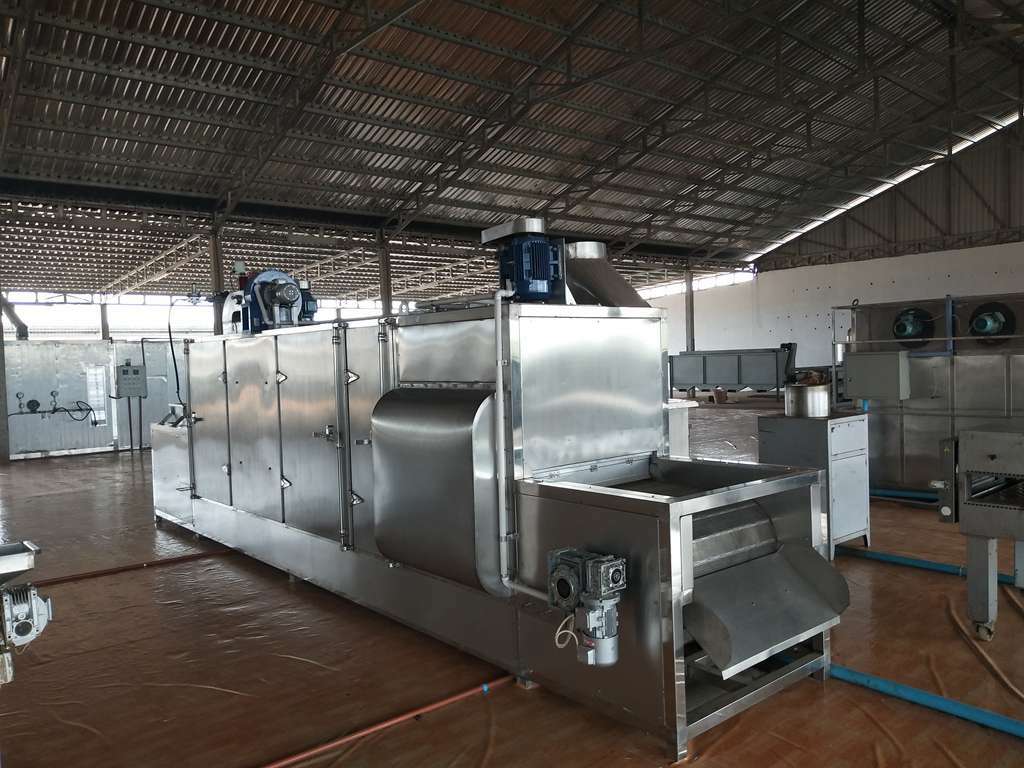
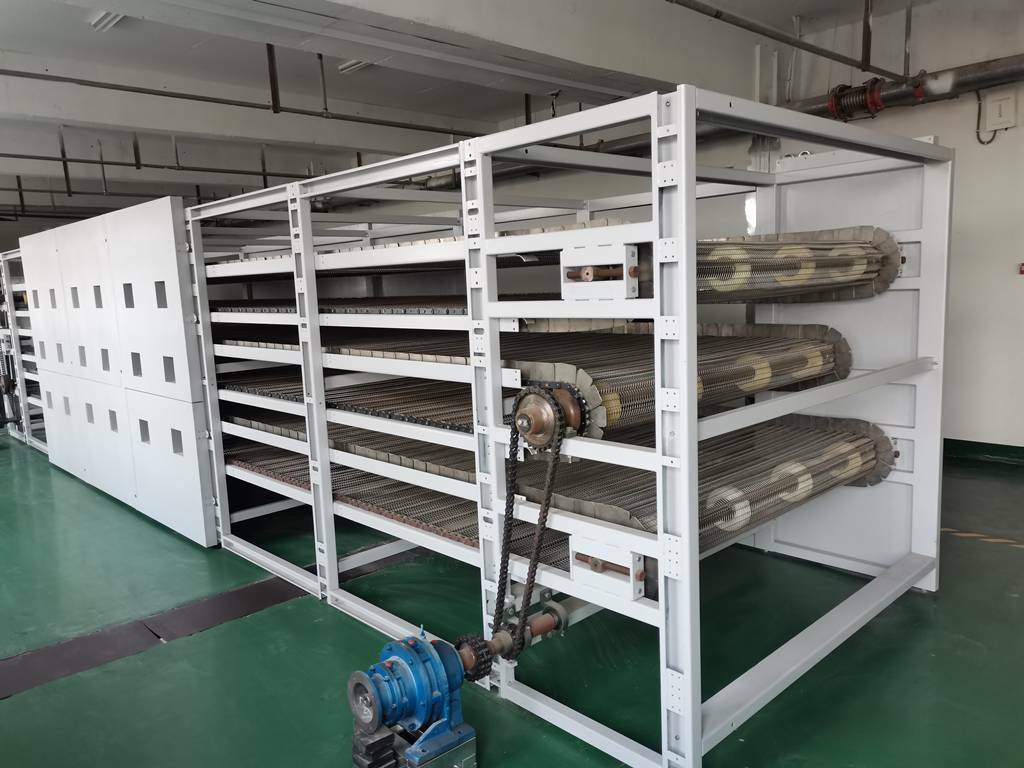
Multi-stage continuous dryer machine
The Multi-layer continuous dryer machines are essentially composed of several single-belt dryers in series, and their operating principle is the same as that of Single-stage dryers.
Multi-layer dryers are suitable for the mass production of difficult-drying materials with a low drying rate. The equipment has a compact structure, small floor space, simple operation, convenient maintenance, and stable operation.
With the continuous improvement of technology in enterprises, our products also gradually have higher requirements. Now, our Multi-layer belt dryer can already meet the continuous mass production, and the product quality is also guaranteed. It has the advantages of high efficiency,energy-saving, and easy management.
Chili drying solution display
| Item | Value (Recommended/Adjustable) |
|---|---|
| Raw Material | Chili (whole / segments / slices) |
| Capacity | 1200 kg/h (fresh material) |
| Initial Moisture w1 | 70–75% (wet basis) |
| Final Moisture w2 | ≈12% (wet basis) |
| Inlet Temperature t0 | ≈20℃ |
| Drying Temperature t1 | 65–75℃ (color protection, initial) → 55–60℃ (moisture balance, final) |
| Exhaust Temperature t2 | ≈60℃ |
| Heating Method | Electric / Charcoal Hot Air (optional: steam / gas) |
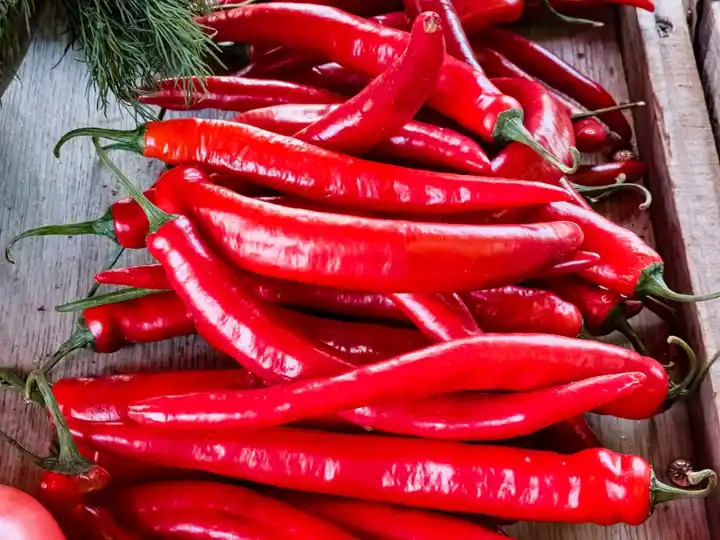
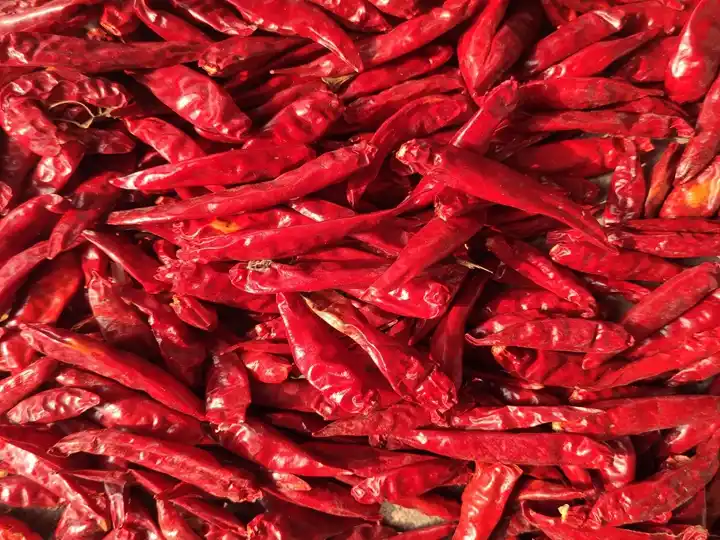
Key heat balance
Based on 1,200 kg/h fresh chili, w1 = 75%, w2 = 12%:
- Dry basis = 300 kg/h
- Final product ≈ 341 kg/h
- Required moisture evaporation W ≈ 859 kg/h
- Estimated total heat demand (including system losses): Q_total ≈ 6.1 × 10^5 kcal/h (assuming 15% losses).
Customer-friendly explanation:
This drying line needs to remove about 0.86 tons of water per hour, corresponding to a heat demand of ≈610,000 kcal/h. If converted to steam, this equals approximately 1.1 tons of steam per hour (rough estimate at 540 kcal/kg).
Option A: model SL-2-20 (2m × 20m)
- Heat load coverage: Steam consumption range 450–1200 kg/h, which matches the required 1.1 t/h, allowing a single line to fully meet production demand.
- Application: Suitable for both whole chilies and cut chilies; offers sufficient space for color retention, with adjustable residence time (0.5–3 h).
Fans and airflow (reference values)
To make it easier for customers to understand, both range + model reference are provided:
- Circulation fan (per line): Air volume 15,000–22,000 m³/h, static pressure 900–1300 Pa, power 11–15 kW.
Reference: 4-72-6C-11 kW (or equivalent model). - Exhaust/dehumidification fan (per line): Air volume 25,000–35,000 m³/h, static pressure 800–1000 Pa, power 22–30 kW.
Reference: 4-72-8C-30 kW (or equivalent model).
Note: Final fan selection should be verified according to cabinet resistance, heat exchanger resistance, and material resistance. Exhaust settings must ensure “no saturation, no condensation.” During the color-retention phase, the fresh air ratio and exhaust volume should be appropriately increased.
Site interfaces and footprint (checklist)
Power/heat supply:
- Electric heating requires ≥ Q_total equivalent power.
- Charcoal/gas systems require a matching hot air furnace capacity.
- Steam heating requires a stable steam supply.
Ducting/exhaust:
- Exhaust ducts should discharge outdoors, with condensate recovery and rain cover; inspection ports should be reserved.
Footprint (reference for single SL-2-20 line):
- Approx. length 21.6 m × width 2.32 m × height 2.5 m (based on your specification table).
Upstream/Downstream integration:
- Feeding and shaping (crushing/cutting), weighing and loading, cooling after discharge, and sealed packaging.
For a more detailed explanation of the process flow, please visit our blog – Chili Dryer.
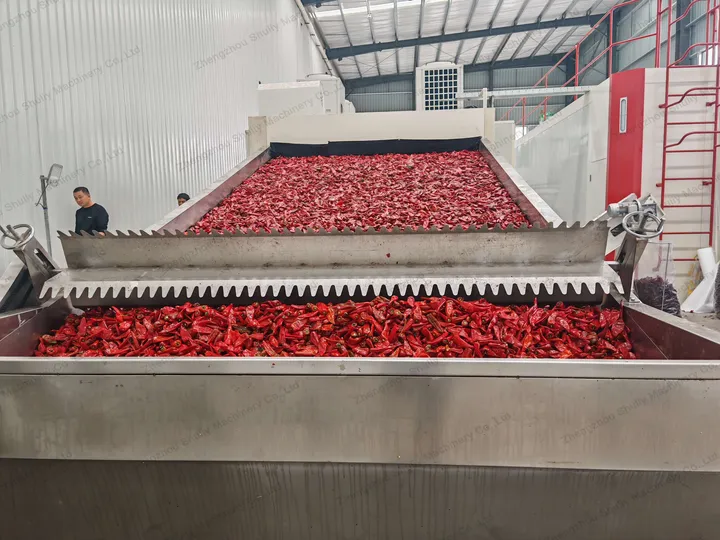
Customer case
Our belt dryers have been favored by customers in more than 30 countries and regions worldwide. Click below to read more.
Recommended Product
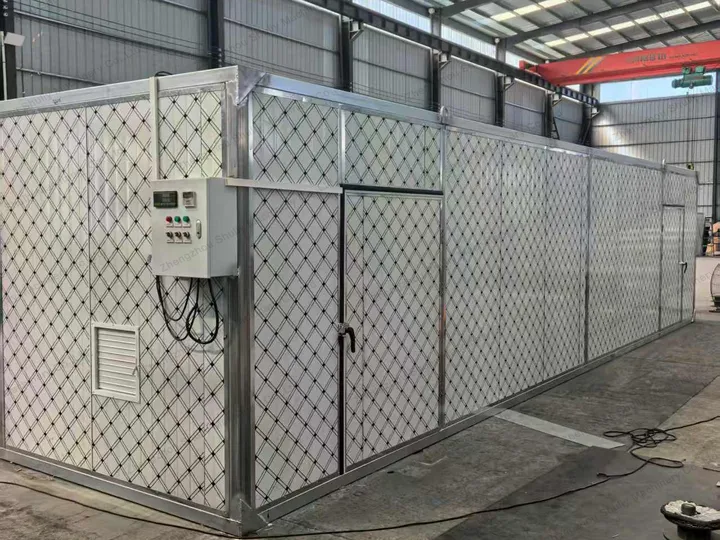
Our Drying Room is designed for batch or bulk drying of fruits, vegetables, herbs, spices, and similar products.
Key Advantages:
- Uniform Heat Distribution – ensures consistent drying and product quality
- Energy Efficient – reduces operating costs while maintaining high performance
- Easy Operation – simple controls and maintenance
- Customizable Size – tailored to your production capacity and workflow