

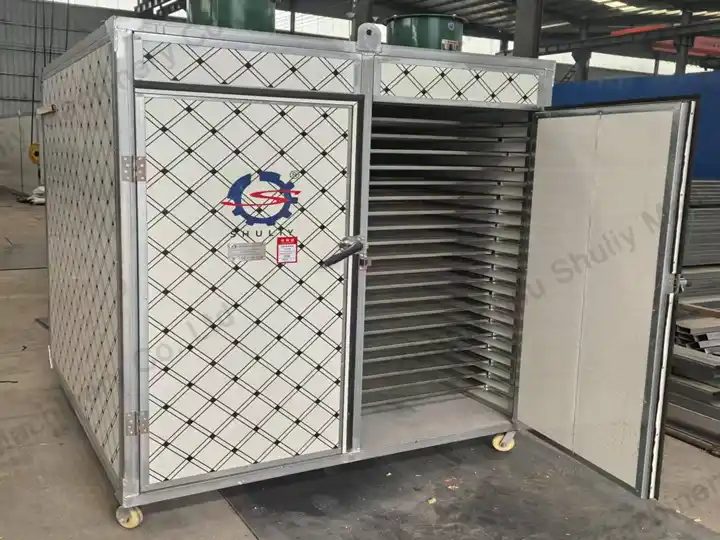
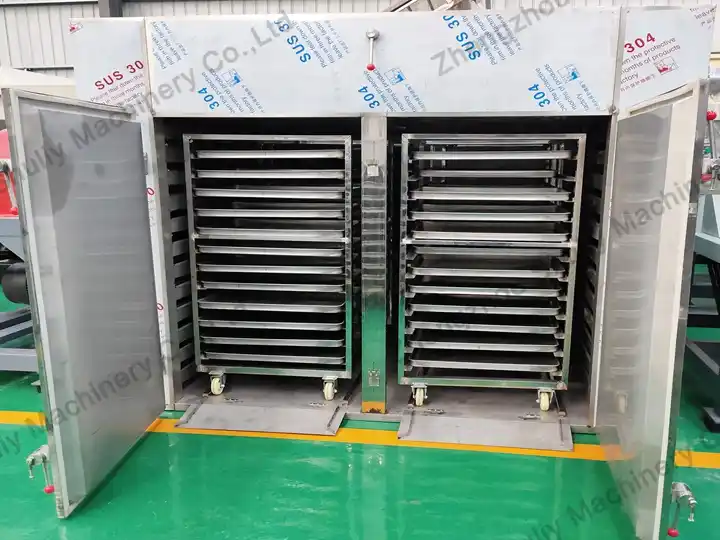
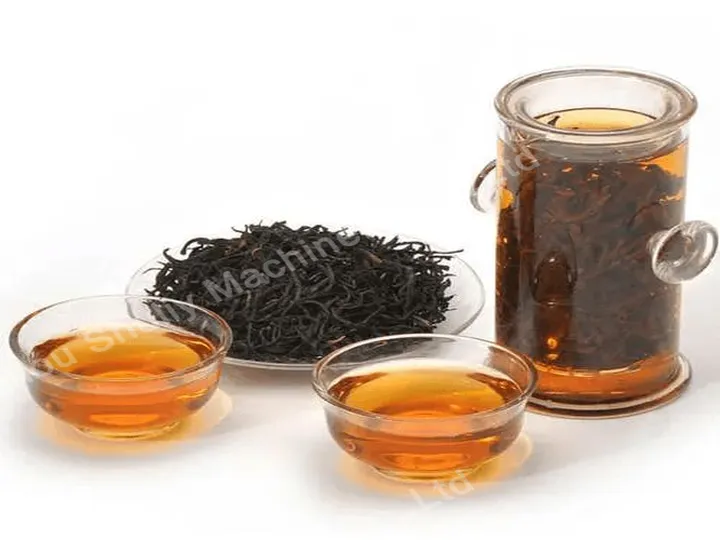
De black tea drying machine is a closed-chamber batch dryer designed to stop fermentation and reduce moisture in fully oxidized black tea leaves. It processes 300–8,000 kg of fermented tea per batch. Freshly fermented leaves enter at 55–65% moisture. The system reduces this to 3–5% within 2–4 hours. Dried black tea is ready for grading, sorting, and packaging for domestic sale or export.
Conventional charcoal-fired dryers run at 100–120°C with no humidity control. This black tea dryer operates at 70–105°C in a sealed chamber with ±1°C temperature precision. The heat pump recycles thermal energy from exhaust air. It delivers a COP of 3.0–4.0. Electricity consumption drops by 60–70% compared to direct electric heating. A PLC touchscreen lets operators program multi-stage drying profiles. Chamber temperature stays within ±1°C. Relative humidity stays within ±3%. The 2–4 hour cycle enables 4–6 batches per day during peak harvest.
Shuliy has manufactured industrial drying equipment for over 20 years. The company has exported heat pump dryers to more than 30 countries. All chambers use 304 stainless steel trays. Housing options include galvanized steel and SUS304. The system meets EU and FDA food-contact material standards. A 12-month warranty covers all mechanical and electrical components. Lifetime technical consultation is included.
Why Must Black Tea Be Dried?
After full fermentation, black tea leaves still contain 55–65% moisture and active enzymes. Without timely and controlled drying, quality deteriorates rapidly.
- Over-Fermentation: Enzymatic activity continues. The tea develops a sour, overripe flavor. Astringency increases. Market grade drops.
- Color Degradation: Uncontrolled moisture causes uneven oxidation. Leaf color turns dull brown instead of the desired dark amber. Buyers reject discolored batches.
- Mold Growth: Moisture above 8% creates ideal conditions for Aspergillus and Penicillium mold. Aflatoxin contamination becomes a food safety risk.
- Aroma Loss: Volatile aromatic compounds evaporate unevenly. The characteristic malty, floral, or fruity notes fade. Tea loses its premium classification.
The Shuliy black tea drying machine solves these problems through staged temperature control. A three-phase drying profile stops fermentation at the optimal point. Moisture draws evenly from each leaf. Aroma compounds are locked in. The final product reaches 3–5% moisture with batch uniformity within ±0.5%.
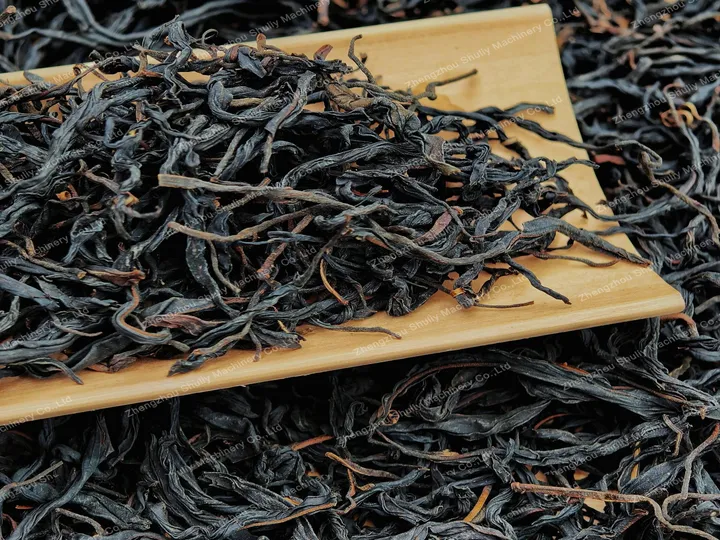
Wat is een Zwarte Thee Droogmachine?
Een zwarttheedrogmachine is een apparaat voor hete-luchtcirculatie dat specifiek is ontworpen voor het drogen van gefermenteerde zwarte thee. Theebladeren worden gelijkmatig over platen uitgespreid en in fasen gedehydrateerd met controleerbare hete lucht, wat zorgt voor stabiel en efficiënt drogen.
In vergelijking met traditionele zon-drogen of handmatige roostermethoden biedt de zwarte thee droger duidelijke voordelen:
- Controleerbare temperatuur, minder beïnvloed door de omgeving
- Batchverwerking voor hogere productie-efficiëntie
- Stabiele kwaliteit, geschikt voor gestandaardiseerde productie
- Verlaagt arbeidskosten en afhankelijkheid van ervaring
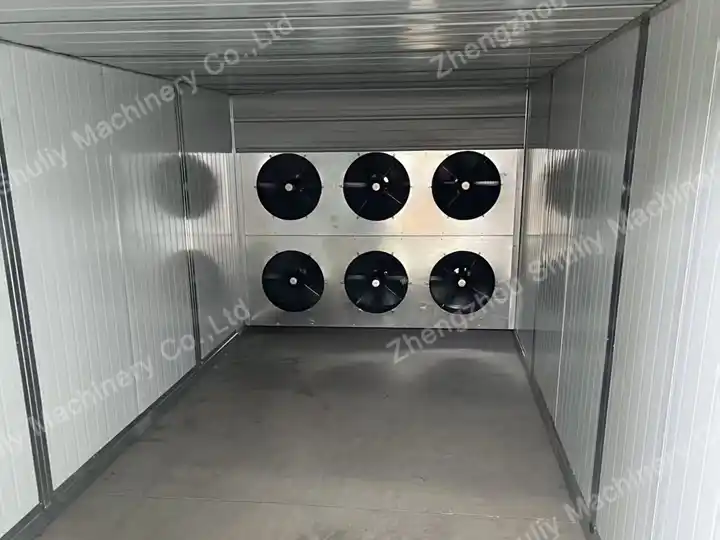
Technische specificaties
| Parameter | Specificatie | Klantenwaarde |
|---|---|---|
| Modelbereik | SL-2 tot SL-24 | 8 models from 300–8,000 kg for precise capacity matching |
| Droogmethode | Luchtwarmtepomp | 70% energy savings versus electric heating; zero combustion emissions |
| Temperatuurbereik | 30–110°C (adjustable) | 70–105°C optimal for black tea; stops fermentation without scorching |
| Control Precision | ±1°C temperature; ±3% RH humidity | Prevents over-drying and under-drying within the same batch |
| Batchcapaciteit | 300–8,000 kg fermented tea | Scales from small tea estate to industrial export volume |
| Drying Cycle | 2–4 hours/batch | 4–6 batches per day during peak harvest season |
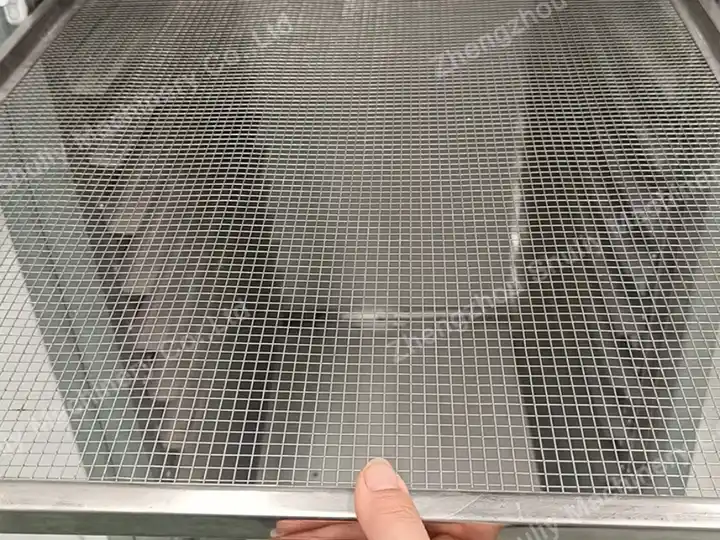
| Lade Materiaal | 304 stainless steel (perforated) | Food-grade, corrosion-resistant, easy to clean |
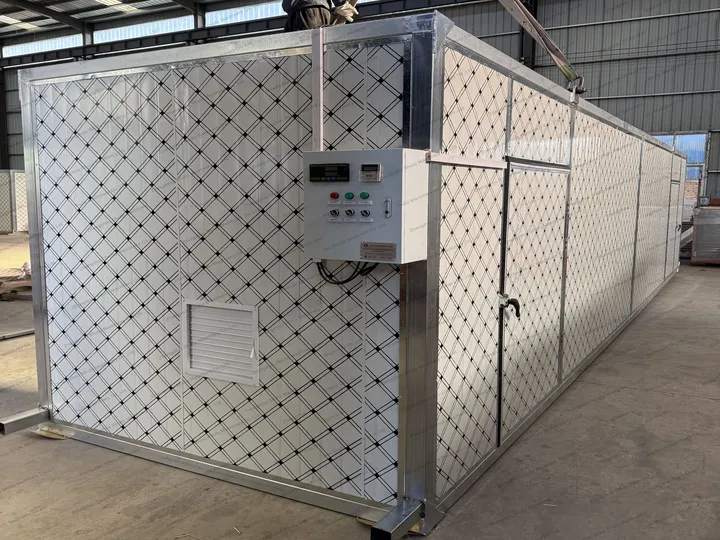
| Chamber Construction | Galvanized steel or SUS304 | 75 mm rock wool insulation; durable frame |
| Controlesysteem | PLC with HMI touchscreen | Automated profiles reduce labor and human error |
| Eindvochtigheid | 3–5% | Optimal for grading, packaging, and 24-month storage |
| Energieverbruik | 3–36 kW (model dependent) | Low operating cost; suitable for rural tea estate power supply |
| Isolatie | 75 mm hoog-temperatuur steenwol | 20% energy efficiency improvement over uninsulated chambers |
Model Selection Guide
| Model | Dimensions (mm) | Drying Crews | Capaciteit (kg/batch) |
|---|---|---|---|
| SL-2 | 4,000 × 1,860 × 2,500 | 2 | 300–600 |
| SL-4 | 6,000 × 1,860 × 2,500 | 4 | 500–1,000 |
| SL-6 | 7,200 × 2,300 × 2,500 | 6 | 800–1,500 |
| SL-8 | 8,500 × 2,300 × 2,500 | 8 | 1,000–2,000 |
| SL-10 | 10,000 × 2,300 × 2,500 | 10 | 1,200–2,500 |
| SL-12 | 8,500 × 3,300 × 2,500 | 12 | 2,500–4,000 |
| SL-18 | 8,500 × 5,000 × 2,500 | 18 | 4,000–6,500 |
| SL-24 | 12,000 × 5,000 × 2,500 | 24 | 5,000–8,000 |
How Does the Black Tea Dryer Work?
De black tea dryer uses a hot-air circulation system, allowing heated air to flow evenly throughout the drying chamber. This continuous airflow removes moisture from the tea leaves, achieving controlled drying.
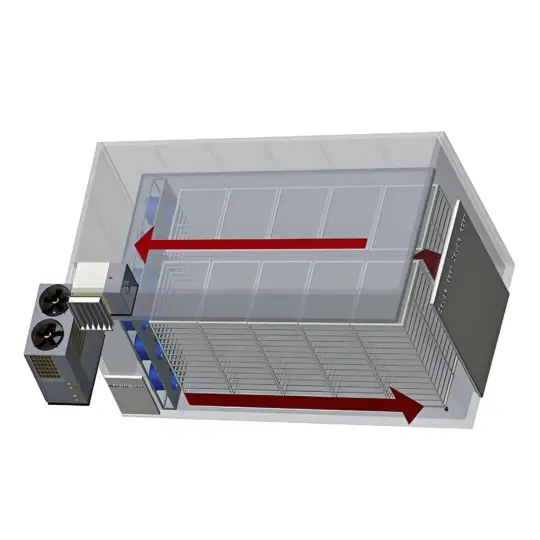
1. Evaporation Stage
Ambient air passes across the evaporator coil. Refrigerant absorbs thermal energy. The air is pre-cooled.
2. Compression Stage
The compressor raises refrigerant temperature and pressure. A high-grade heat source is created.
3. Condensation Stage
Hot refrigerant circulates through the condenser coil inside the drying chamber.
Circulated air heats to the setpoint temperature of 70–105°C.
4. Dehumidification Stage
Warm, moist air passes over the evaporator coil.
Water vapor condenses into liquid. The condensate drains from the system.
The dry air is reheated and recirculated.
5. Control Stage
PLC sensors monitor temperature, humidity, and airflow.
Compressor speed, fan velocity, and exhaust damper position adjust in real time.
The energy-recovery design produces 3–4 kW of usable heat per 1 kW of electrical input.
Conventional electric dryers produce only 1 kW of heat per 1 kW of input.
Black Tea Drying Process: Step by Step
1. Feeding and Spreading
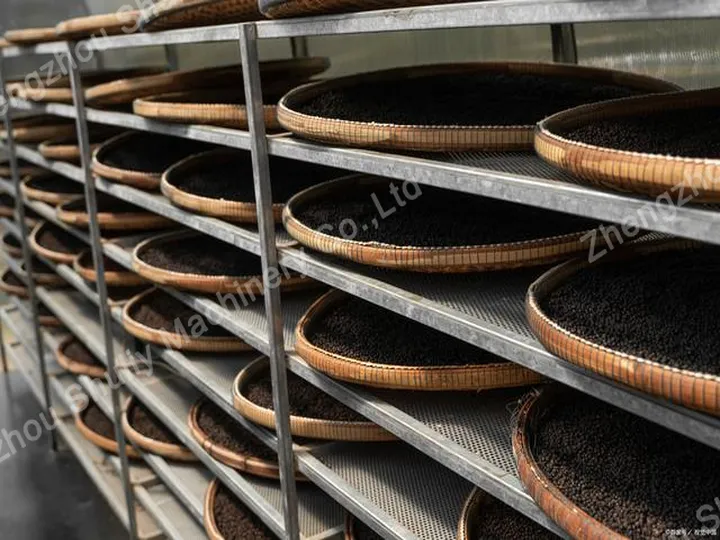
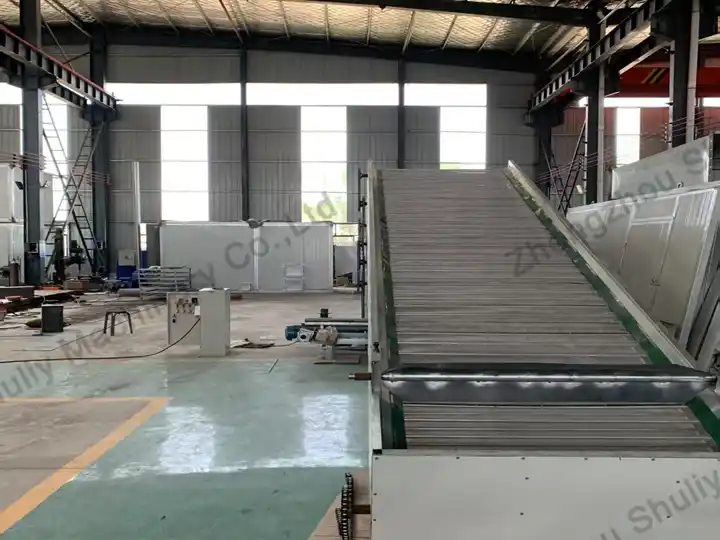
- Fully fermented black tea leaves are evenly spread on drying trays or conveyor belts to ensure uniform heating.
2. Hot-Air Heating and Circulation
- The heating system (electric, gas, or biomass) heats the air, and fans circulate the hot air throughout the drying chamber to avoid local overheating.
3. Staged Temperature-Controlled Drying
- Initiële droging (80–90°C): Verwijdert snel oppervlaktevocht en voorkomt bladplakken.
- Hoofd Droogproces (90–105°C): Gelijkmatige dehydratie, vastleggen van aroma en smaakstructuur.
- Einddroging (70–85°C): Stabiliseert het vochtgehalte zonder het aroma te beschadigen.
4. Moisture Exhaust and Air Exchange
- Moist, hot air is expelled through the exhaust system while fresh air enters, maintaining a stable drying environment. The final moisture content is generally controlled at ≤5%.
5. Discharge and Cooling
After drying, tea leaves are discharged and cooled naturally or with assistance to prevent reabsorption of moisture.
Belangrijkste voordelen van het gebruik van een zwarte thee droger
Gelijke Drooging
Theebladeren worden gelijkmatig verwarmd, wat zorgt voor consistente kleur en smaak.
High Efficiency and Controllable Capacity
Geschikt voor kleine thee-fabrieken tot grootschalige productie.
Multiple Heat Source Options
Kan gebruik maken van elektrische, gas- of biomassa-verhitting, aangepast aan lokale energiecondities.
Easy Operation and Maintenance
Geschikt voor continue productie en langdurig gebruik.
Toepassingsgebieden voor zwarte thee drogers
Zwarte thee drogers worden veel gebruikt voor:
- Verwerking van hele blad zwarte thee en gebroken zwarte thee (CTC)
- Zwarte thee productie in kleine tot middelgrote thee-fabrieken
- Exportgerichte zwarte thee verwerkingsbedrijven
- Gestandaardiseerde en grootschalige productie lijnen voor zwarte thee
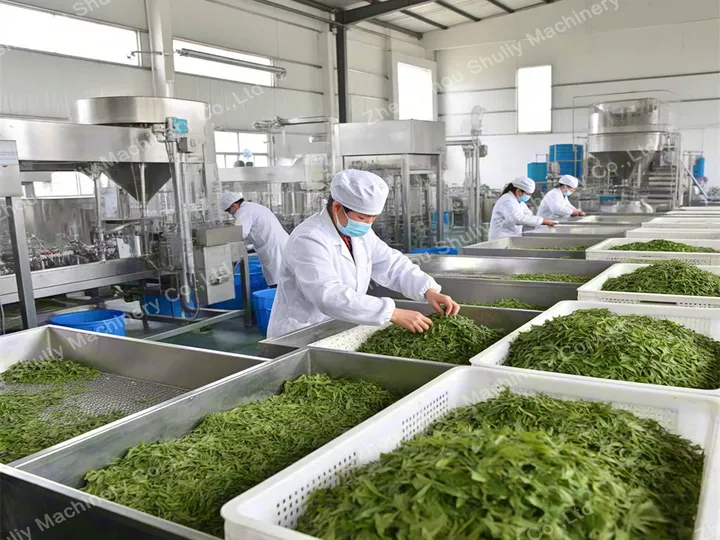
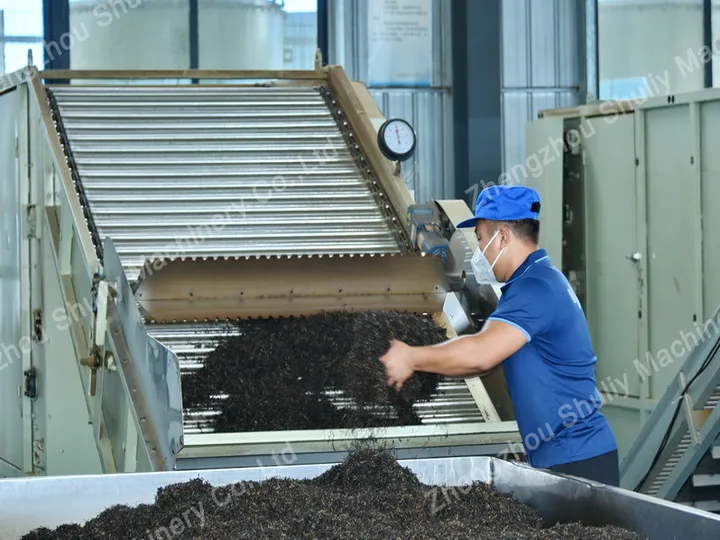
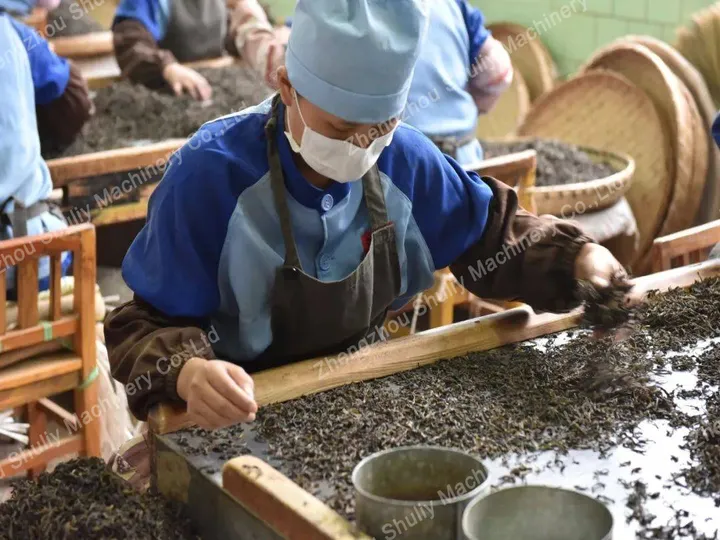
Hoe Kies Je de Juiste Zwarte Thee Droogmachine?
When selecting a black tea drying machine, it is recommended to focus on:
- Vereiste batch- of uurlijkse verwerkingscapaciteit
- Beschikbare types warmtebron
- Werkplaatsruimte en indeling
- Lokale temperatuur- en vochtigheidsomstandigheden
Het kiezen van het juiste model kan niet alleen de droogefficiëntie verbeteren, maar ook effectief het energieverbruik en de bedrijfskosten verminderen.
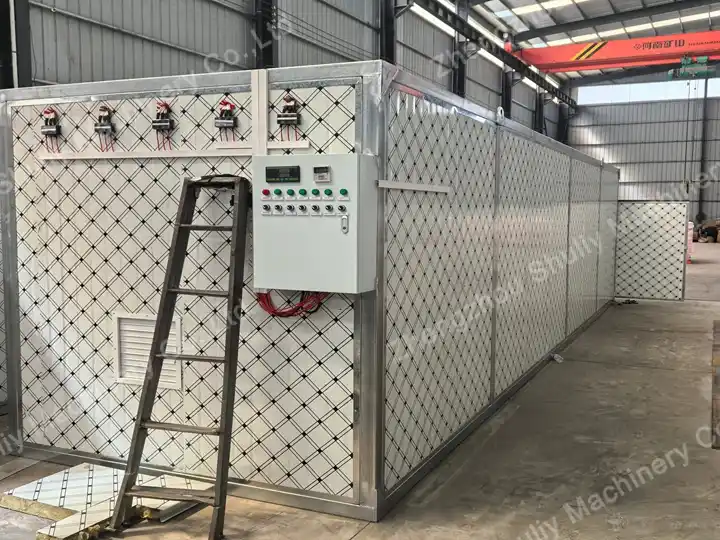
Hoe Zwarte Thee Maken?
Plucking
- Selecteer tere theebladeren met één knop en één of twee bladeren om de kwaliteit van de grondstof te waarborgen.
Withering
- Gebruik natuurlijke verspreiding of temperatuur- en vochtigheidsgecontroleerde verwerkingskamers om vocht te verminderen en bladeren te verzachten, zodat ze klaar zijn voor rollen en fermentatie.
Rolling
- Breek de bladcellen om sap vrij te maken, waardoor stroken of gebroken bladeren ontstaan, wat de polyfenoloxidatie bevordert.
Fermentatie
- Fermenteer de bladeren volledig onder geschikte temperatuur en vochtigheid, waardoor ze van groen naar rood veranderen en de unieke aroma en smaak van zwarte thee ontwikkelen.
Drogen
- Gebruik droogkamers of hete-lucht drogers om fermentatie te stoppen, het vochtgehalte te verlagen tot ≤5%, en aroma en smaak vast te leggen.
Grading
- Sorteren op basis van bladstroken, gebroken bladeren en uiterlijk om uniformiteit en stabiele kwaliteit te waarborgen.
Verpakken
- Drogen en sorteren van de thee om vocht en geur te voorkomen, waardoor het geschikt is voor opslag en transport.
Shuliy biedt een reeks zwarte thee drogers in roestvrij staal en standaardmaterialen, allemaal aanpasbaar. Voor meer informatie, neem gerust contact met ons op.
Solving Common Black Tea Drying Challenges
| Customer Pain Point | Shuliy-oplossing | Result |
|---|---|---|
| Over-fermentation from slow drying | Staged temperature profile (80°C → 105°C → 70°C) | Enzymatic activity stopped within 20 minutes; flavor locked in |
| Uneven moisture causing mold in storage | 360° turbulent airflow and automated humidity exhaust | Batch uniformity within ±0.5% moisture deviation |
| Aroma loss from excessive heat | Final drying phase at 70–85°C with controlled exhaust | Volatile compound retention above 90%; premium grade maintained |
| High fuel costs from charcoal or biomass | Heat pump COP 3.0–4.0 with energy recovery | 60–70% reduction in drying energy cost per kg |
| Seasonal harvest peaks overwhelming capacity | Modular SL-series from 300–8,000 kg; 2–4 h cycles | 4–6 batches per day; multi-chamber expansion available |
| Export rejection due to moisture non-compliance | Precise 3–5% final moisture with PLC verification | Full compliance with ISO 3720 and buyer specifications |
Why Choose Shuliy Black Tea Drying Equipment?
- Proven Heat Pump Technology: Thousands of installed drying rooms across agricultural and food processing sectors. System reliability is validated in real-world conditions.
- Application-Specific Expertise: Drying protocols for orthodox whole-leaf, CTC, and broken black tea are pre-programmed into the PLC. Commissioning time is reduced. Operator training is simplified.
- Full Material Traceability: All stainless steel components carry mill test certificates. Chamber insulation meets fire-rating and thermal-conductivity standards for international export.
- Integrated Processing Lines: Shuliy supplies withering troughs, rolling machines, fermentation chambers, and grading sorters. Turnkey black tea processing projects are supported.
- Global Export Experience: CE-certified electrical systems. Multi-voltage compatibility (220V/380V/415V/460V). ISPM-15 compliant export packing ensures smooth customs clearance.