
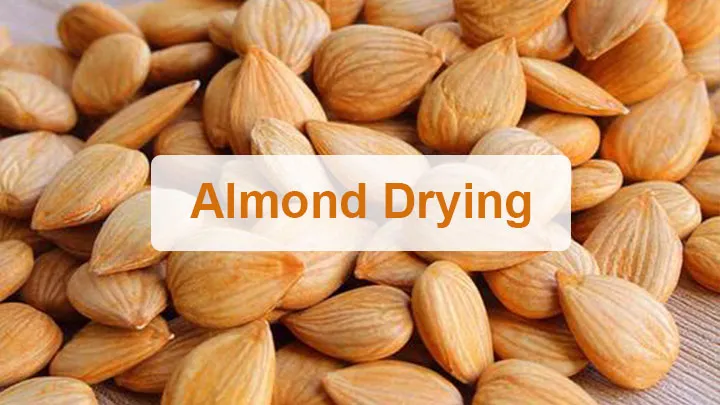
The almond drying machine is an essential piece of equipment in modern nut processing operations. Designed specifically for drying almonds from their initial harvest moisture content of 20-30% down to the optimal storage level of 5.5-6.5%, this heat pump drying system ensures product quality, food safety, and extended shelf life. Whether you operate a small-scale farm or a large industrial processing facility, our almond drying machine delivers consistent results with energy-efficient operation.
What Is an Almond Drying Machine and How Does It Work?
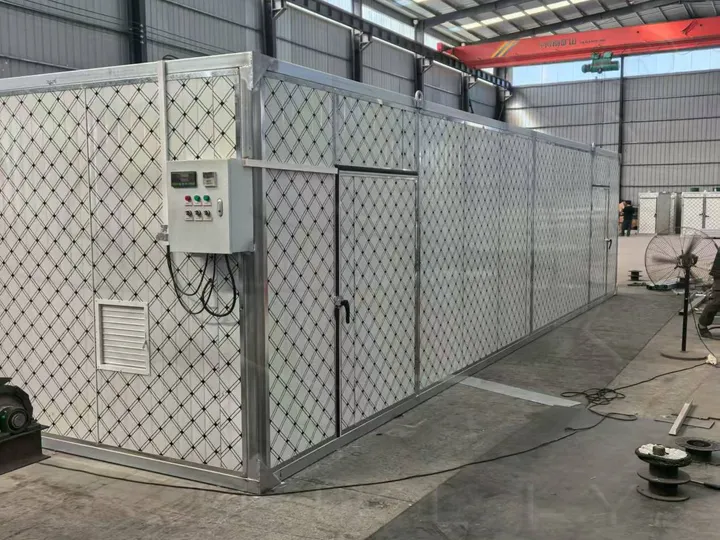
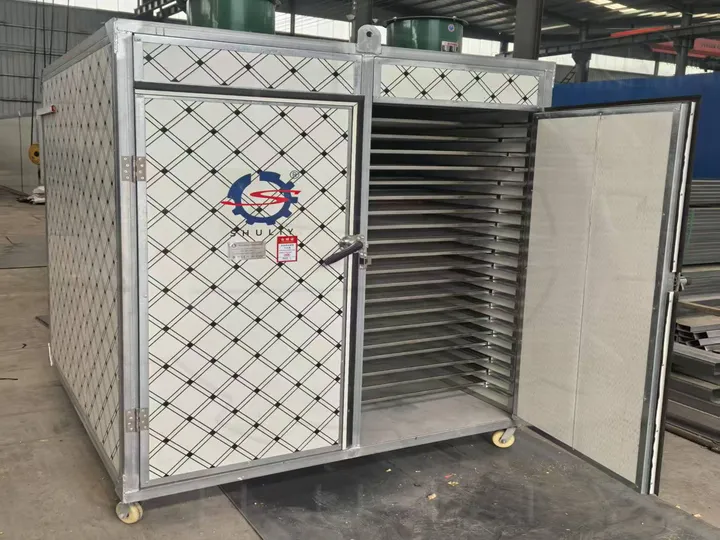
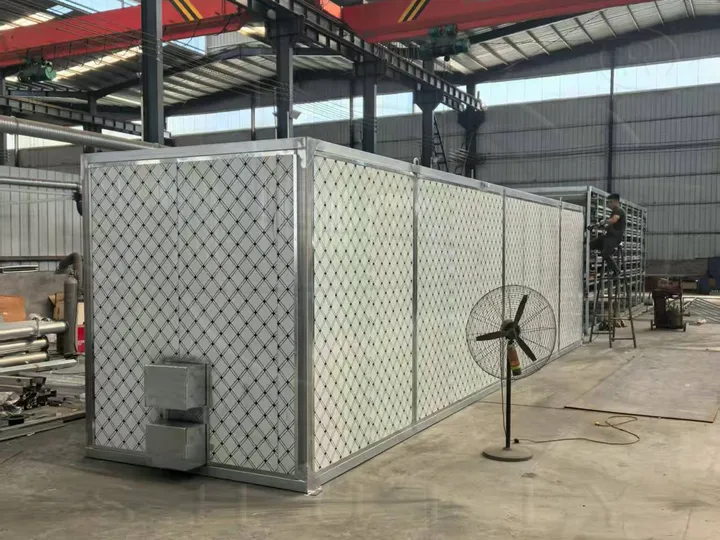
Our almond drying machine utilizes advanced heat pump technology combined with a box-type drying chamber design. This closed-system dryer creates a controlled environment where temperature, humidity, and airflow are precisely regulated to achieve uniform drying results. The system operates independently of weather conditions, enabling year-round almond processing with maximum efficiency.
Key Specifications
| Parameter | Specification |
|---|---|
| Model Range | SL-2 to SL-24 |
| Batch Capacity | 300–8000 kg |
| Temperature Range | 30–80°C |
| Drying Time | 10–15 hours |
| Power Consumption | 3–36 kW |
| Control System | PLC automatic control |
| Chamber Material | Galvanized steel / Stainless steel 304 |
| Insulation | 75 mm high-temperature rock wool |
Almond Drying Machine Technical Specifications
| Model | Dimensions(mm) | Drying crews | Quantity of drying material (times/kg) |
| SL-2 | 4000*1860*2500 | 2 | 300-600 |
| SL-4 | 6000*1860*2500 | 4 | 500-1000 |
| SL-6 | 7200*2300*2500 | 6 | 800-1500 |
| SL-8 | 8500*2300*2500 | 8 | 1000-2000 |
| SL-10 | 10000*2300*2500 | 10 | 1200-2500 |
| SL-12 | 8500*3300*2500 | 12 | 2500-4000 |
| SL-18 | 8500*5000*2500 | 18 | 4000-6500 |
| SL-24 | 12000*5000*2500 | 24 | 5000-8000 |
What Characteristics of Almonds Affect the Drying Process?
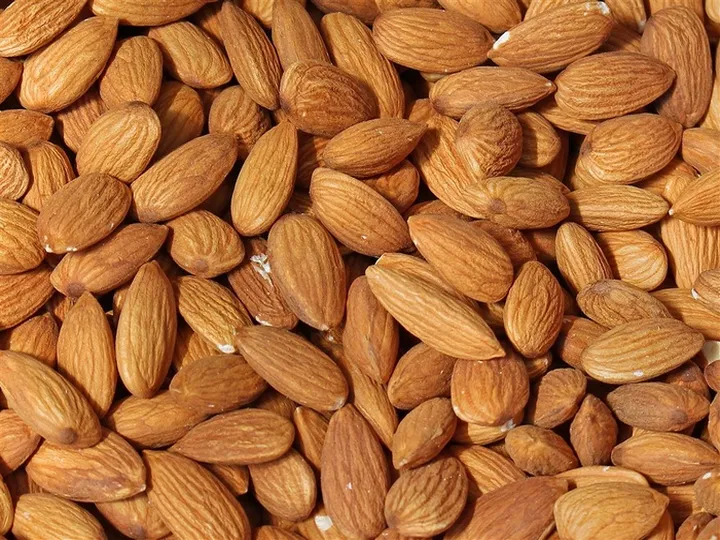
Almonds are a highly nutritious tree nut rich in healthy fats, protein, fiber, vitamins, and minerals. As one of the most consumed nuts globally, almonds are used in snacks, confectionery, baking, and almond milk production. Proper drying is crucial to maintain almond quality and market value.
Why Is Drying Important for Almond Processing and Storage?
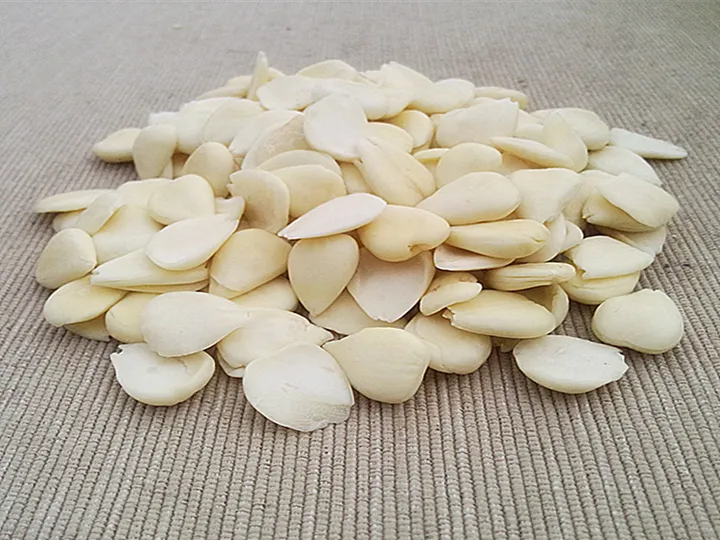
Freshly harvested almonds contain 20-30% moisture content, which promotes mold growth and aflatoxin contamination. Immediate drying after harvest is essential to prevent spoilage and ensure food safety. Properly dried almonds with moisture content below 6% can be stored for 18-24 months.
The drying process stabilizes almonds for storage, transportation, and processing. It preserves the nut’s natural flavor, texture, and nutritional properties while preventing rancidity and microbial contamination.
How Does a Heat Pump Dryer Compare with Traditional Almond Drying Methods?
Traditional almond drying relies on sun drying on the ground or trays, which takes 10-20 days depending on weather conditions. This method exposes almonds to dust, insects, birds, and soil contamination. The inconsistent drying leads to quality variations and potential aflatoxin development.
Our heat pump dryer provides controlled environment drying regardless of the weather. The system maintains precise temperature (35-50℃) and humidity levels, completing the drying process in 10-15 hours. The closed chamber prevents contamination while achieving uniform moisture reduction.
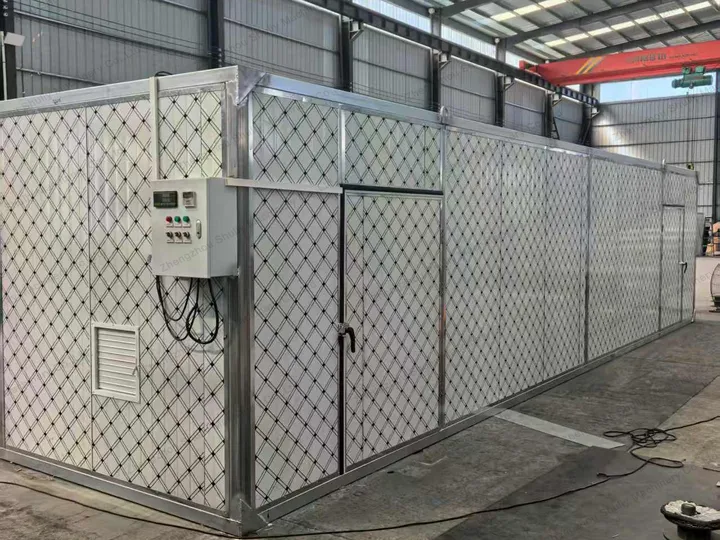
Advantages of Almond Drying Machine
- Energy Saving: Air-source heat pump uses 70% less energy than electric heating, reducing operating costs significantly
- Precise Control: Automatic temperature (30-80℃) and humidity control ensure optimal drying conditions for almonds
- Uniform Drying: 360° hot air circulation prevents hot spots and ensures consistent moisture content throughout the batch
- Food Safety: Enclosed stainless steel chamber meets food hygiene standards, preventing contamination
- Flexible Capacity: Batch capacity from 300-8000kg accommodates small farms to large processing facilities
- Weather Independent: Year-round operation, regardless of external weather conditions, enables continuous production
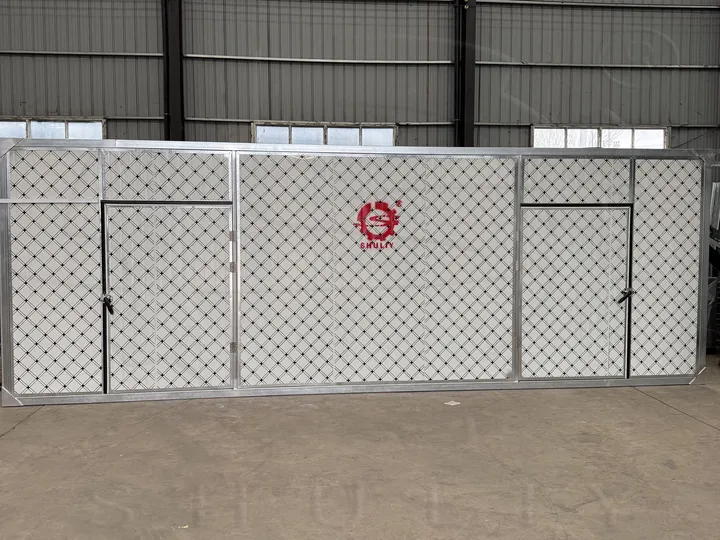
What Is the Complete Almond Drying Process?
The almond drying process involves four critical stages: preparation, pre-drying, main drying, and cooling. Each stage requires specific parameters to preserve almond quality and prevent kernel damage.
The following methods are for reference only. For more detailed guidance, please consult with the manufacturer. We will develop a more scientific and tailored almond drying solution based on your specific material conditions.
Preparation Stage
After hulling and shelling, almonds should be sorted to remove damaged or immature nuts. Clean almonds to remove shell fragments and dust. Spread almonds evenly on drying trays with a layer thickness of 4-6cm. Proper spacing ensures adequate air circulation around each nut.
Pre-drying Stage
Set the temperature to 35-40℃ for 2-3 hours. This gentle initial drying removes surface moisture and prevents case hardening. The gradual temperature increase protects the almond kernel from thermal shock. Moisture content reduces to approximately 18-20%.
Main Drying Stage
Increase the temperature to 45-50℃ for 8-12 hours. This phase removes bound moisture from the kernel interior. The heat pump dryer maintains stable conditions while efficiently removing humidity. Periodic tray rotation ensures uniform drying. Moisture content drops to 6-8%.
Final Drying Stage
Reduce the temperature to 40-45℃ for 2-3 hours for final moisture adjustment. This stage ensures moisture equilibrium throughout the kernel. Final moisture content should be 5.5-6.5% for optimal storage stability. Over-drying above 65℃ can cause oil migration and rancidity.
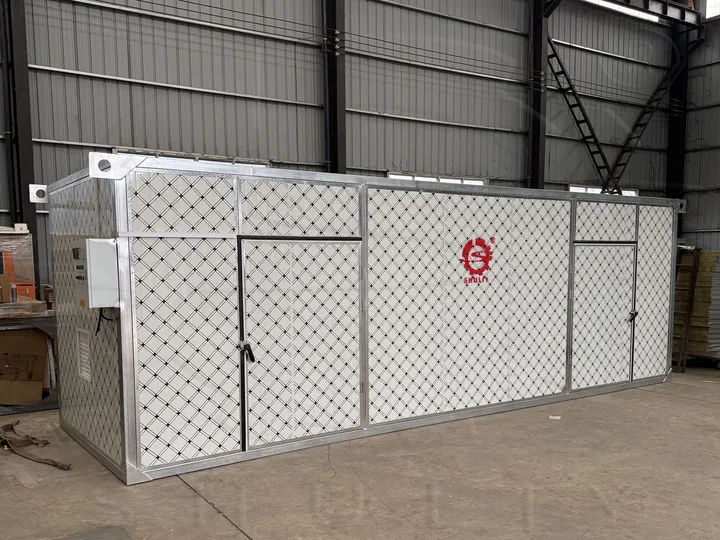
What Are the Technical Parameters of the Drying Room?
| Parameter | Specification | Customer Value |
|---|---|---|
| Model Range | SL-2 to SL-24 | 12 models from 300-8000kg capacity for precise matching |
| Temperature Range | 30-80℃ (Heat Pump) | Low-temperature drying preserves almond flavor and prevents oil oxidation |
| Batch Capacity | 300-8000 kg/batch | Scalable solution from farm-level to industrial processing |
| Energy Source | Air-source heat pump | 70% energy cost reduction compared to conventional electric heating |
| Control System | PLC automatic control | Automated operation with minimal labor requirement |
| Chamber Material | Galvanized steel/Stainless steel 304 | Food-grade certification compliant, corrosion resistant |
| Insulation | 75mm high-temperature rock wool | Superior heat retention, 20% energy efficiency improvement |
| Cycle Time | 10-15 hours/batch | Fast turnaround enables 2-3 batches per day |
| Final Moisture | 5.5-6.5% | Optimal for long-term storage without quality degradation |
| Power Consumption | 3-36 kW (model dependent) | Low operating cost, suitable for rural power supply |
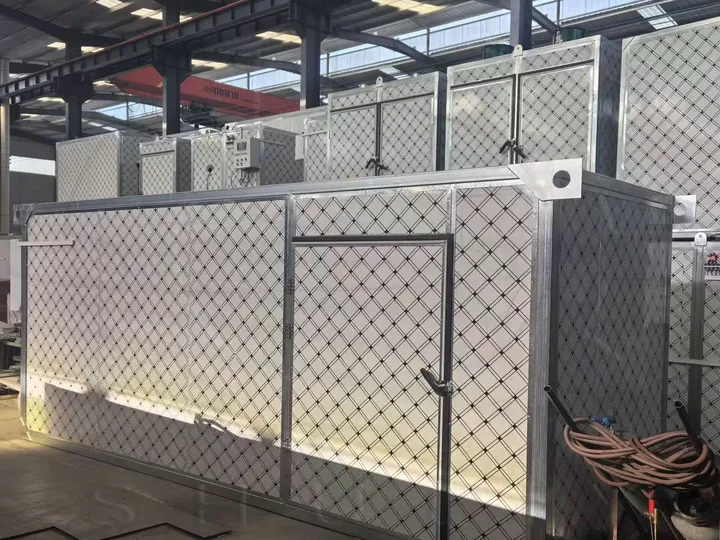
How Should an Almond Drying Machine Be Operated?
- Temperature Control: Never exceed 55℃ during drying to prevent oil migration and flavor degradation.
- Airflow Management: Maintain adequate spacing between trays to ensure uniform air distribution throughout the chamber.
- Quality Monitoring: Sample and test moisture content every 2 hours during the main drying stage.
- Material Handling: Avoid dropping or rough handling to prevent kernel breakage and quality loss.
- Cooling Procedure: Allow almonds to cool to room temperature before packaging to prevent condensation and moisture reabsorption.
- Storage Recommendations: Store dried almonds in airtight containers at 10-15℃ for a maximum shelf life of 18-24 months.
Attentions in Drying Process
- Temperature Limit: Never exceed 55℃ to prevent oil migration and flavor degradation
- Air Flow: Maintain adequate spacing between trays for uniform air distribution
- Moisture Testing: Sample and test moisture content every 2 hours during main drying
- Gentle Handling: Avoid dropping or rough handling to prevent kernel breakage
- Cooling Period: Allow almonds to cool to room temperature before packaging to prevent condensation
- Storage Conditions: Store dried almonds in airtight containers at 10-15℃ for maximum shelf life
What Benefits Can Properly Dried Almonds Provide?
- Builds brand reputation and customer satisfaction through reliable product quality
- Retains over 95% of nutritional value including vitamin E, magnesium, and healthy monounsaturated fats
- Preserves natural sweetness and crispy texture preferred by consumers
- Achieves 18-24 months storage stability with moisture content below 6%
- Maintains market quality during long-distance transportation
- Enables global export capability with consistent quality standards
Related Products for Almond Drying
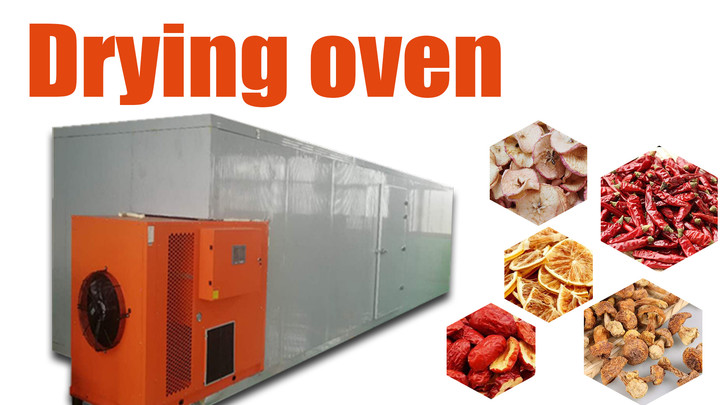
Stainless steel electric heating dryer ideal for small batch almond drying with precise temperature control and food-grade construction.

Continuous conveyor dryer for high-volume almond processing with automatic feeding, drying, and discharging capabilities.
FAQ
Can the almond drying machine be used for other nuts besides almonds?
Yes. The drying room can also be used for walnuts, cashews, pistachios, peanuts, hazelnuts, macadamia nuts, and other agricultural products. Different drying programs can be set according to the moisture content and characteristics of each material.
How many workers are required to operate the drying room?
Normally, one operator is enough. The PLC control system automatically manages temperature, humidity, and drying time, reducing manual intervention during the drying process.
Can the drying room be customized according to my factory space?
Yes. The drying room size, tray quantity, trolley configuration, and overall capacity can be customized according to the available workshop space and daily production requirements. Various models are available from small-scale to industrial-scale production.
What power supply options are available?
The machine can be customized according to local electrical standards, such as 220V, 380V, 415V, 50Hz, or 60Hz. Customers should provide local power specifications before production.
Is installation complicated?
No. The drying room adopts a modular design. Most components are pre-installed before shipment. Customers only need to assemble the chamber panels, connect the heat pump unit, and connect the power supply according to the installation manual.
How much energy does the almond drying machine consume?
Actual power consumption depends on the drying room model, batch capacity, ambient temperature, and moisture content of the almonds. Compared with traditional electric heating systems, heat pump technology can significantly reduce operating costs by utilizing heat from the surrounding air.
Can I monitor the drying process remotely?
Yes. Optional intelligent control systems can support real-time monitoring of drying temperature, humidity, and operating status. Some configurations also support remote troubleshooting and parameter adjustment
What materials are used for the trays and chamber?
Food-contact parts are available in SUS304 stainless steel, which provides excellent corrosion resistance, easy cleaning, and compliance with food processing hygiene standards.
Does the machine require frequent maintenance?
Routine maintenance is simple. Operators mainly need to clean the chamber, trays, air filters, and heat exchange components regularly. Proper maintenance helps ensure stable performance and extends equipment lifespan.
Can fresh almonds be dried directly after harvesting?
It is recommended to first remove the hulls and impurities before drying. Proper cleaning and sorting improve drying efficiency and help achieve more uniform final moisture content.
How long is the service life of the drying room?
With proper operation and regular maintenance, the drying room and heat pump system can typically operate for many years. The stainless steel structure and insulated chamber are designed for long-term industrial use.