

A blueberry drying machine removes moisture from fresh blueberries through controlled heat and airflow inside a sealed chamber. The most effective type for premium results is the heat pump drying room. It dries blueberries in stages, starting at a low temperature to protect the waxy skin and finishing at a higher temperature to reach the target moisture level.

The full process takes 18 to 20 hours for a typical batch and produces dried blueberries with 12–15% moisture, bright purple color, and preserved anthocyanins. Below is a complete breakdown of how the machine works from raw fruit to finished product.
Note before reading: If you are interested in the machine featured in this article, please click the three contact options on the right-hand pop-up window to get in touch with us. We will provide you with a quotation within 24 hours.
Why Do Blueberries Need Careful Drying?
Fresh blueberries contain more than 80% water. They also have a natural wax coating on the skin. If heat is applied too quickly, this wax layer seals the surface. The outside looks dry, but moisture remains trapped inside. This causes:
- Case hardening
- Uneven texture
- Fermentation inside the berry
- Mold during storage
- Dark color and flavor loss
A เครื่องอบบลูเบอร์รี่ solves this by using a staged temperature curve. The first stage uses low heat to open the skin gently. Later stages raise the temperature to remove internal moisture without overheating the fruit.
Pre-Treatment: The Step That Decides Quality
Before blueberries enter the drying room, they must be prepared correctly. Skipping any of these steps reduces final quality.
Step 1: Sorting
Remove unripe, overripe, damaged, and oversized berries. Uniform size helps every berry dry at the same rate.
Step 2: Washing
Rinse the berries gently in clean water. This removes dirt, dust, pesticide residue, and field debris. Do not soak them for too long, or they absorb extra water.
Step 3: Piercing the Wax Skin
This is the most important pre-treatment step. The natural wax on blueberry skin blocks moisture escape. Piercing creates tiny openings that allow water vapor to leave during drying. Common methods include:
- Soft needle drum
- Roller perforator
- Manual pricking for very small batches
Pierced berries lose water visibly faster during the first hour.
Step 4: Draining
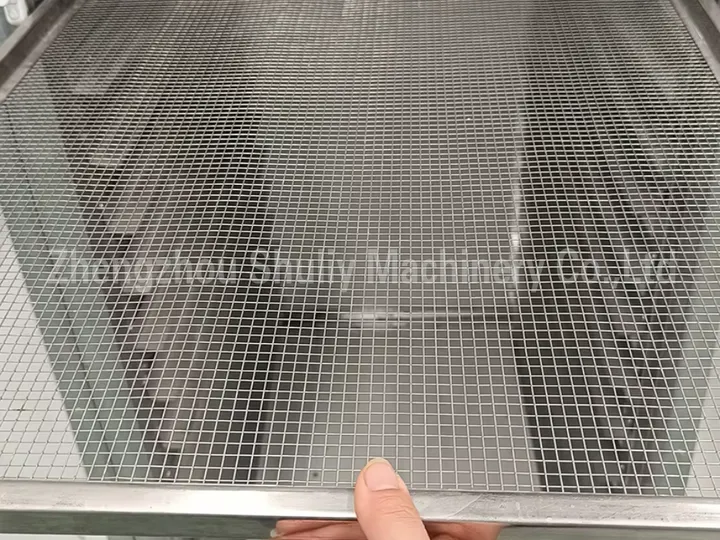
After washing and piercing, spread the berries on a mesh table or use a vibrating dewatering screen. Remove as much surface water as possible. Extra surface water extends the pre-drying stage.
Step 5: Loading Trays
Spread the berries in a single layer on stainless steel trays. Do not stack them. Stacked berries block airflow and dry unevenly. Leave small gaps between berries so hot air can reach every surface.

Loading the Heat Pump Drying Room
Once trays are loaded, they slide into trolleys. The trolleys roll into the sealed drying chamber. A typical Shuliy drying room holds 2 to 24 trolleys, depending on the model.
The chamber door closes, and the operator sets the drying program. The PLC control system then manages:
- อุณหภูมิ
- Relative humidity
- Air circulation speed
- Exhaust timing
The machine runs automatically until the cycle ends.
The Four Stages of Blueberry Drying
The drying process is divided into stages. Each stage has a different blueberry drying temperature, duration, and humidity target.
| ขั้นตอน | อุณหภูมิ | ระยะเวลา | ความชื้น | What Happens |
|---|---|---|---|---|
| Pre-drying | 45°C | 8 hours | 60–65% | Surface water evaporates slowly; skin opens without hardening |
| Main drying | 55°C | 6 ชั่วโมง | 45–50% | Internal moisture moves to the surface; most water leaves |
| Final drying | 60–65°C | 4 hours | ≤30% | Bound water is removed; berries reach 12–15% moisture |
| Total | — | 18–20 hours | — | — |

Stage 1: Pre-Drying at 45°C
The cycle begins at the lowest blueberry drying temperature. The heat pump warms air inside the chamber to 45°C. Circulating fans blow this air across the berry surfaces.
At this stage, the goal is to remove free water from the outside of the berry without shocking the skin. The wax layer softens and opens because of the gentle heat and airflow. Humidity stays high at first, around 60–65%, because the berries release a lot of moisture.
If the temperature were higher at this stage, the skin would harden and seal. This would trap water inside and ruin the texture.
Stage 2: Main Drying at 55°C
After the surface is no longer wet, the temperature rises to 55°C. This is the longest dehydration stage. The warmer air creates a stronger moisture difference between the inside and outside of the berry. Water moves from the center to the surface and then evaporates.
The exhaust fan removes humid air from the chamber and replaces it with dry air. Humidity drops to 45–50%. The berries begin to shrink and wrinkle evenly.
Stage 3: Final Drying at 60–65°C
In the last stage, the temperature rises to 60–65°C. This removes the remaining bound water inside the fruit. Humidity falls below 30%. The berries finish at 12–15% moisture.
This temperature must never exceed 68°C. Higher heat causes:
- Dark brown or black color
- Anthocyanin breakdown
- Sugar caramelization
- Loss of nutritional value
The PLC controller prevents this by holding the temperature within the safe range.
Stage 4: Cooling and Conditioning
After the heating cycle ends, the machine turns off the heat but continues gentle airflow. The berries cool inside the chamber for 1–2 hours. This allows internal moisture to balance between the center and surface.
Then the trays are removed. The berries rest at room temperature for another 1–2 hours before sorting and packaging.

What Does the Heat Pump Inside the Blueberry Dryer?
The heat pump is the heart of the drying room. It works like an air conditioner in reverse:
- It absorbs heat from the surrounding air.
- A compressor raises the temperature of the heat.
- The hot refrigerant transfers heat into the drying chamber.
- Moist air leaving the chamber passes over a cold coil, where water condenses and drains away.
- The dried, warmed air re-enters the chamber.
This process recycles heat instead of wasting it. For every 1 kW of electricity, the heat pump produces 3–6 kW of heat. This makes it far more efficient than pure electric heating.


Sorting and Packaging
After cooling, workers sort the dried blueberries by size, color, and moisture. Defective berries are removed. The acceptable product goes into packaging.
Packaging must be airtight. Many producers add oxygen absorbers to extend shelf life. At 12–15% moisture and packed correctly, dried blueberries store for 12–18 months.
Common Mistakes to Avoid
- Skipping wax piercing: Berries will not dry evenly.
- Stacking berries: Always use a single layer.
- Starting too hot: Causes case hardening and juice leakage.
- Exceeding 68°C: Ruins color and nutrition.
- Opening the door during drying: Lets in humid air and disrupts the cycle.
- Packing warm berries: Creates condensation and mold.

Why Use a Shuliy Heat Pump Blueberry Drying Machine?
Shuliy’s heat pump drying rooms are built for processors who need reliable quality. Key advantages include:
- Sealed stainless steel chamber for food safety
- PLC automatic temperature and humidity control
- Forced hot-air circulation for uniform drying
- Energy-efficient heat pump operation
- Batch capacity from 300 kg to 8,000 kg
- 1-year warranty and lifetime technical support

Get Help with Your Blueberry Drying Process
If you want to dry blueberries commercially with consistent color and high anthocyanin retention, a heat pump blueberry drying machine is the right choice.
Contact Shuliy today for a free drying curve design and equipment quote. Click the contact window on the right to get in touch with us. We will provide you with a quotation within 24 hours.
