
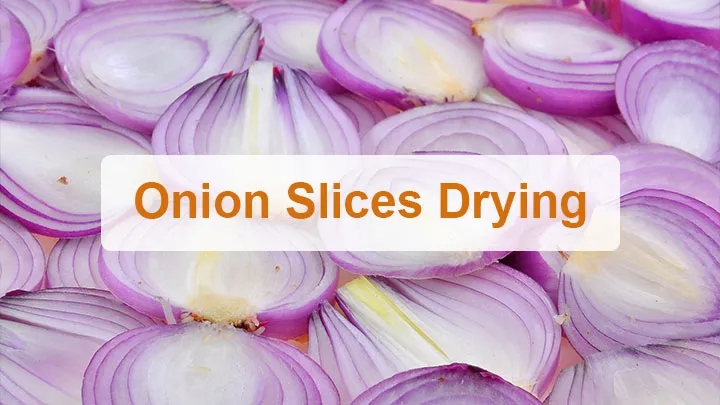
The onion slices drying machine is a continuous conveyor dryer built around a multi-layer stainless steel mesh belt system. It processes 400–14,000 kg of fresh onion slices per hour depending on the configuration. Sliced onions enter at 85–90% moisture. The system reduces this to 7–10% moisture in 2.5–4 hours. Dried onion slices are ready for seasoning, snack manufacturing, foodservice packaging, or further grinding into onion powder.
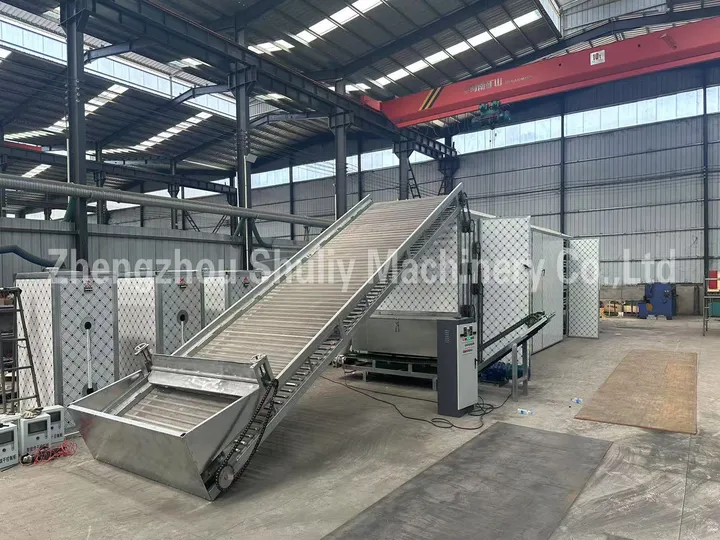
Conventional sun drying takes 3–5 days. It exposes onion slices to contamination and weather damage. This onion dryer operates continuously at 55–75°C in a sealed tunnel. Hot air circulates through 3 mm stainless steel mesh belts. Moisture is removed evenly from each slice. A PLC control system adjusts belt speed, temperature, and airflow in real time. The multi-layer design reduces floor space by 60% compared to single-layer dryers. A 1-ton-per-hour line fits into a 22 m × 4 m workshop area.
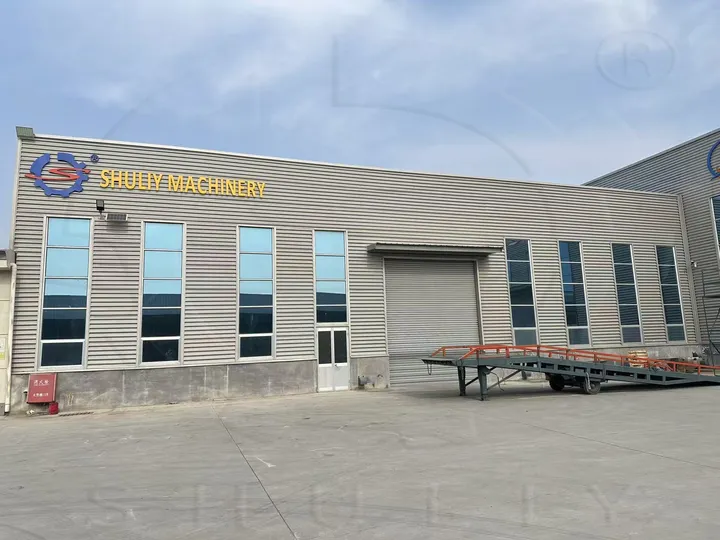
Shuliy has manufactured industrial drying equipment for over 20 years. The company has exported mesh belt dryers to more than 30 countries. All food-contact surfaces use 304 stainless steel. Frame options include carbon steel and galvanized steel. The system meets EU and FDA food-contact material standards. A 12-month warranty covers all mechanical and electrical components. Lifetime technical consultation is included.
Why Do Onion Slices Require Controlled Drying?
Onions contain 85–90% water. They also contain high levels of reducing sugars. These properties create specific drying challenges.
| Drying Challenge | Beschreibung |
|---|---|
| Sugar Caramelization | Temperatures above 80°C cause sugars to brown. Dried onion slices turn dark and develop bitter flavor. Market value drops significantly. |
| Case Hardening | Rapid surface drying traps moisture inside. The outer layer becomes hard. The center remains wet. Mold grows during storage. |
| Uneven Shrinkage | Irregular airflow causes slices to curl or break. Broken pieces increase waste in packaging lines. |
| Sulfur Compound Loss | Onion flavor comes from volatile sulfur compounds. Overheating drives these compounds away. The final product loses pungency. |
The Shuliy onion slices drying machine solves these problems through zoned temperature control. Air circulates at 55–75°C. Belt speed is adjustable from 0.1–1.5 m/min. Slice thickness stays at 3–5 mm. Moisture is removed gradually. Color remains light golden. Flavor compounds are preserved.
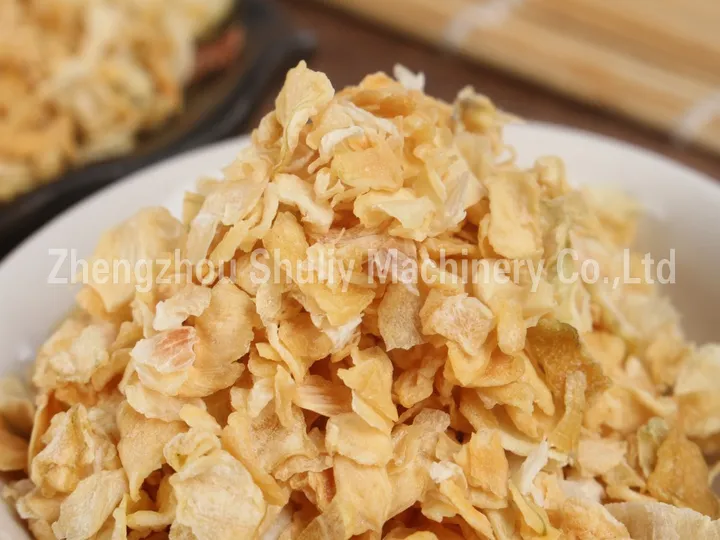
1-Ton/Hour Onion Slice Drying Solution
Production Requirements
| Artikel | Wert |
|---|---|
| Dried onion slice output | 1,000 kg/h |
| Final moisture | 7–10% (wet basis) |
| Fresh onion slices required | 4,500–5,000 kg/h |
| Water removal target | 3,500–4,000 kg/h |
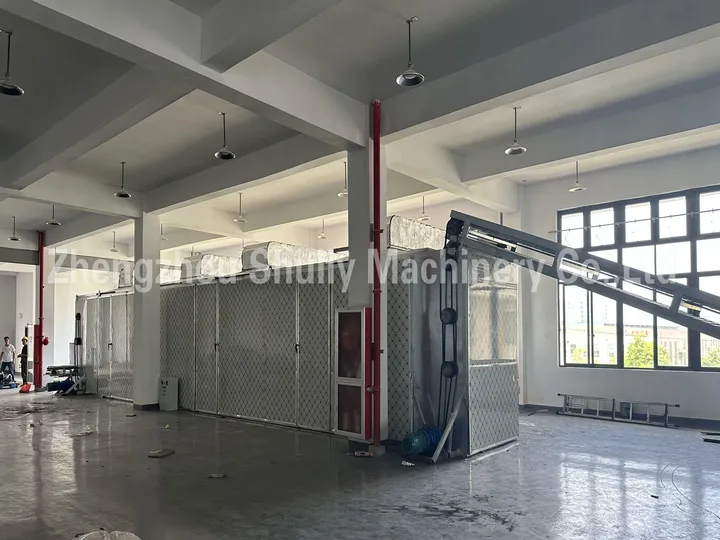
Recommended Machine Configuration
Two SL-2-20 four-layer mesh belt dryers operate in parallel. Each unit provides 500–600 kg/h of dried onion output. This configuration provides redundancy and easier maintenance scheduling.
| Parameter | Wert |
|---|---|
| Modell | SL-2-20 × 2 units |
| Belt Width | 2 m per unit |
| Drying Length | 20 m per unit |
| Schichten | 10 per unit |
| Gurtmaterial | 304 stainless steel, 3 mm holes |
| Trocknungstemperatur | 55–75°C (three-zone control) |
| Trockenzeit | 2.5–4 hours |
| Layer Thickness | 30–50 mm |
| Total Power | 36.8 kW per unit (73.6 kW total) |
| Wärmquelle | Air-source heat pump + natural gas hot air furnace |
| Footprint (per unit) | 21.56 m × 2.32 m × 2.5 m |
| Operators | 2–3 persons per shift |
Alternative Single-Line Option
A custom SL-2-30 unit (30 m drying length, 2 m belt width) can replace the two-unit configuration. This option requires custom engineering. It reduces operator count but has a longer lead time.
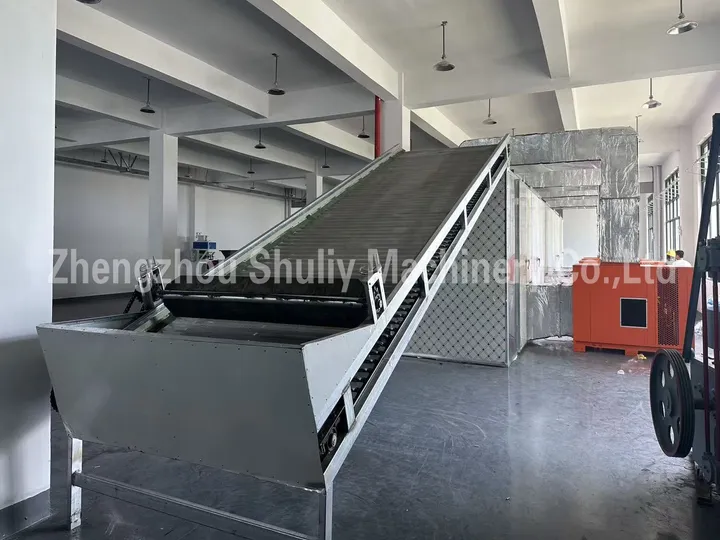
Technical Specifications of Onion Slices Drying Machine Standard Models
| Modell | SL-1.2-8 | SL-1.2-10 | SL-1.6-8 | SL-1.6-10 | SL-2-8 | SL-2-10 | SL-2-20 |
|---|---|---|---|---|---|---|---|
| Schichten | 4 | 5 | 4 | 5 | 4 | 5 | 10 |
| Gurtbreite (m) | 1.2 | 1.2 | 1.6 | 1.6 | 2 | 2 | 2 |
| Trocknungslänge (m) | 8 | 10 | 8 | 10 | 8 | 10 | 20 |
| Materialdicke (mm) | 10–80 | 10–80 | 10–80 | 10–80 | 10–80 | 10–80 | 10–80 |
| Service-Temperatur (°C) | 50–140 | 50–140 | 50–140 | 50–140 | 50–140 | 50–140 | 50–140 |
| Trocknungszeit (h) | 0,2–1,2 | 0,25–1,5 | 0,2–1,2 | 0,25–1,5 | 0,2–1,2 | 0,2–1,5 | 0,5–3 |
| Trocknungskapazität (kg/h) | 60–160 | 80–220 | 75–220 | 95–250 | 100–260 | 120–300 | 240–600 |
| Gesamtleistung (kW) | 11.4 | 13.6 | 11.4 | 13.6 | 14.7 | 15.8 | 36.8 |
| Länge (m) | 9.56 | 11.56 | 9.56 | 11.56 | 9.56 | 11.56 | 21.56 |
| Breite (m) | 1.49 | 1.49 | 1.9 | 1.9 | 2.32 | 2.32 | 2.32 |
| Höhe (m) | 2.3 | 2.3 | 2.4 | 2.4 | 2.5 | 2.5 | 2.5 |
| Gesamtgewicht (kg) | 4,500 | 5,600 | 5,300 | 6,400 | 6,200 | 7,500 | 14,000 |
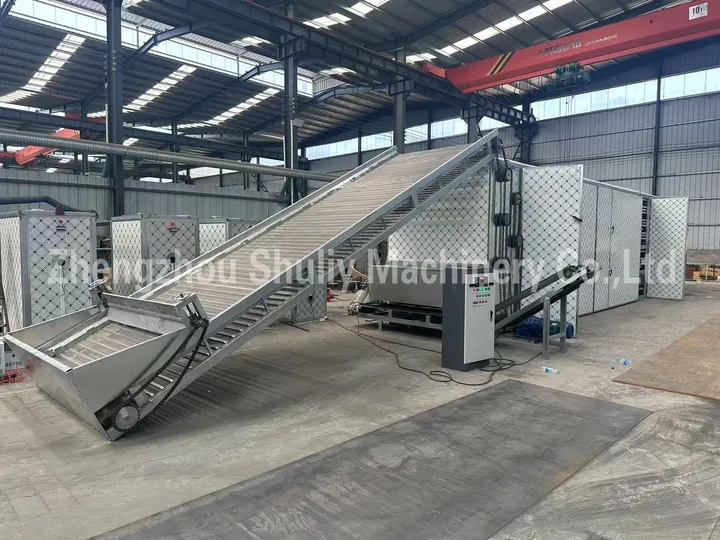
What Are the Key Features of the Onion Slices Dryer?
Continuous Multi-Layer Drying
Fresh onion slices feed continuously onto the top mesh belt. They transfer automatically between layers through reversing stations. This multi-pass design increases effective drying area. A 20 m machine provides up to 80 m of effective belt travel across 10 layers. Output is 4–6 times higher than a single-layer dryer of the same footprint.
Zoned Temperature Control
The drying tunnel divides into three temperature zones.
| Zone | Betriebstemperatur | Funktion |
|---|---|---|
| Zone 1 | 55–60°C | Gentle surface moisture removal |
| Zone 2 | 65–70°C | Main drying |
| Zone 3 | 55–60°C | Final conditioning |
Each zone has independent temperature sensors and hot air circulation fans.
Stainless Steel Food-Grade Construction
The mesh belt, side baffles, and discharge chutes are fabricated from 304 stainless steel. The 75 mm rock wool insulation shell minimizes heat loss. The frame uses galvanized square tubes. The design resists corrosion from onion acids and sugars.
Adjustable Belt Speed
The main drive motor with reducer provides stepless speed regulation. Belt speed ranges from 0.1–1.5 m/min. Operators adjust drying time based on slice thickness and initial moisture. Thicker slices or higher moisture require slower belt speed.
Automated Hot Air Circulation
Centrifugal fans force hot air through the onion layer from bottom to top. Airflow is reversed between layers for uniform drying. Moist air is exhausted through humidity-controlled dampers. Fresh air is preheated and mixed with recirculated air to save energy.
Customizable Heat Sources
The dryer supports air-source heat pump, electric heating, natural gas, coal, biomass pellet, or steam heat exchanger.
For onion processing, air-source heat pump plus natural gas is recommended. This combination balances energy cost and drying speed.
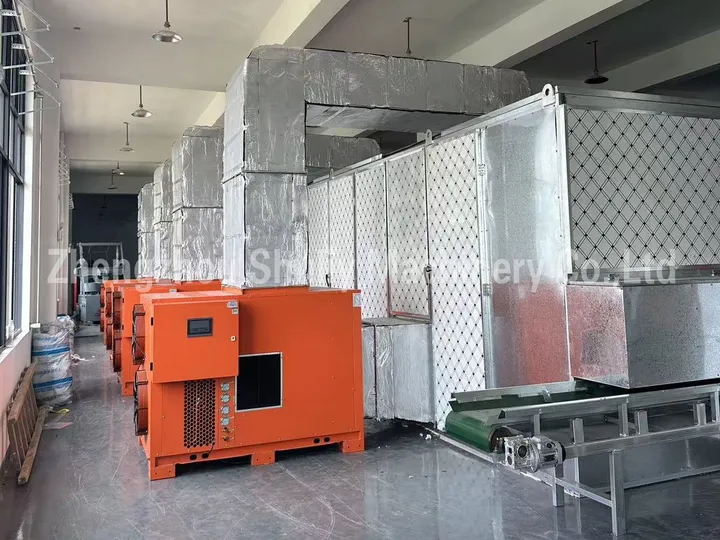
How Does the Onion Slices Drying Machine Work?
The continuous conveyor dryer operates on a forced-hot-air drying principle. Sliced onions move through a temperature-controlled tunnel on perforated mesh belts.
1. Feeding
An elevator conveyor or screw feeder distributes onion slices evenly onto the top mesh belt. A leveling gate controls layer thickness at 30–50 mm.
2. First Pass
Hot air flows upward through the onion layer. Surface moisture evaporates. Slices move to the end of the belt.
3. Layer Transfer
A reversing drum flips slices onto the next lower belt. This turning action exposes wet surfaces. Airflow direction reverses.
4. Multi-Pass Drying
Slices pass through 4–10 layers. Each layer exposes a new surface to hot air. Moisture content drops gradually.
5. Discharge
Dried slices exit the final belt onto a cooling conveyor. A moisture sensor verifies final moisture at 7–10%.
6. Air Handling
Exhaust fans remove humid air. Fresh makeup air is heated and recirculated. Energy recovery reduces fuel consumption by 30–40%.
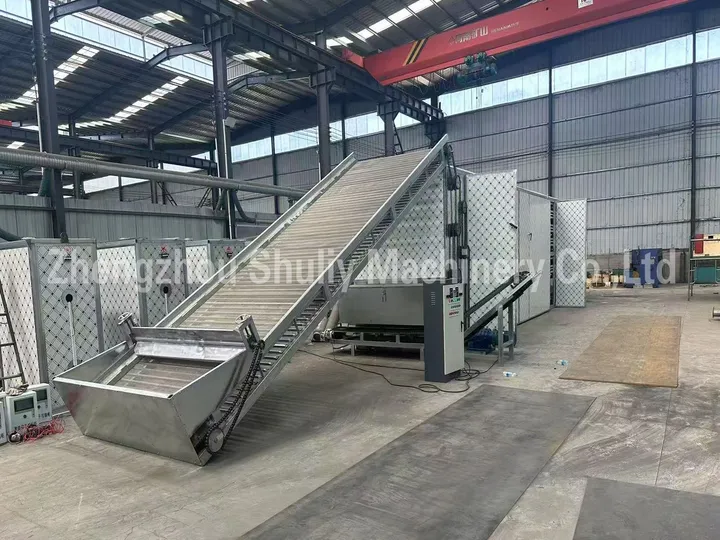
Onion Slice Drying Process: Step by Step
Stage 1: Peeling and Slicing
Raw onions pass through a peeling machine. A slicer cuts them into 3–5 mm thick rings or half-moon slices. Uniform thickness ensures consistent drying time.
Stage 2: Washing and Draining
Slices are rinsed to remove skin fragments and sugars. A vibrating dewatering screen removes free surface water. This step reduces initial drying load by 10–15%.
Stage 3: Loading and Spreading
The feeding system spreads slices in a 30–50 mm layer across the mesh belt. Side baffles prevent spillage. A leveling gate ensures uniform thickness.
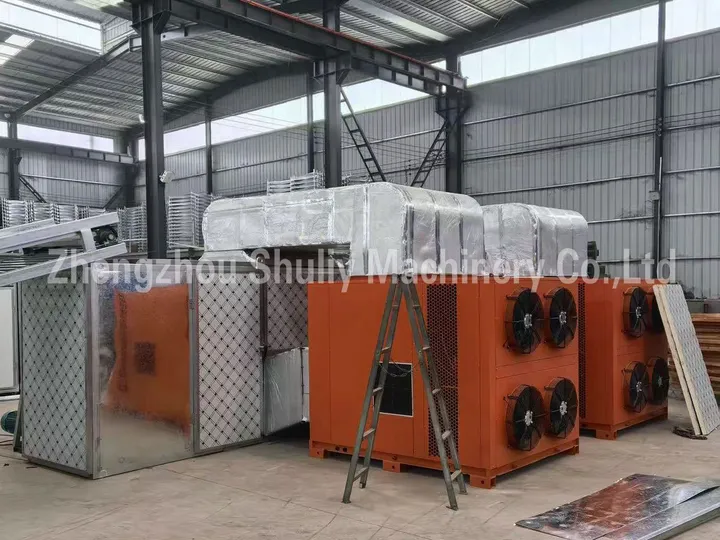
Stage 4: Zoned Drying
| Drying Zone | Temperatur | Zeit | Funktion |
|---|---|---|---|
| Zone 1 | 55–60°C | 30–40 min | Surface moisture removal. Prevents case hardening. |
| Zone 2 | 65–70°C | 90–120 min | Main moisture removal. Water content drops from 60% to 20%. |
| Zone 3 | 55–60°C | 30–40 min | Final conditioning. Moisture equilibrates to 7–10%. |
Stage 5: Cooling and Packaging
Dried slices discharge onto a cooling conveyor. Temperature drops to ambient. Slices transfer directly to a packaging machine or storage silo. Packaging uses moisture-barrier bags to prevent rehydration.
Who Needs an Onion Slices Belt Dryer Machine?
| Customer Type | Anwendung |
|---|---|
| Dehydrated Vegetable Processors | Produce 1,000 kg/h of dried onion for food manufacturing. A two-unit SL-2-20 line handles this capacity continuously. |
| Seasoning and Spice Companies | Supply dried onion flakes and granules to soup, sauce, and snack manufacturers. Uniform moisture ensures consistent grinding. |
| Onion Powder Producers | Dried slices at 7–10% moisture mill into fine powder with minimal clumping. Powder yield improves by 12–15% compared to unevenly dried material. |
| Foodservice Suppliers | Package dried onion slices for institutional kitchens and ready-meal producers. Long shelf life reduces inventory waste. |
| Onion Farms and Cooperatives | Add value to surplus or blemished onions. A single SL-2-10 unit (120–300 kg/h) serves medium-sized farms. |
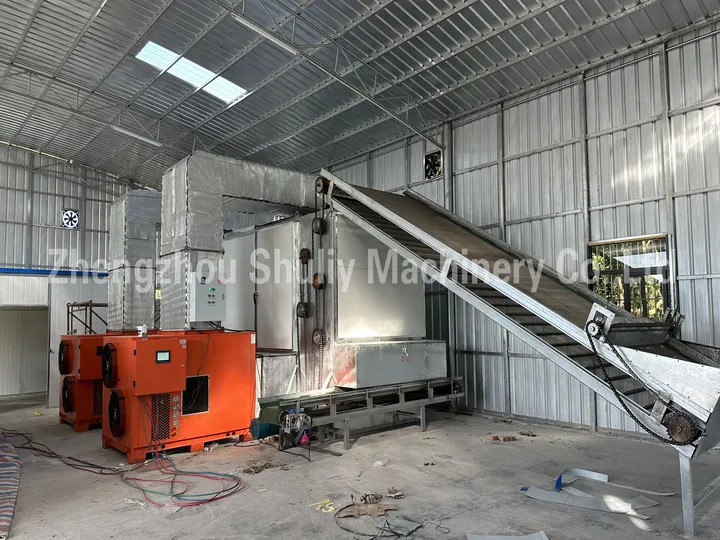
Solving Common Onion Slice Drying Challenges
| Customer Pain Point | Shuliy-Lösung | Result |
|---|---|---|
| Browning from sugar caramelization | Zoned temperature control with maximum 75°C | Light golden color maintained; no bitter off-flavors |
| Case hardening and mold risk | Layer thickness 30–50 mm with multi-pass airflow | Moisture uniformity within ±1% across the batch |
| High breakage during drying | 3 mm stainless steel mesh belt with gentle transfer drums | Whole slice rate above 92% |
| Inconsistent moisture for grinding | Final moisture controlled at 7–10% with online sensor | Onion powder particle size uniformity improves |
| High energy cost for water removal | Air-source heat pump + exhaust air recirculation | 30–40% reduction in energy cost per kg of water removed |
| Seasonal harvest peaks | Modular SL-2-10 and SL-2-20 units; expandable layout | Capacity scales from 300 kg/h to 1,200 kg/h |
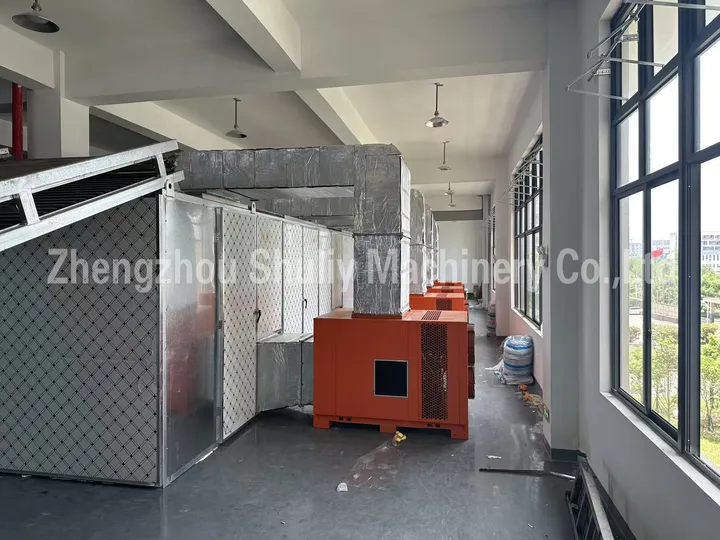
Why Choose Shuliy Onion Drying Equipment?
- Proven Conveyor Technology: Thousands of installed belt dryers across food processing sectors. System reliability is validated in real-world production.
- Application-Specific Design: Drying protocols for onion slices, garlic slices, ginger slices, and other vegetables are pre-programmed into the PLC. Commissioning time is reduced.
- Full Material Traceability: All stainless steel components carry mill test certificates. Chamber insulation meets fire-rating standards for international export.
- Integrated Processing Lines: Shuliy supplies onion peelers, slicers, washing machines, and packaging systems. Turnkey dehydrated onion projects are supported.
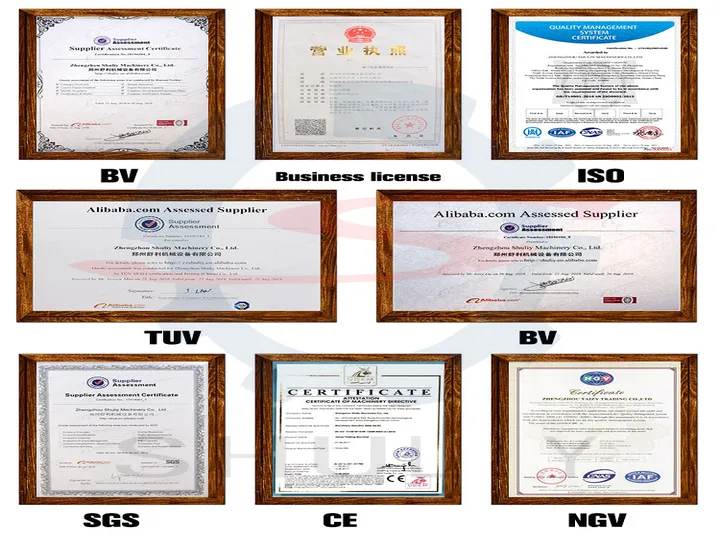
- Global Export Experience: CE-certified electrical systems. Multi-voltage compatibility (220V/380V/415V/460V). ISPM- 15-compliant export packing ensures smooth customs clearance.
Frequently Asked Questions
What is the ideal thickness for onion slices before drying?
Onion slices should be 3–5 mm thick for continuous belt drying. Thinner slices dry faster but break more easily. Thicker slices require longer drying time and may retain moisture in the center. A 4 mm thickness provides the best balance between drying speed and whole-slice yield.
How much fresh onion is needed to produce 1 ton of dried onion per hour?
Fresh onion contains 85–90% moisture. To produce 1,000 kg/h of dried onion at 7–10% moisture, you need approximately 4,500–5,000 kg/h of fresh sliced onions. Water removal is 3,500–4,000 kg/h.
Can the onion slices drying machine handle red, white, and yellow onions?
Yes. The same machine processes all common onion varieties. Red onions require slightly lower drying temperatures (55–70°C) to preserve color. White and yellow onions tolerate temperatures up to 75°C. Each variety has a pre-programmed drying profile in the PLC.
What heat source is most economical for onion drying?
For most regions, a combination of air-source heat pump and natural gas hot air furnace offers the lowest operating cost. The heat pump handles the initial low-temperature drying. Natural gas provides the high-temperature air needed for the main drying phase. Electric heating is suitable for small-scale operations where gas is unavailable.
How many operators are needed to run a 1-ton/hour onion drying line?
A two-unit SL-2-20 line requires 2–3 operators per shift. One operator monitors the control panel. One operator feeds raw onions and inspects slice quality. One operator handles packaging and final product inspection. Automation reduces labor compared to batch drying rooms.
Can dried onion slices be used directly for powder production?
Yes. Onion slices at 7–10% moisture are ideal for grinding into powder. The low moisture prevents clumping during milling. It also extends the shelf life of the final powder to 18–24 months when packaged in moisture-barrier containers.
What is the typical payback period for an onion drying line?
Payback depends on local onion prices and dried onion selling prices. Most customers achieve payback within 12–24 months when operating 8–12 hours per day during the harvest season. The continuous design allows 24-hour operation with minimal additional labor.
Related Equipment
If you have a limited budget, an intermittent box-type drying machine would be a more economical choice.
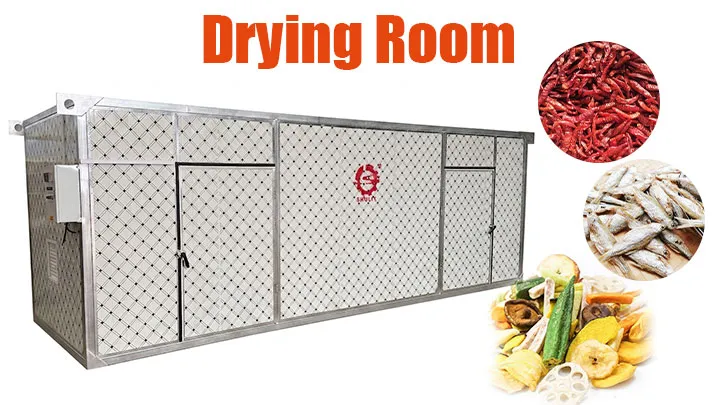
Industrial Box-Type Drying Room
This modular sealed hot air drying chamber covers complete standard models from SL-2 to SL-24 with single batch processing capacity ranging 300–8000kg. The whole frame adopts thick galvanized square pipes, filled with a high-density rock wool thermal insulation layer; internal trays and material contact parts are all made of food-grade SUS304 stainless steel. Equipped with multi-group circulating fans, an automatic moisture exhaust system and a PLC intelligent temperature & humidity control cabinet, it supports air source heat pump, electric heating, sulfur-free coal, biomass and gas multiple heat source matching. Adjustable drying temperature and automatic constant humidity operation effectively lock material color and nutrients. Beyond fruits, vegetables, seafood and Chinese medicinal herbs, it can dry textiles, leather, grain, sludge and various industrial raw materials. Featuring fully closed hot air circulation and batch-independent drying, it delivers uniform low-moisture finished products for fruit and vegetable processing plants, herbal factories, textile dyeing mills and agricultural waste treatment manufacturers.
Core Advantages
- Ultra-Wide Material Compatibility: Adaptable to flaky, strip, block and granular agricultural, aquatic, medicinal and industrial materials; tray quantity and internal space customizable for different material stacking demands.
- Batch Large-Capacity Production: Multi-model capacity gradient design covers small workshops to large industrial plants, only 1–2 operators required to complete feeding and discharging, cutting labor costs greatly.
- Full-Range Uniform Hot Air Circulation: Multi-angle cross-flow air duct layout eliminates dead air zones, avoiding local over-drying or incomplete dehydration to keep consistent color and moisture of finished goods.
- Flexible Multi Heat Source Matching: Multiple heating options to match local energy prices and factory conditions; air source heat pump model achieves ultra-low operating cost with high heat conversion efficiency.
- Intelligent Constant Temperature & Humidity Control: PLC automatic system auto-adjusts heating, air circulation and dehumidification; preset drying procedures realize unattended operation with overheat safety protection.
- Energy-Saving Insulated Sealed Structure: Thickened rock wool sandwich panel minimizes heat loss; fully sealed door with silicone sealing strips prevents hot air leakage and improves thermal utilization rate.
- Customized Layout & Full After-Sales Service: 12-month full machine warranty with online remote debugging and on-site assembly guidance; chamber size, tray number, heat source configuration and control mode can be customized according to workshop area and output targets.
Click the contact window on the right to get in touch with us. We will provide you with a quotation within 24 hours.