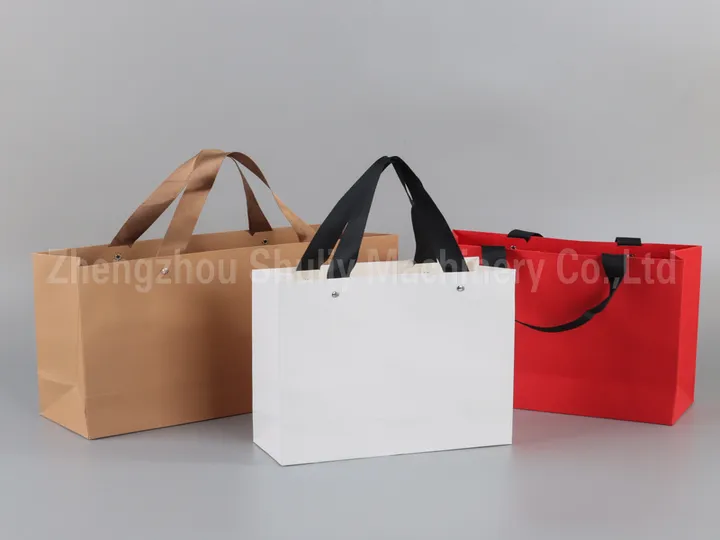
The paper bag drying machine is an industrial device specially designed for paper packaging materials, such as kraft paper bags and paper-plastic composite bags.
It mainly uses hot air circulation or microwave drying to quickly remove moisture, ensuring the bags dry evenly without deformation or cracking. The machine can be made as a batch dryer or a continuous production line to meet different production needs. Below, two types of paper bag drying machines are introduced.
Why Use a Paper Bag Drying Machine?
- Fast Drying: Quickly removes moisture from paper bags, more efficient than air drying, suitable for large-scale production.
- Stable Quality: Controlled drying prevents unevenness or mold, ensuring bag strength and appearance.
- Hygiene Assurance: High-temperature drying reduces microbial growth, ideal for food and medical packaging.
- Easy Storage and Transport: Dried bags resist moisture and deformation, reducing storage and transport losses.
- Continuous Production: Can be integrated into production lines for automated, continuous operation, improving efficiency.
- Protects Printing: Even drying keeps patterns clear and surfaces smooth.
Paper Bag Drying Process
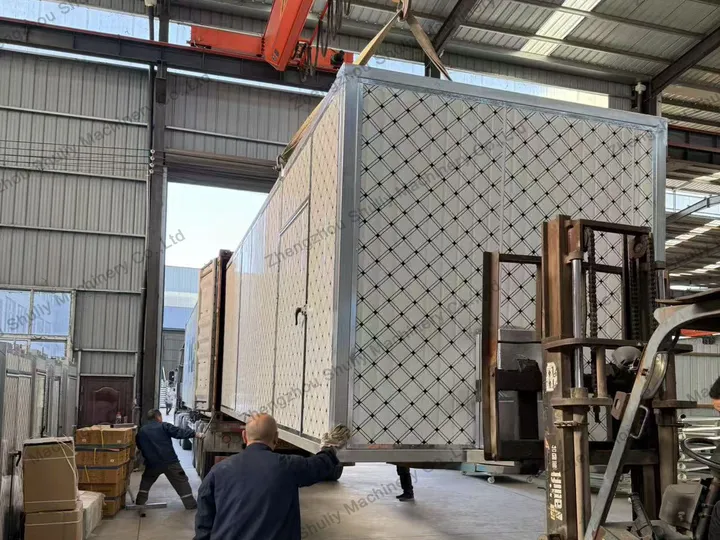
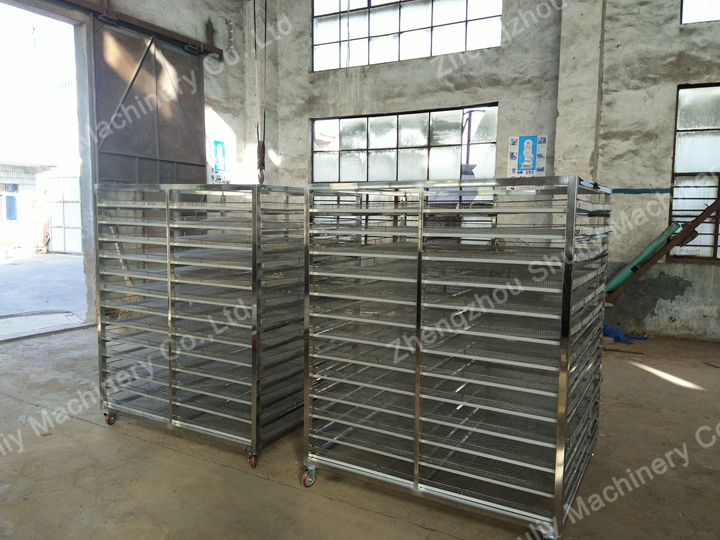
- Loading/Conveying: Place paper bags into the drying machine and send them into the drying chamber via conveyor or tray.
- Heating and Drying: Heat the bags with hot air or microwave to evaporate moisture.
- Moisture Exhaust: Evaporated water is removed through the exhaust system to maintain a dry environment.
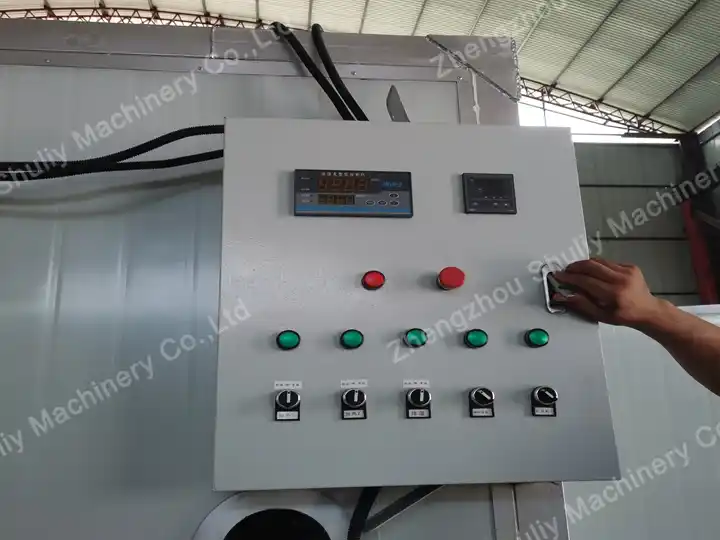
- Temperature Control: Adjust temperature and drying time based on bag material and thickness to prevent deformation or scorching.
- Discharge/Cooling: Dried bags exit the machine and can be cooled before packaging or storage.
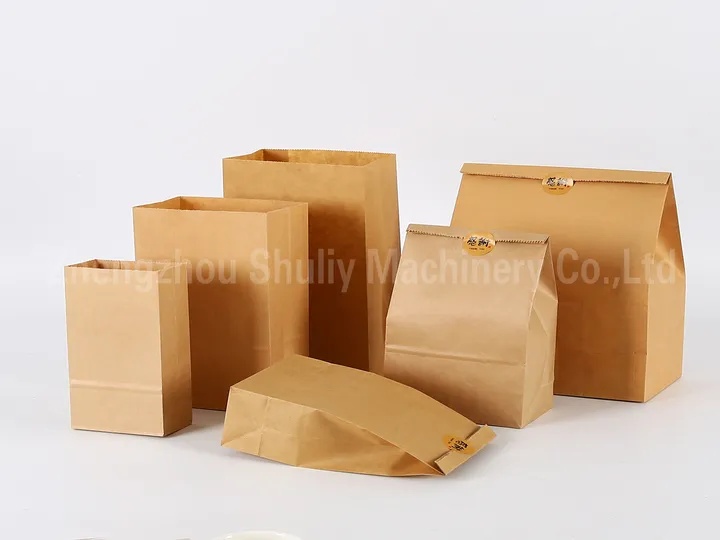
Key Points for Temperature Control in Paper Bag Dryer
- Suitable Temperature: For ordinary kraft paper bags, hot air drying is 50–70 ℃; thicker or composite bags can go up to 100 ℃. Microwave drying power is adjustable, equivalent to 80–120 ℃.
- Even Heating: Ensure uniform temperature across the bag to prevent scorching or wrinkles.
- Temperature-Time Matching: Higher temperatures require shorter drying times, lower temperatures need longer times, avoiding overexposure or incomplete drying.
- Moisture Exhaust: Maintain good ventilation or dehumidification during drying to remove moisture efficiently.
- Adjust by Use: Food and medical packaging bags require gentle, even drying; high-quality or printed bags need strict temperature control.
Type 1: Hot Air Paper Bag Drying Machine
Working Principle
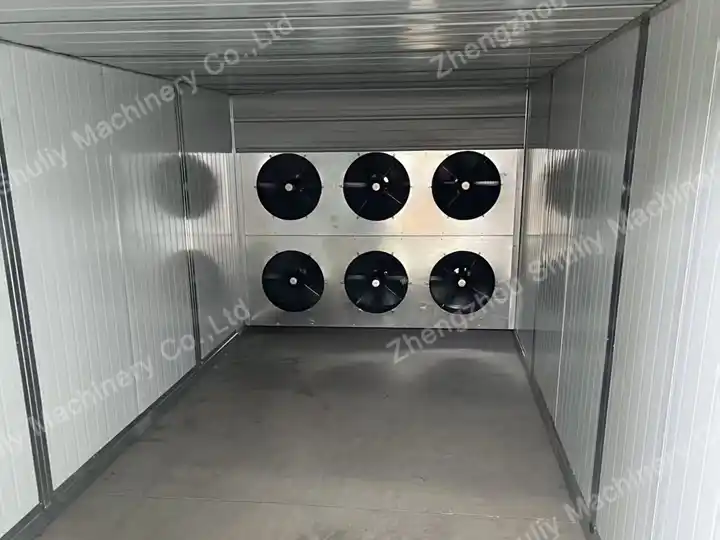
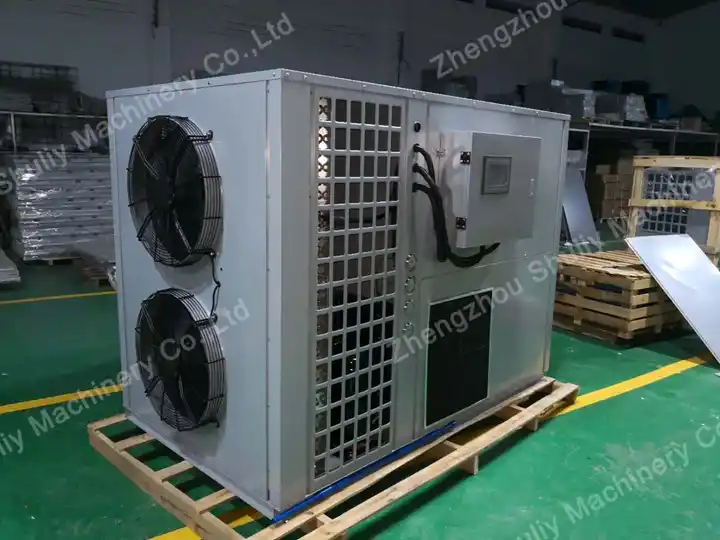
- Air Heating: The air is heated to the set temperature using an air energy heat pump.
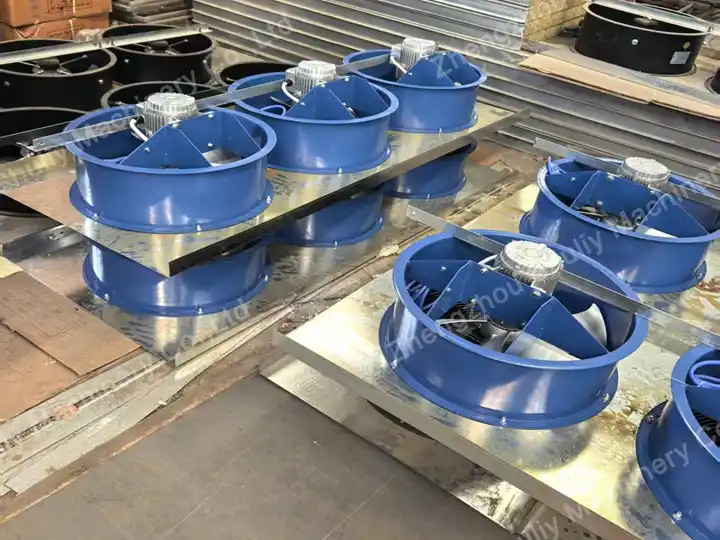
- Air Circulation: Hot air circulates evenly in the drying chamber with a fan, surrounding the paper bags.
- Moisture Evaporation: Moisture in the bags evaporates under heat and is carried away by the hot air.
- Moisture Exhaust: Humid air is removed through the exhaust system to maintain drying efficiency.
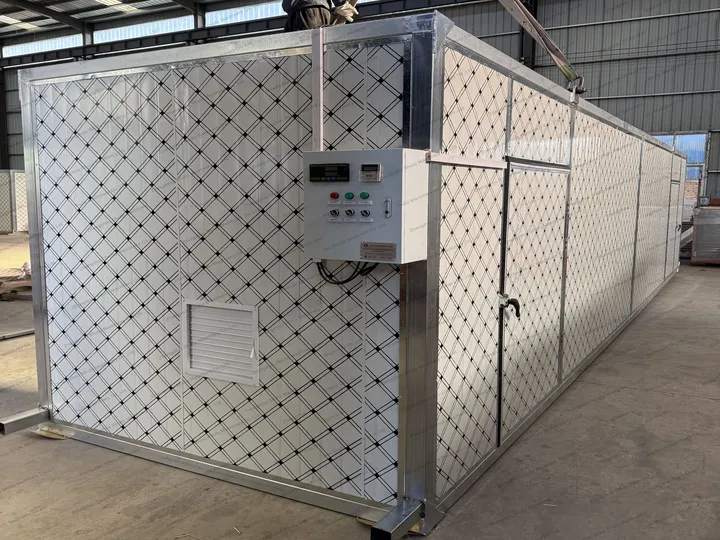
Features
Suitable for batch drying and continuous production. Temperature is controllable and does not easily damage bag structure.
Technical Parameters
| Model | Dimensions(mm) | Drying crews | Quantity of drying material (times/kg) |
| SL-2 | 4000*1860*2500 | 2 | 300-600 |
| SL-4 | 6000*1860*2500 | 4 | 500-1000 |
| SL-6 | 7200*2300*2500 | 6 | 800-1500 |
| SL-8 | 8500*2300*2500 | 8 | 1000-2000 |
| SL-10 | 10000*2300*2500 | 10 | 1200-2500 |
| SL-12 | 8500*3300*2500 | 12 | 2500-4000 |
| SL-18 | 8500*5000*2500 | 18 | 4000-6500 |
| SL-24 | 12000*5000*2500 | 24 | 5000-8000 |
Type 2: Microwave Paper Bag Drying Machine
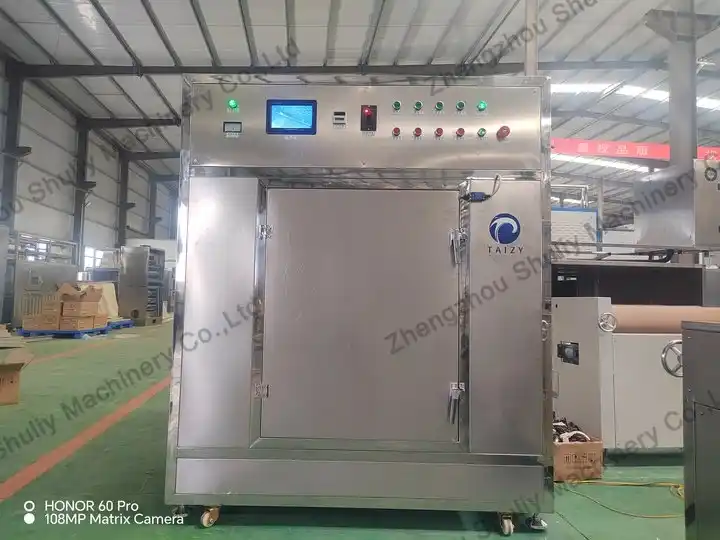
Working Principle
- Microwave Penetration: Microwave energy acts directly on water molecules inside the paper bags, making them vibrate and generate heat.
- Internal Even Heating: Moisture evaporates from inside the bag, drying from the inside out.
- Moisture Exhaust: Evaporated water is removed through an exhaust or dehumidification system.
Features
Fast drying, uniform heating, reduces deformation or wrinkles, ideal for paper bags with high drying quality requirements.
Technical Parameters
| Item | Specification |
| Power supply | 380V±5% 50Hz±1% 3PHASE |
| Microwave Output Power | 8kw |
| Number of trays | 3 pcs |
| Capacity | 5-7.5kg/batch |
| Microwave frequency | 2450MHz±50MHz |
| Overall Dimension | 1400×1200×1600(mm) |
| Microwave heating box | 1000*900*1000(mm) |
| Diameter of trays | 500mm |
| Tray speed | 0-40 circle /min(adjustable) |
| Temperature range, accuracy | 0-300℃ (adjustable) |
Microwave Paper Bag Dryer vs. Hot Air Paper Bag Dryer
| Feature | Microwave Paper Bag Dryer | Hot Air Paper Bag Dryer |
|---|---|---|
| Drying Method | Uses microwave energy to heat water molecules inside the bag | Uses hot air circulation to heat the bag surface |
| Drying Speed | Fast, heats from inside out | Slower, heats from outside in |
| Drying Uniformity | High, even throughout the bag | Moderate, may vary by position in the chamber |
| Bag Deformation | Minimal, gentle on shape | Low risk, but slightly higher than microwave |
| Suitable For | High-quality drying, sensitive printing | Large-scale batch or continuous production |
| Energy Efficiency | Generally higher for small batches | Efficient for large volumes |
| Installation | Compact, can be integrated into production lines | Larger footprint, requires air circulation system |
Notes: Microwave drying equipment is generally more expensive, but it provides higher drying quality. Shuliy also offers large microwave tunnel dryers. You are welcome to contact us for more information.
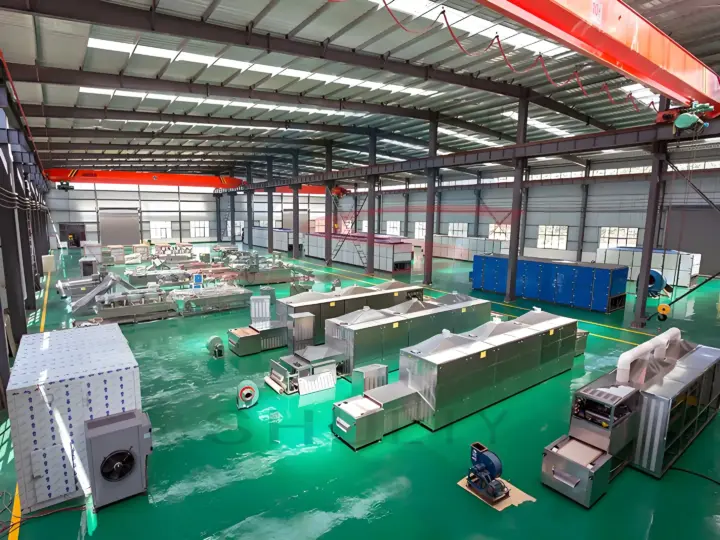
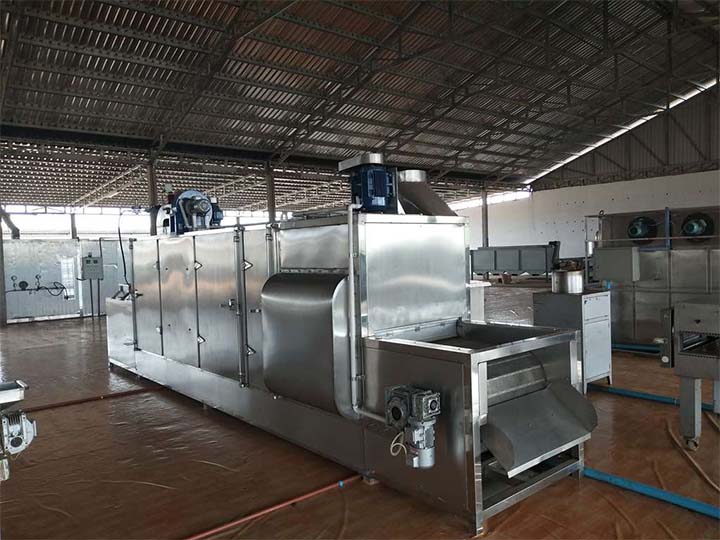
Working with Shuliy
By choosing Shuliy’s paper bag drying machines, you get an efficient, stable, and customized drying solution. Shuliy offers full support from equipment selection and production line design to installation and commissioning, ensuring fast, even drying and consistent quality. The machines are reliable, energy-efficient, and suitable for different production scales, with complete after-sales service for long-term stable operation. Whether for kraft paper bags, printed bags, or recycled paper bags, Shuliy provides professional drying solutions to improve productivity and reduce losses.