

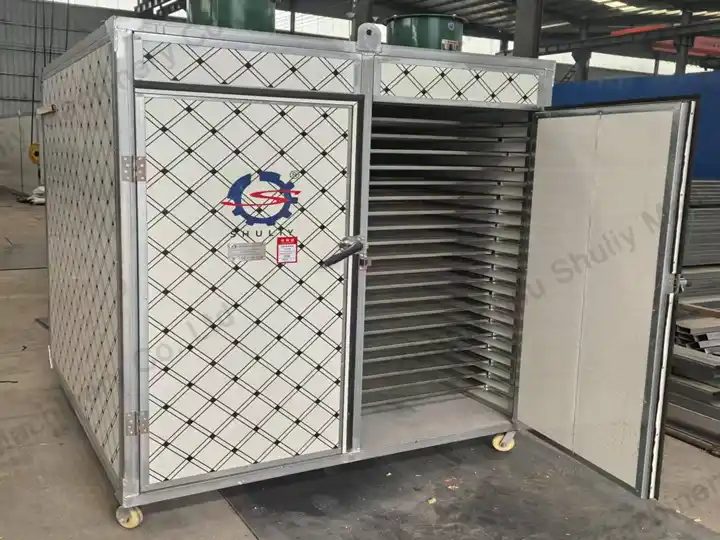
Den black tea drying machine is a closed-chamber batch dryer designed to stop fermentation and reduce moisture in fully oxidized black tea leaves. It processes 300–8,000 kg of fermented tea per batch. Freshly fermented leaves enter at 55–65% moisture. The system reduces this to 3–5% within 2–4 hours. Dried black tea is ready for grading, sorting, and packaging for domestic sale or export.
Conventional charcoal-fired dryers run at 100–120°C with no humidity control. This black tea dryer operates at 70–105°C in a sealed chamber with ±1°C temperature precision. The heat pump recycles thermal energy from exhaust air. It delivers a COP of 3.0–4.0. Electricity consumption drops by 60–70% compared to direct electric heating. A PLC touchscreen lets operators program multi-stage drying profiles. Chamber temperature stays within ±1°C. Relative humidity stays within ±3%. The 2–4 hour cycle enables 4–6 batches per day during peak harvest.
Shuliy has manufactured industrial drying equipment for over 20 years. The company has exported heat pump dryers to more than 30 countries. All chambers use 304 stainless steel trays. Housing options include galvanized steel and SUS304. The system meets EU and FDA food-contact material standards. A 12-month warranty covers all mechanical and electrical components. Lifetime technical consultation is included.
Why Must Black Tea Be Dried?
After full fermentation, black tea leaves still contain 55–65% moisture and active enzymes. Without timely and controlled drying, quality deteriorates rapidly.
- Over-Fermentation: Enzymatic activity continues. The tea develops a sour, overripe flavor. Astringency increases. Market grade drops.
- Color Degradation: Uncontrolled moisture causes uneven oxidation. Leaf color turns dull brown instead of the desired dark amber. Buyers reject discolored batches.
- Mold Growth: Moisture above 8% creates ideal conditions for Aspergillus and Penicillium mold. Aflatoxin contamination becomes a food safety risk.
- Aroma Loss: Volatile aromatic compounds evaporate unevenly. The characteristic malty, floral, or fruity notes fade. Tea loses its premium classification.
The Shuliy black tea drying machine solves these problems through staged temperature control. A three-phase drying profile stops fermentation at the optimal point. Moisture draws evenly from each leaf. Aroma compounds are locked in. The final product reaches 3–5% moisture with batch uniformity within ±0.5%.
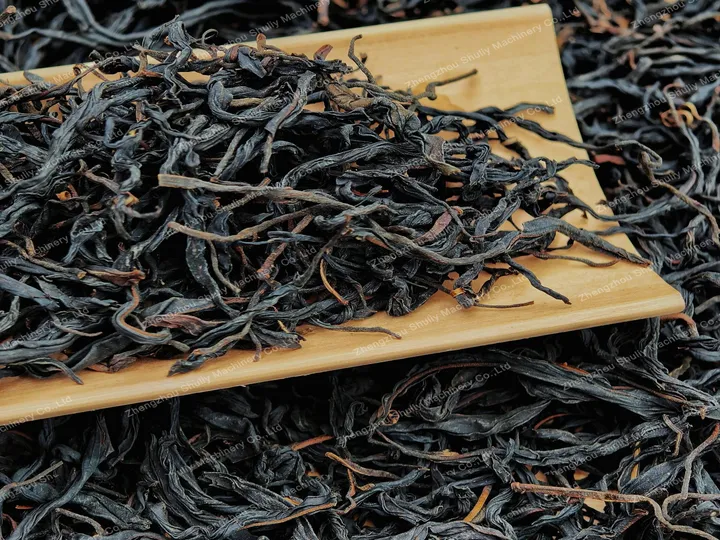
Vad är en svart te-torkmaskin?
En svart te-torkmaskin är en varm luft-cirkulationsenhet som är speciellt utformad för att torka fermenterat svart te. Tebladen sprids jämnt på brickor och avlägsnas i steg med kontrollerad varm luft för att uppnå stabil och effektiv torkning.
Jämfört med traditionell soltorkning eller manuella rostningsmetoder erbjuder svart te-torkaren tydliga fördelar:
- Kontrollerbar temperatur, mindre påverkan av miljön
- Batchbearbetning för högre produktivitet
- Stabil kvalitet, lämplig för standardiserad produktion
- Minskar arbetskostnader och beroende av erfarenhet
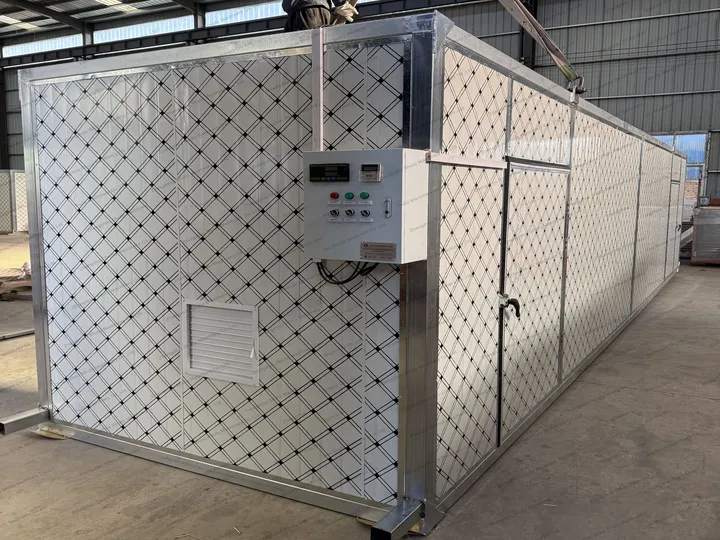
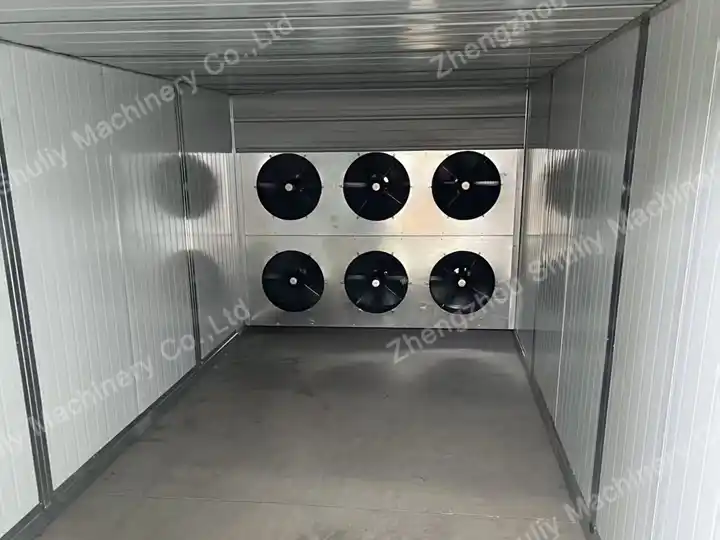
Tekniska specifikationer
| Parameter | Specifikation | Kundvärde |
|---|---|---|
| Modellutbud | SL-2 till SL-24 | 8 models from 300–8,000 kg for precise capacity matching |
| Torkmetod | Luftvärmepump | 70% energy savings versus electric heating; zero combustion emissions |
| Temperaturområde | 30–110°C (adjustable) | 70–105°C optimal for black tea; stops fermentation without scorching |
| Control Precision | ±1°C temperature; ±3% RH humidity | Prevents over-drying and under-drying within the same batch |
| Batchkapacitet | 300–8,000 kg fermented tea | Scales from small tea estate to industrial export volume |
| Drying Cycle | 2–4 hours/batch | 4–6 batches per day during peak harvest season |
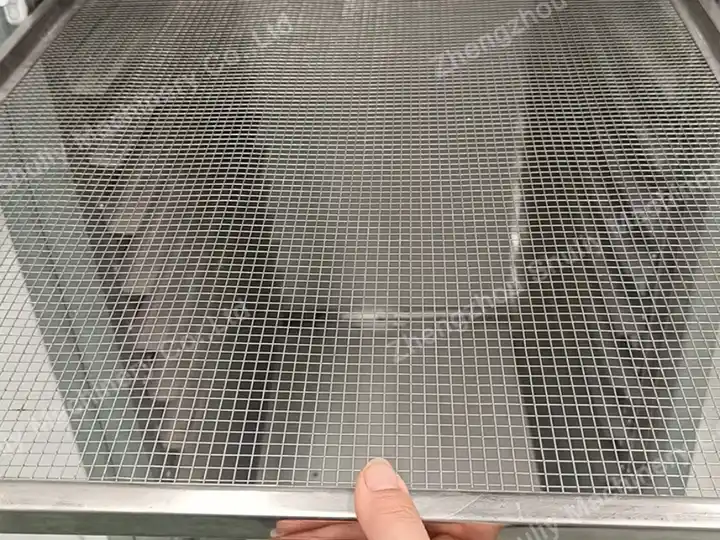
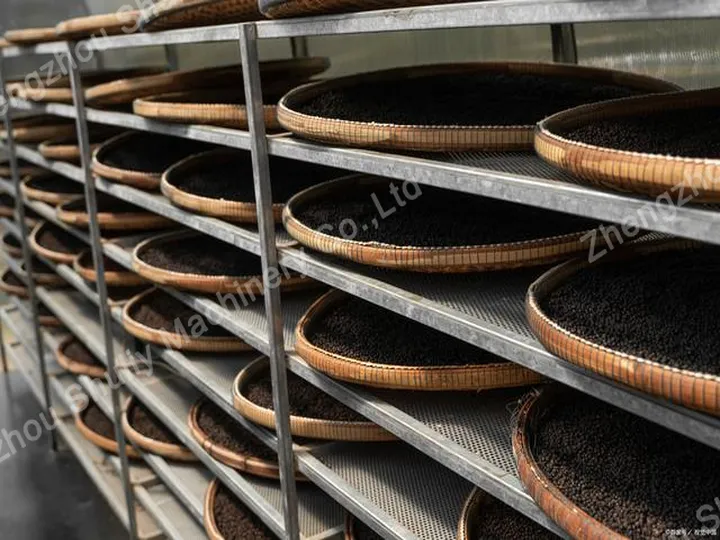
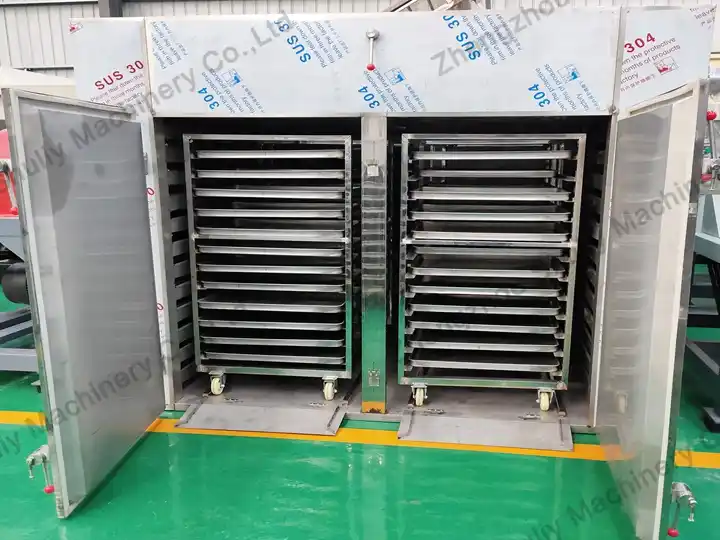
| Brickmaterial | 304 stainless steel (perforated) | Food-grade, corrosion-resistant, easy to clean |
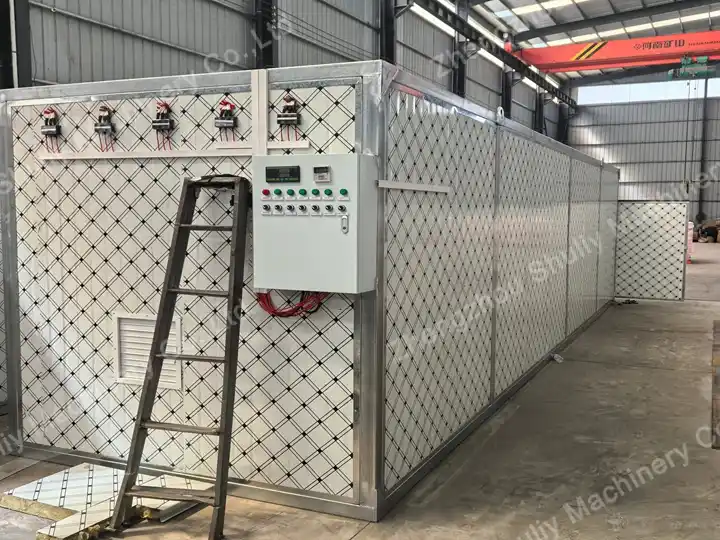
| Chamber Construction | Galvanized steel or SUS304 | 75 mm rock wool insulation; durable frame |
| Styrenhet | PLC with HMI touchscreen | Automated profiles reduce labor and human error |
| Slutfuktighet | 3–5% | Optimal for grading, packaging, and 24-month storage |
| Energiförbrukning | 3–36 kW (model dependent) | Low operating cost; suitable for rural tea estate power supply |
| Isolering | 75 mm högtemperatur rottvätt av stenull | 20% energy efficiency improvement over uninsulated chambers |
Model Selection Guide
| Modell | Dimensions (mm) | Drying Crews | Kapacitet (kg/ sats) |
|---|---|---|---|
| SL-2 | 4,000 × 1,860 × 2,500 | 2 | 300–600 |
| SL-4 | 6,000 × 1,860 × 2,500 | 4 | 500–1,000 |
| SL-6 | 7,200 × 2,300 × 2,500 | 6 | 800–1,500 |
| SL-8 | 8,500 × 2,300 × 2,500 | 8 | 1,000–2,000 |
| SL-10 | 10,000 × 2,300 × 2,500 | 10 | 1,200–2,500 |
| SL-12 | 8,500 × 3,300 × 2,500 | 12 | 2,500–4,000 |
| SL-18 | 8,500 × 5,000 × 2,500 | 18 | 4,000–6,500 |
| SL-24 | 12,000 × 5,000 × 2,500 | 24 | 5,000–8,000 |
How Does the Black Tea Dryer Work?
Den black tea dryer uses a hot-air circulation system, allowing heated air to flow evenly throughout the drying chamber. This continuous airflow removes moisture from the tea leaves, achieving controlled drying.
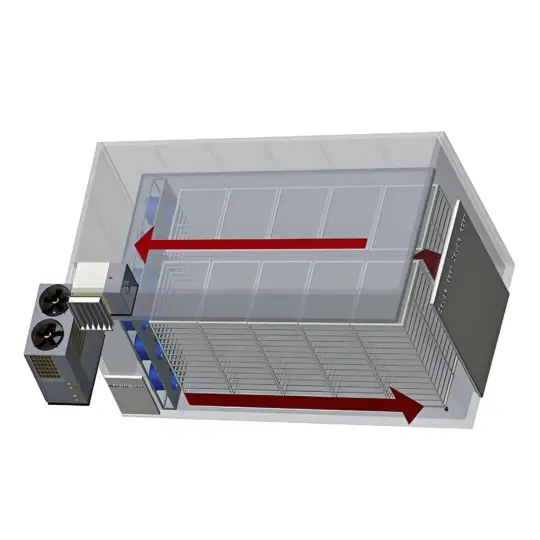
1. Evaporation Stage
Ambient air passes across the evaporator coil. Refrigerant absorbs thermal energy. The air is pre-cooled.
2. Compression Stage
The compressor raises refrigerant temperature and pressure. A high-grade heat source is created.
3. Condensation Stage
Hot refrigerant circulates through the condenser coil inside the drying chamber.
Circulated air heats to the setpoint temperature of 70–105°C.
4. Dehumidification Stage
Warm, moist air passes over the evaporator coil.
Water vapor condenses into liquid. The condensate drains from the system.
The dry air is reheated and recirculated.
5. Control Stage
PLC sensors monitor temperature, humidity, and airflow.
Compressor speed, fan velocity, and exhaust damper position adjust in real time.
The energy-recovery design produces 3–4 kW of usable heat per 1 kW of electrical input.
Conventional electric dryers produce only 1 kW of heat per 1 kW of input.
Black Tea Drying Process: Step by Step
1. Feeding and Spreading
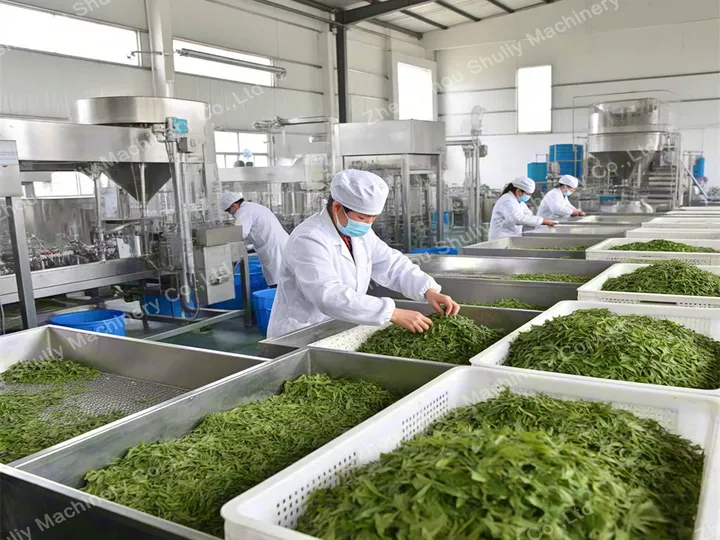
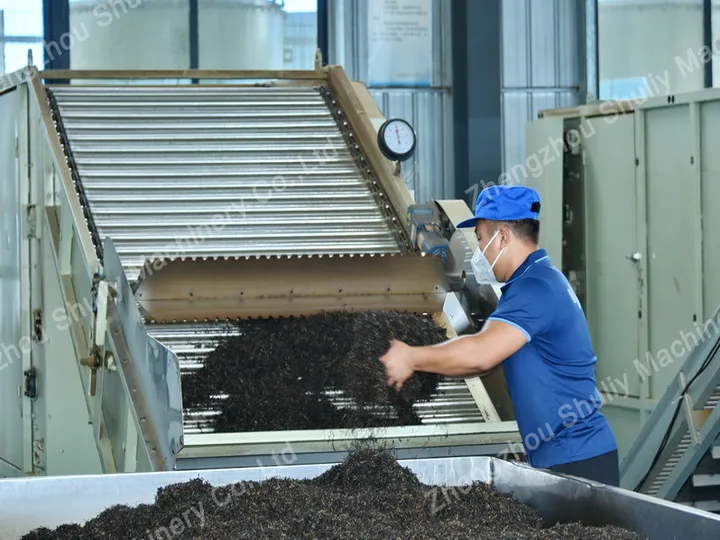
- Fully fermented black tea leaves are evenly spread on drying trays or conveyor belts to ensure uniform heating.
2. Hot-Air Heating and Circulation
- The heating system (electric, gas, or biomass) heats the air, and fans circulate the hot air throughout the drying chamber to avoid local overheating.
3. Staged Temperature-Controlled Drying
- Initial torkning (80–90°C): Tar snabbt bort ytfukt och förhindrar att bladen klibbar ihop.
- Huvudtorkning (90–105°C): Jämn avlägsnande av fukt, fixering av arom- och smakstrukturen.
- Slutlig torkning (70–85°C): Stabiliserar fukthalten utan att skada aromen.
4. Moisture Exhaust and Air Exchange
- Moist, hot air is expelled through the exhaust system while fresh air enters, maintaining a stable drying environment. The final moisture content is generally controlled at ≤5%.
5. Discharge and Cooling
After drying, tea leaves are discharged and cooled naturally or with assistance to prevent reabsorption of moisture.
Huvudfördelar med att använda en svart te-torkmaskin
Jänt torkning
Tebladen värms jämnt, vilket säkerställer konsekvent färg och smak.
High Efficiency and Controllable Capacity
Lämplig för små tefabriker till storskalig produktion.
Multiple Heat Source Options
Kan använda elektrisk, gas eller biobränsleuppvärmning, anpassad till lokala energiförhållanden.
Easy Operation and Maintenance
Lämplig för kontinuerlig produktion och långvarig användning.
Tillämpningsområden för svart te-torkare
Svart te-torkare används ofta för:
- Bearbetning av helbladigt svart te och krossat svart te (CTC)
- Svartteproduktion i små till medelstora tefabriker
- Exportinriktade svarttebearbetningsföretag
- Standardiserade och storskaliga svartteproduktionen

Hur väljer man rätt svart te-torkmaskin?
When selecting a black tea drying machine, it is recommended to focus on:
- Krävd batch- eller timmekapacitet
- Tillgängliga värmekällor
- Workshoputrymme och layout
- Lokala temperatur- och fuktighetsförhållanden
Att välja rätt modell kan inte bara förbättra torkningseffektiviteten utan också effektivt minska energiförbrukningen och driftskostnader.
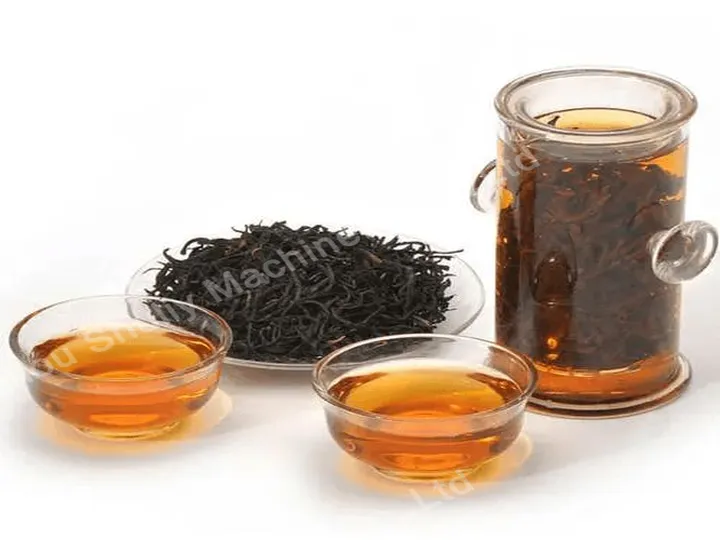
Hur gör man svart te?
Plucking
- Välj sköra teblad med en knopp och en eller två blad för att säkerställa råvarukvaliteten.
Withering
- Använd naturlig spridning eller temperatur- och fuktighetskontrollerade torkrum för att minska fukt och mjuka upp bladen, förbereda dem för rullning och jäsning.
Rolling
- Bryt bladceller för att frigöra juice, bilda strimlor eller krossade blad, vilket främjar polyfenoloxidation.
Fermentation
- Fullständig jäsning av bladen under lämplig temperatur och fuktighet, vilket gör att de går från grönt till rött och utvecklar den unika aromen och smaken av svart te.
Torkning
- Använd torkkammare eller varm luft-torkare för att stoppa jäsningen, minska fukthalten till ≤5 % och fixera arom och smak.
Grading
- Sortera teet baserat på bladstrimlor, krossade blad och utseende för att säkerställa enhetlighet och stabil kvalitet.
Förpackning
- Försegla det torkade och graderade teet för att förhindra fukt och lukt, vilket gör det lämpligt för lagring och transport.
Shuliy erbjuder ett sortiment av svart te-torkare i rostfritt stål och standardmaterial, alla anpassningsbara. Kontakta oss gärna för mer information.
Solving Common Black Tea Drying Challenges
| Customer Pain Point | Shuliy-lösning | Result |
|---|---|---|
| Over-fermentation from slow drying | Staged temperature profile (80°C → 105°C → 70°C) | Enzymatic activity stopped within 20 minutes; flavor locked in |
| Uneven moisture causing mold in storage | 360° turbulent airflow and automated humidity exhaust | Batch uniformity within ±0.5% moisture deviation |
| Aroma loss from excessive heat | Final drying phase at 70–85°C with controlled exhaust | Volatile compound retention above 90%; premium grade maintained |
| High fuel costs from charcoal or biomass | Heat pump COP 3.0–4.0 with energy recovery | 60–70% reduction in drying energy cost per kg |
| Seasonal harvest peaks overwhelming capacity | Modular SL-series from 300–8,000 kg; 2–4 h cycles | 4–6 batches per day; multi-chamber expansion available |
| Export rejection due to moisture non-compliance | Precise 3–5% final moisture with PLC verification | Full compliance with ISO 3720 and buyer specifications |
Why Choose Shuliy Black Tea Drying Equipment?
- Proven Heat Pump Technology: Thousands of installed drying rooms across agricultural and food processing sectors. System reliability is validated in real-world conditions.
- Application-Specific Expertise: Drying protocols for orthodox whole-leaf, CTC, and broken black tea are pre-programmed into the PLC. Commissioning time is reduced. Operator training is simplified.
- Full Material Traceability: All stainless steel components carry mill test certificates. Chamber insulation meets fire-rating and thermal-conductivity standards for international export.
- Integrated Processing Lines: Shuliy supplies withering troughs, rolling machines, fermentation chambers, and grading sorters. Turnkey black tea processing projects are supported.
- Global Export Experience: CE-certified electrical systems. Multi-voltage compatibility (220V/380V/415V/460V). ISPM-15 compliant export packing ensures smooth customs clearance.