

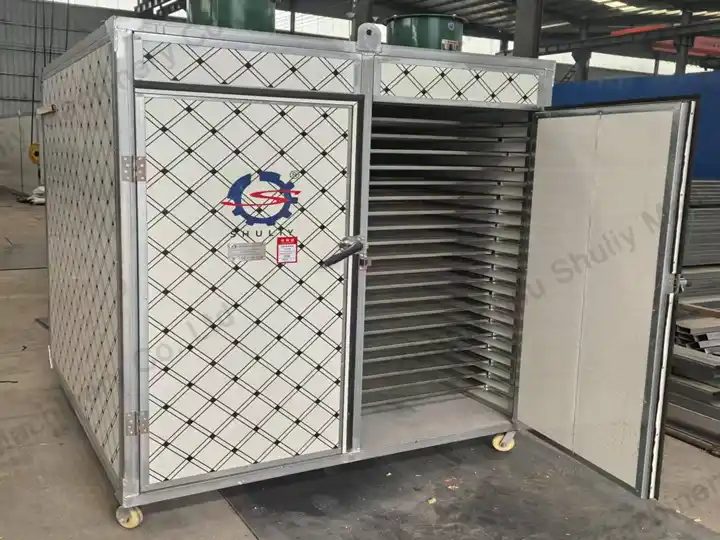
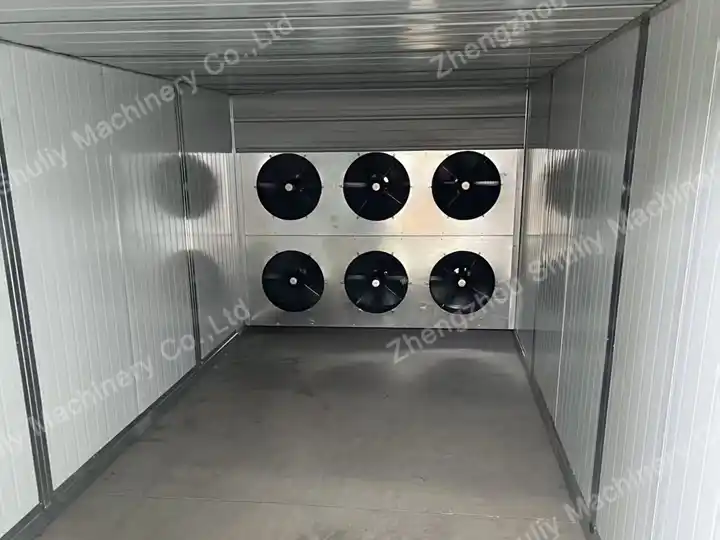
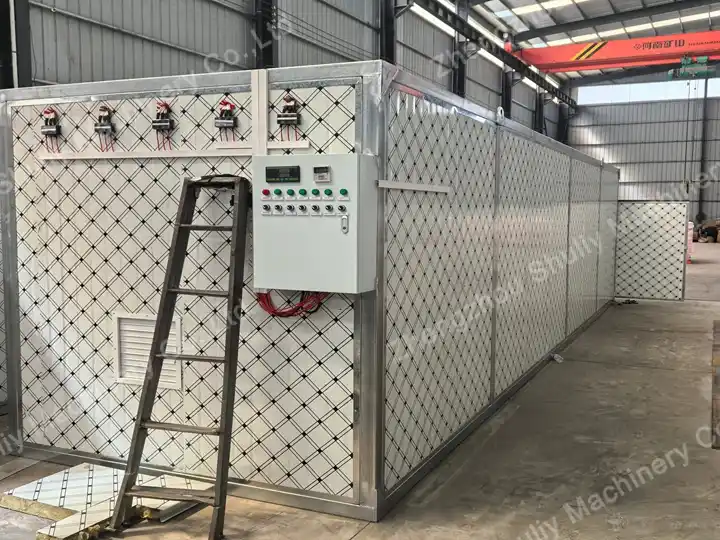
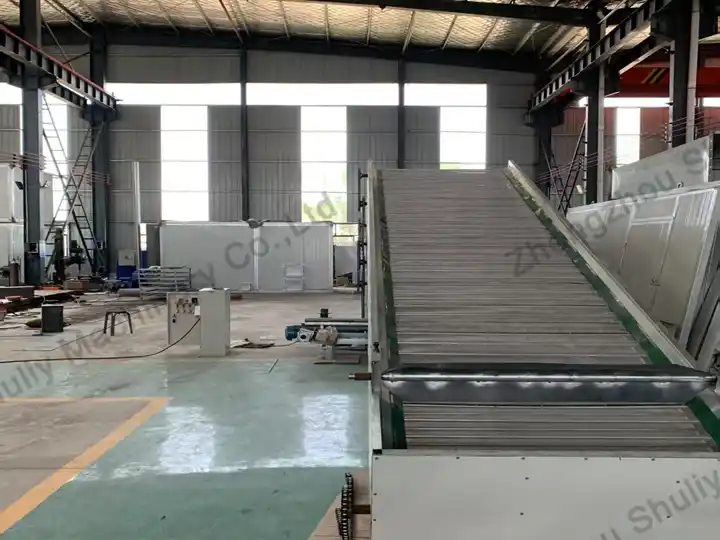
Le black tea drying machine is a closed-chamber batch dryer designed to stop fermentation and reduce moisture in fully oxidized black tea leaves. It processes 300–8,000 kg of fermented tea per batch. Freshly fermented leaves enter at 55–65% moisture. The system reduces this to 3–5% within 2–4 hours. Dried black tea is ready for grading, sorting, and packaging for domestic sale or export.
Conventional charcoal-fired dryers run at 100–120°C with no humidity control. This black tea dryer operates at 70–105°C in a sealed chamber with ±1°C temperature precision. The heat pump recycles thermal energy from exhaust air. It delivers a COP of 3.0–4.0. Electricity consumption drops by 60–70% compared to direct electric heating. A PLC touchscreen lets operators program multi-stage drying profiles. Chamber temperature stays within ±1°C. Relative humidity stays within ±3%. The 2–4 hour cycle enables 4–6 batches per day during peak harvest.
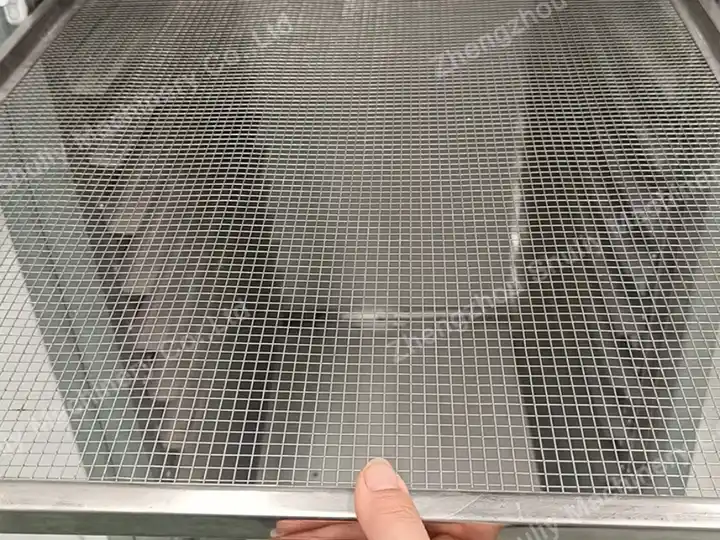
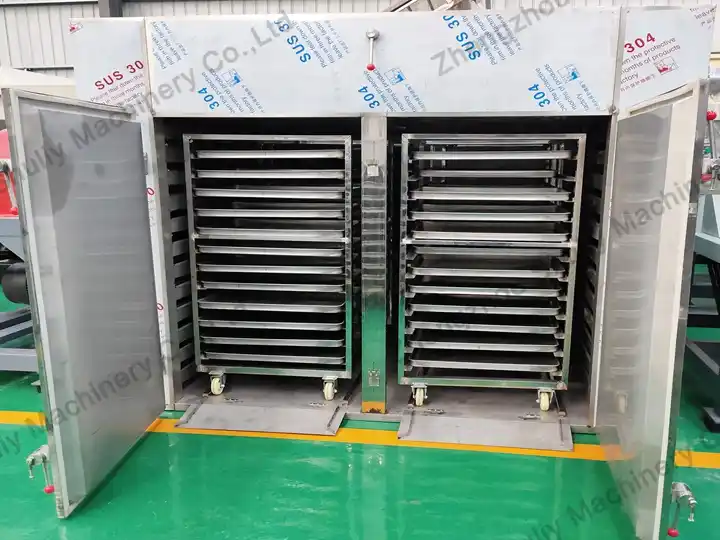
Shuliy has manufactured industrial drying equipment for over 20 years. The company has exported heat pump dryers to more than 30 countries. All chambers use 304 stainless steel trays. Housing options include galvanized steel and SUS304. The system meets EU and FDA food-contact material standards. A 12-month warranty covers all mechanical and electrical components. Lifetime technical consultation is included.
Why Must Black Tea Be Dried?
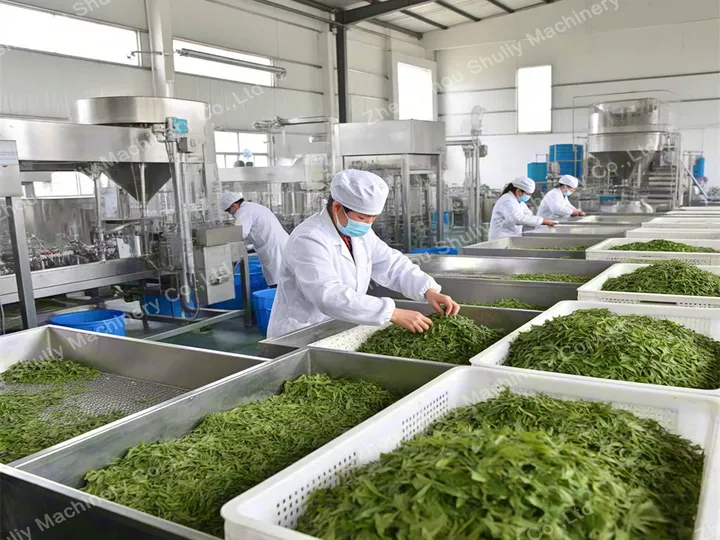
After full fermentation, black tea leaves still contain 55–65% moisture and active enzymes. Without timely and controlled drying, quality deteriorates rapidly.
- Over-Fermentation: Enzymatic activity continues. The tea develops a sour, overripe flavor. Astringency increases. Market grade drops.
- Color Degradation: Uncontrolled moisture causes uneven oxidation. Leaf color turns dull brown instead of the desired dark amber. Buyers reject discolored batches.
- Mold Growth: Moisture above 8% creates ideal conditions for Aspergillus and Penicillium mold. Aflatoxin contamination becomes a food safety risk.
- Aroma Loss: Volatile aromatic compounds evaporate unevenly. The characteristic malty, floral, or fruity notes fade. Tea loses its premium classification.
The Shuliy black tea drying machine solves these problems through staged temperature control. A three-phase drying profile stops fermentation at the optimal point. Moisture draws evenly from each leaf. Aroma compounds are locked in. The final product reaches 3–5% moisture with batch uniformity within ±0.5%.
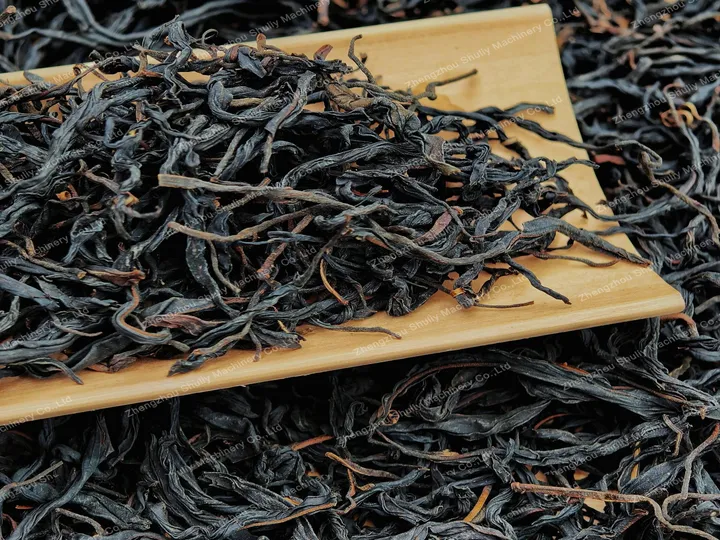
Qu'est-ce qu'une machine de séchage du thé noir ?
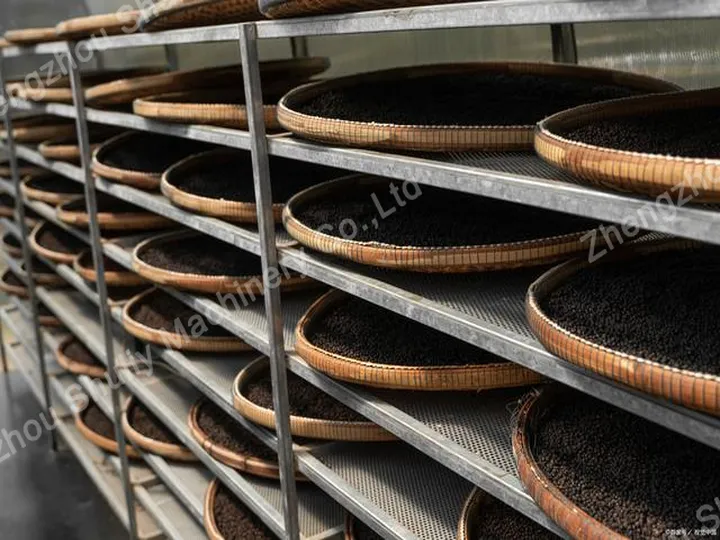
Une machine à thé noir est un dispositif de circulation d'air chaud spécialement conçu pour sécher le thé noir fermenté. Les feuilles de thé sont réparties uniformément sur des plateaux et déshydratées par étapes avec de l'air chaud contrôlable, atteignant un séchage stable et efficace.
Comparé aux méthodes traditionnelles de séchage au soleil ou de torréfaction manuelle, le sècheur de thé noir offre des avantages clairs:
- Température contrôlable, peu affectée par l'environnement
- Traitement par lots pour une efficacité de production plus élevée
- Qualité stable, adaptée à une production standardisée
- Réduit les coûts de main-d'œuvre et la dépendance à l'expérience
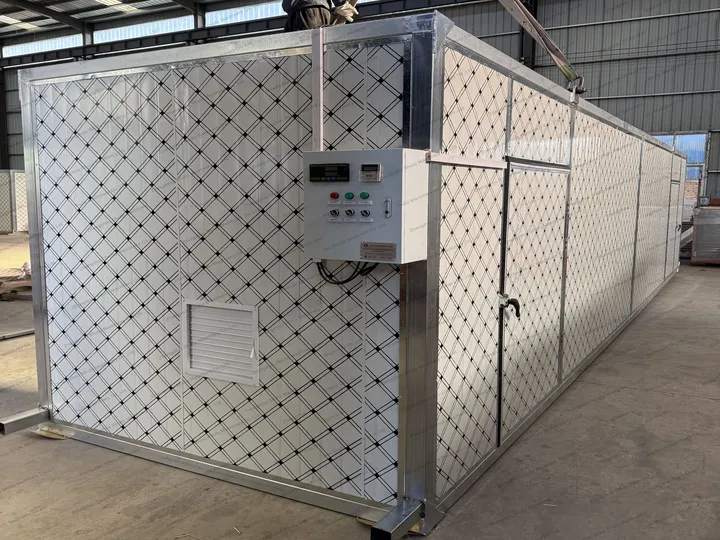
Spécifications techniques
| Paramètre | Spécification | Valeur client |
|---|---|---|
| Gamme de modèles | SL-2 à SL-24 | 8 models from 300–8,000 kg for precise capacity matching |
| Méthode de séchage | Pompe à chaleur air-air | 70% energy savings versus electric heating; zero combustion emissions |
| Plage de température | 30–110°C (adjustable) | 70–105°C optimal for black tea; stops fermentation without scorching |
| Control Precision | ±1°C temperature; ±3% RH humidity | Prevents over-drying and under-drying within the same batch |
| Capacité de lot | 300–8,000 kg fermented tea | Scales from small tea estate to industrial export volume |
| Drying Cycle | 2–4 hours/batch | 4–6 batches per day during peak harvest season |
| Matériau du plateau | 304 stainless steel (perforated) | Food-grade, corrosion-resistant, easy to clean |
| Chamber Construction | Galvanized steel or SUS304 | 75 mm rock wool insulation; durable frame |
| Système de contrôle | PLC with HMI touchscreen | Automated profiles reduce labor and human error |
| Humidité finale | 3–5% | Optimal for grading, packaging, and 24-month storage |
| Consommation d'énergie | 3–36 kW (model dependent) | Low operating cost; suitable for rural tea estate power supply |
| Isolation | la laine de roche haute température de 75 mm | 20% energy efficiency improvement over uninsulated chambers |
Model Selection Guide
| Modèle | Dimensions (mm) | Drying Crews | Capacité (kg/lot) |
|---|---|---|---|
| SL-2 | 4,000 × 1,860 × 2,500 | 2 | 300–600 |
| SL-4 | 6,000 × 1,860 × 2,500 | 4 | 500–1,000 |
| SL-6 | 7,200 × 2,300 × 2,500 | 6 | 800–1,500 |
| SL-8 | 8,500 × 2,300 × 2,500 | 8 | 1,000–2,000 |
| SL-10 | 10,000 × 2,300 × 2,500 | 10 | 1,200–2,500 |
| SL-12 | 8,500 × 3,300 × 2,500 | 12 | 2,500–4,000 |
| SL-18 | 8,500 × 5,000 × 2,500 | 18 | 4,000–6,500 |
| SL-24 | 12,000 × 5,000 × 2,500 | 24 | 5,000–8,000 |
How Does the Black Tea Dryer Work?
Le black tea dryer uses a hot-air circulation system, allowing heated air to flow evenly throughout the drying chamber. This continuous airflow removes moisture from the tea leaves, achieving controlled drying.
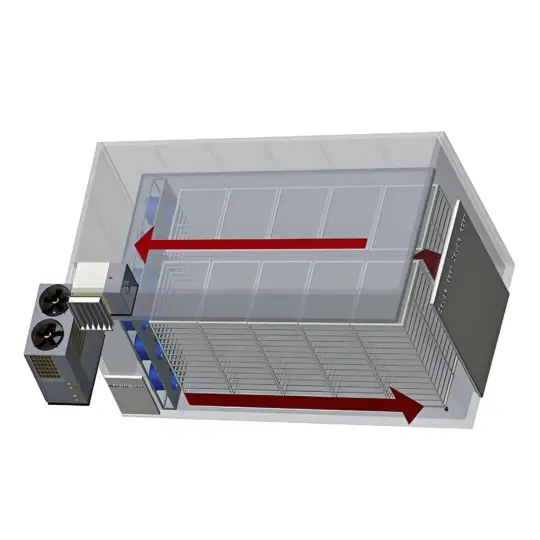
1. Evaporation Stage
Ambient air passes across the evaporator coil. Refrigerant absorbs thermal energy. The air is pre-cooled.
2. Compression Stage
The compressor raises refrigerant temperature and pressure. A high-grade heat source is created.
3. Condensation Stage
Hot refrigerant circulates through the condenser coil inside the drying chamber.
Circulated air heats to the setpoint temperature of 70–105°C.
4. Dehumidification Stage
Warm, moist air passes over the evaporator coil.
Water vapor condenses into liquid. The condensate drains from the system.
The dry air is reheated and recirculated.
5. Control Stage
PLC sensors monitor temperature, humidity, and airflow.
Compressor speed, fan velocity, and exhaust damper position adjust in real time.
The energy-recovery design produces 3–4 kW of usable heat per 1 kW of electrical input.
Conventional electric dryers produce only 1 kW of heat per 1 kW of input.
Black Tea Drying Process: Step by Step
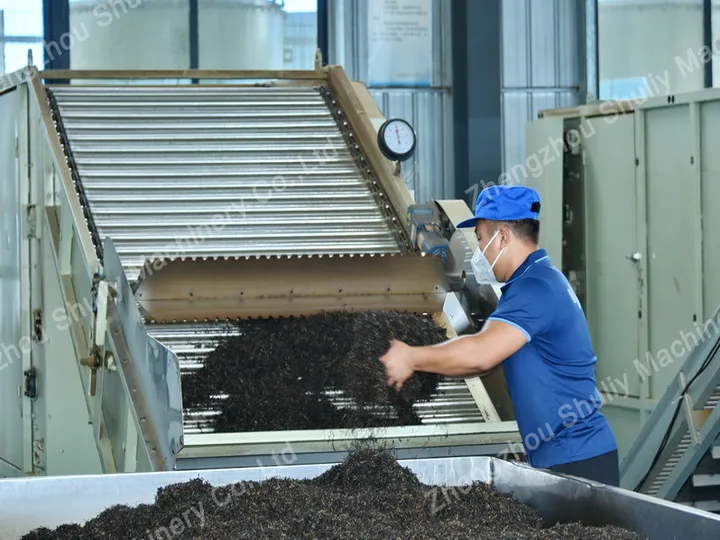
1. Feeding and Spreading
- Fully fermented black tea leaves are evenly spread on drying trays or conveyor belts to ensure uniform heating.
2. Hot-Air Heating and Circulation
- The heating system (electric, gas, or biomass) heats the air, and fans circulate the hot air throughout the drying chamber to avoid local overheating.
3. Staged Temperature-Controlled Drying
- Séchage initial (80–90°C) : Élimine rapidement l'humidité de surface et empêche les feuilles de coller.
- Trobèlement principal (90–105°C) : Séchage homogène, fixation de l'arôme et de la structure de saveur.
- Dernier séchage (70–85°C) : Stabilise le contenu en humidité sans altérer l'arôme.
4. Moisture Exhaust and Air Exchange
- Moist, hot air is expelled through the exhaust system while fresh air enters, maintaining a stable drying environment. The final moisture content is generally controlled at ≤5%.
5. Discharge and Cooling
After drying, tea leaves are discharged and cooled naturally or with assistance to prevent reabsorption of moisture.
Principaux avantages de l'utilisation d'un sècheur de thé noir
Séchage uniforme
Les feuilles de thé sont chauffées uniformément, assurant une couleur et une saveur constantes.
High Efficiency and Controllable Capacity
Convient pour petites usines de thé à production à grande échelle.
Multiple Heat Source Options
Peut utiliser le chauffage électrique, au gaz ou à la biomasse, en s'adaptant aux conditions énergétiques locales.
Easy Operation and Maintenance
Convient à la production continue et à l'utilisation à long terme.
Scénarios applicables pour les sécheurs de thé noir
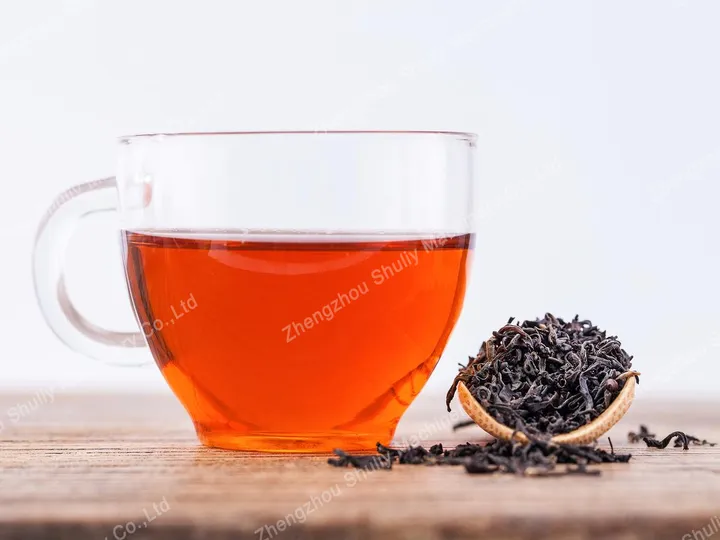
Les sécheurs de thé noir sont largement utilisés pour :
- Traitement du thé noir en feuilles entières et de thé noir cassé (CTC)
- Production de thé noir dans les petites et moyennes usines de thé
- Entreprises de transformation de thé noir à l'exportation
- Lignes de production de thé noir standardisées et à grande échelle

Comment choisir le bon sécheur de thé noir ?
When selecting a black tea drying machine, it is recommended to focus on:
- Capacité de traitement par lot ou horaire requise
- Types de sources de chaleur disponibles
- Espace et agencement de l'atelier
- Conditions de température et d'humidité locales
Choisir le bon modèle peut non seulement améliorer l'efficacité de séchage, mais aussi réduire efficacement la consommation d'énergie et les coûts d'exploitation.
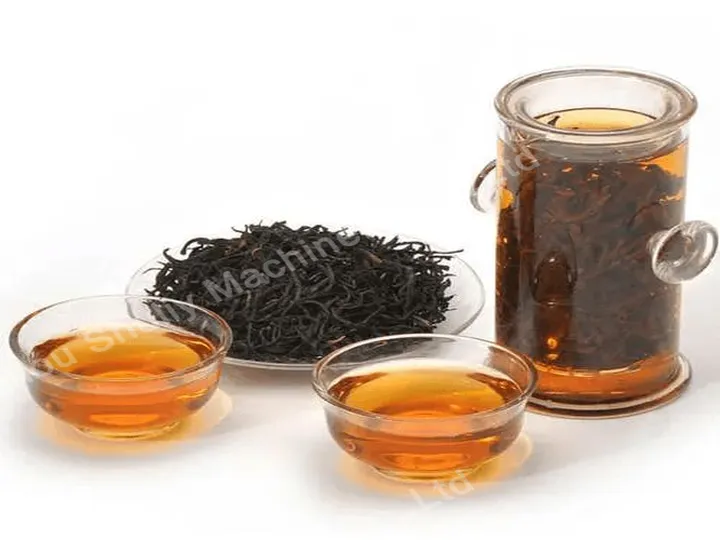
Comment faire du thé noir ?
Plucking
- Sélectionnez des feuilles de thé tendres avec une pousse et une ou deux feuilles pour assurer la qualité des matières premières.
Withering
- Utiliser des chambres de répartition naturelle ou avec avecering contrôlé par température et humidité pour réduire l’humidité et ramollir les feuilles, les préparant au roulage et à la fermentation.
Rolling
- Briser les cellules des feuilles pour libérer le jus, formant des rubans ou des feuilles cassées, ce qui favorise l’oxydation des polyphénols.
Fermentation
- Fermentation complète des feuilles sous température et humidité adaptées, passant du vert au rouge et développant l'arôme et la saveur uniques du thé noir.
Séchage
- Utiliser des chambres de séchage ou des sécheurs à air chaud pour arrêter la fermentation, réduire l'humidité à ≤5%, et fixer l'arôme et la saveur.
Grading
- Trier le thé selon les rubans de feuilles, feuilles cassées et apparence pour assurer l'uniformité et une qualité stable.
Emballage
- Scelle le thé séché et trié pour éviter l'humidité et les odeurs, le rendant approprié pour le stockage et le transport.
Shuliy propose une gamme de sécheurs de thé noir en acier inoxydable et matériaux standard, tous personnalisables. Pour plus d'informations, n'hésitez pas à nous contacter.
Solving Common Black Tea Drying Challenges
| Customer Pain Point | Solution Shuliy | Result |
|---|---|---|
| Over-fermentation from slow drying | Staged temperature profile (80°C → 105°C → 70°C) | Enzymatic activity stopped within 20 minutes; flavor locked in |
| Uneven moisture causing mold in storage | 360° turbulent airflow and automated humidity exhaust | Batch uniformity within ±0.5% moisture deviation |
| Aroma loss from excessive heat | Final drying phase at 70–85°C with controlled exhaust | Volatile compound retention above 90%; premium grade maintained |
| High fuel costs from charcoal or biomass | Heat pump COP 3.0–4.0 with energy recovery | 60–70% reduction in drying energy cost per kg |
| Seasonal harvest peaks overwhelming capacity | Modular SL-series from 300–8,000 kg; 2–4 h cycles | 4–6 batches per day; multi-chamber expansion available |
| Export rejection due to moisture non-compliance | Precise 3–5% final moisture with PLC verification | Full compliance with ISO 3720 and buyer specifications |
Why Choose Shuliy Black Tea Drying Equipment?
- Proven Heat Pump Technology: Thousands of installed drying rooms across agricultural and food processing sectors. System reliability is validated in real-world conditions.
- Application-Specific Expertise: Drying protocols for orthodox whole-leaf, CTC, and broken black tea are pre-programmed into the PLC. Commissioning time is reduced. Operator training is simplified.
- Full Material Traceability: All stainless steel components carry mill test certificates. Chamber insulation meets fire-rating and thermal-conductivity standards for international export.
- Integrated Processing Lines: Shuliy supplies withering troughs, rolling machines, fermentation chambers, and grading sorters. Turnkey black tea processing projects are supported.
- Global Export Experience: CE-certified electrical systems. Multi-voltage compatibility (220V/380V/415V/460V). ISPM-15 compliant export packing ensures smooth customs clearance.