Choosing between a heat pump drying room, a mesh belt dryer, and a microwave dryer is one of the most important equipment decisions a food processor can make. The three machines use completely different drying principles, and each fits a different production style, budget, and product type.
This guide compares the three industrial dryers side by side, covering how they work, capacity, energy cost, product quality, and price, so you can choose the right machine for your factory.



Quick Comparison Table
| Factor | Heat Pump Drying Room | Secador de correia de malha | Secador de microondas |
|---|---|---|---|
| Production mode | Batch | Continuous | Batch or continuous |
| Tempo de secagem | 8–20 hours per batch | 1–4 hours | 15 minutes–2 hours |
| Capacidade | 300–8,000 kg/batch | 400–14,000 kg/h | Small to medium batches |
| Heat source | Bomba de calor de fonte de ar | Heat pump, gas, coal, steam, electric | Electricity only |
| Energy efficiency | Very high | Alto | Moderate |
| Product quality | Excellent color and nutrients | Good, uniform | Very fast, retains shape |
| Initial investment | Médio | Higher | Highest |
| Labor requirement | Médio | Baixo | Baixo |
| Best for | Premium products, mixed materials | Large-scale continuous production | High-value, heat-sensitive products |
How Does Each Industrial Dryer Work?
Heat Pump Drying Room
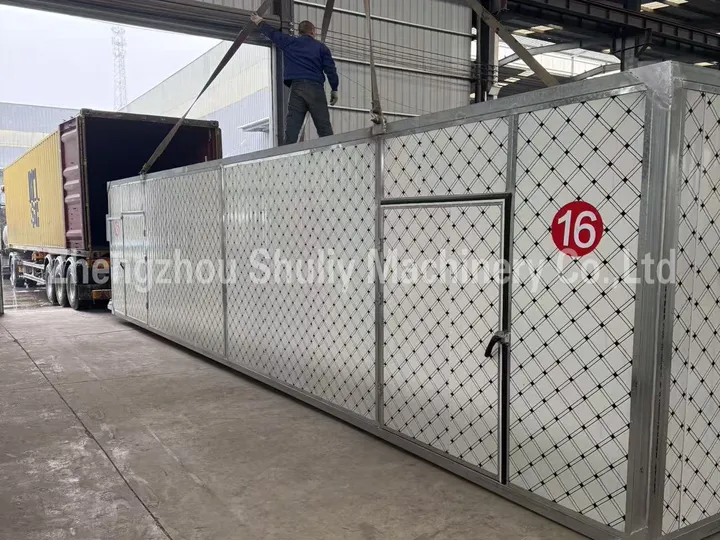
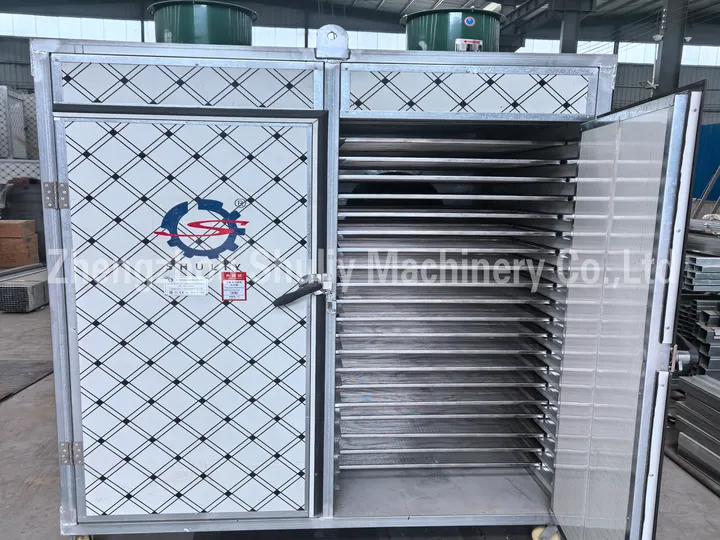
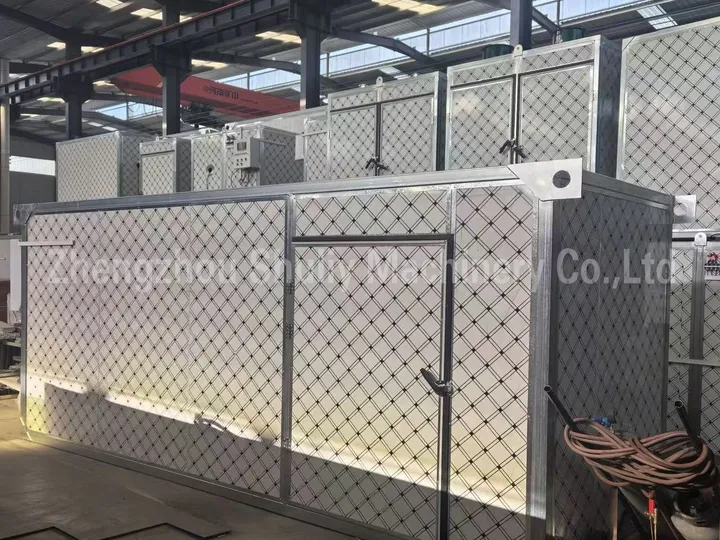
A heat pump drying room is a sealed chamber loaded with trolleys and trays. The heat pump absorbs heat from ambient air, compresses it to a higher temperature, and releases it into the chamber. Circulating fans push hot air through the trays, while an exhaust system removes moist air.
The key advantage is energy recovery. Moist air leaving the chamber passes over a cold coil, where water condenses and drains out. The dried air is reheated and reused. For every 1 kW of electricity, the system delivers 3–6 kW of heat.
This makes the heat pump dryer the most energy-efficient batch system available, with operating costs 30–50% lower than pure electric heating.
Secador de correia de malha
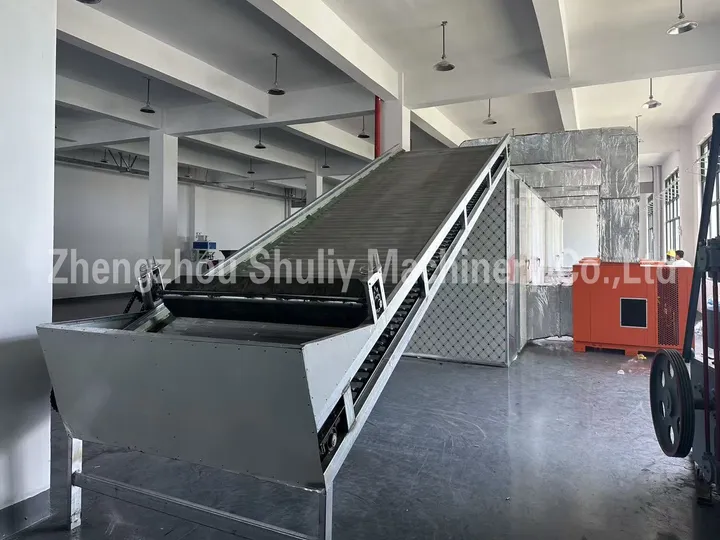
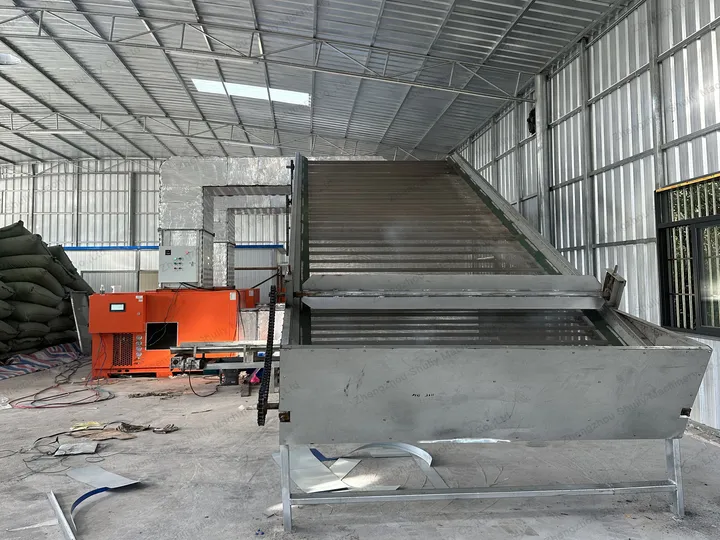
A mesh belt dryer is a continuous tunnel. Material is spread automatically on a stainless steel mesh belt and moves slowly through multiple temperature zones. Hot air passes through the product layer from above and below.
The machine runs 24 hours non-stop. Fresh material enters one end, and dried product exits the other. Multi-layer designs stack belts vertically to save floor space. Heat sources include heat pump, natural gas, coal, biomass, steam, and electricity.
Secador de microondas
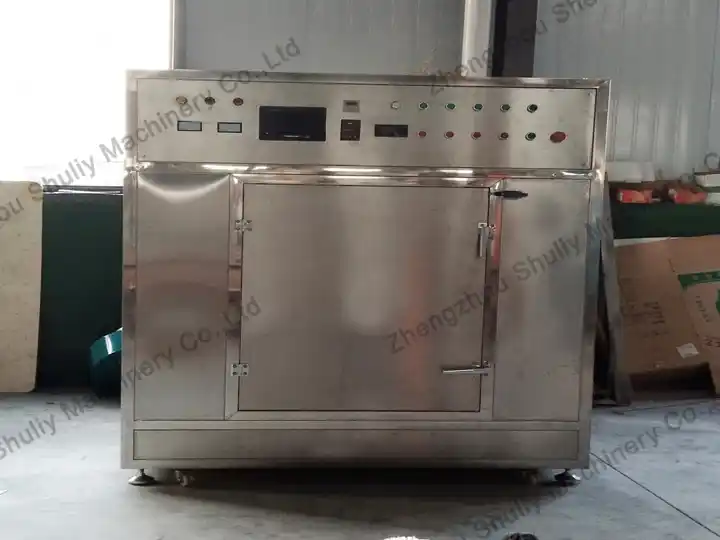
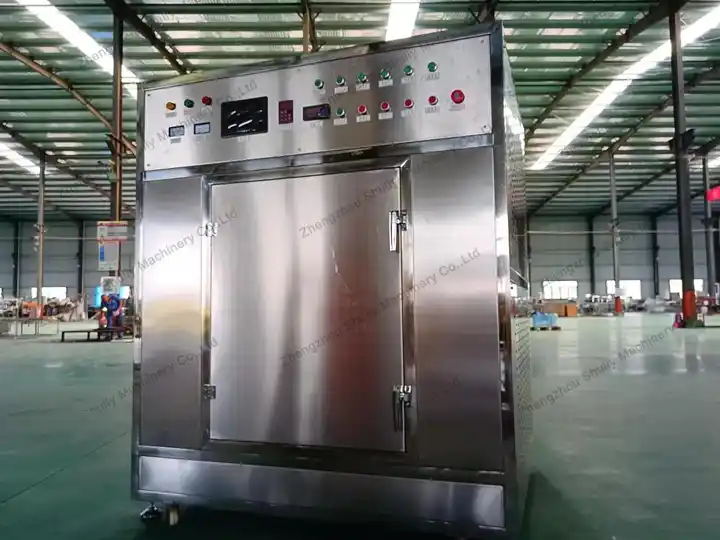
A microwave dryer uses electromagnetic waves to heat water molecules directly inside the product. Unlike hot-air dryers, which dry from the surface inward, microwave energy penetrates the entire material at once. This makes it the fastest drying method, with most products finishing in minutes rather than hours.
Microwave drying is ideal for heat-sensitive products because it needs no long exposure to high air temperatures. However, electricity consumption is high, and the equipment cost is the highest of the three options.
Dryer Capacity and Production Style
Heat Pump Drying Room: Flexible Batch Processing
Shuliy heat pump drying rooms handle 300 to 8,000 kg per batch. Because the chamber can dry almost anything placed on trays, one machine can process fruits today, vegetables tomorrow, and herbs the next day.
This flexibility is valuable for processors handling multiple products or seasonal harvests. The trade-off is downtime between batches for loading and unloading.

Mesh Belt Dryer: Maximum Throughput
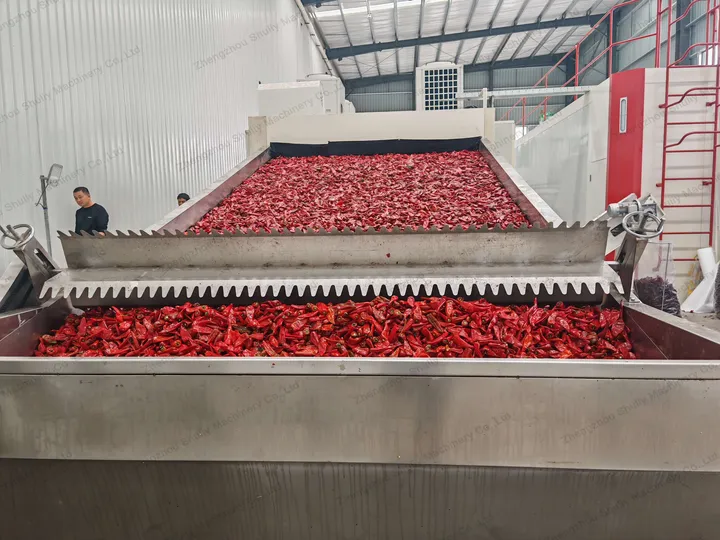
The mesh belt dryer is built for volume. Standard models process 400 to 14,000 kg per hour continuously. There is no batch cycle, and the machine runs as long as material keeps feeding.
For large factories drying one product all season, such as chili or carrot processors, no other machine matches its daily output. A single line can replace multiple drying rooms.
Microwave Dryer: Speed Over Volume
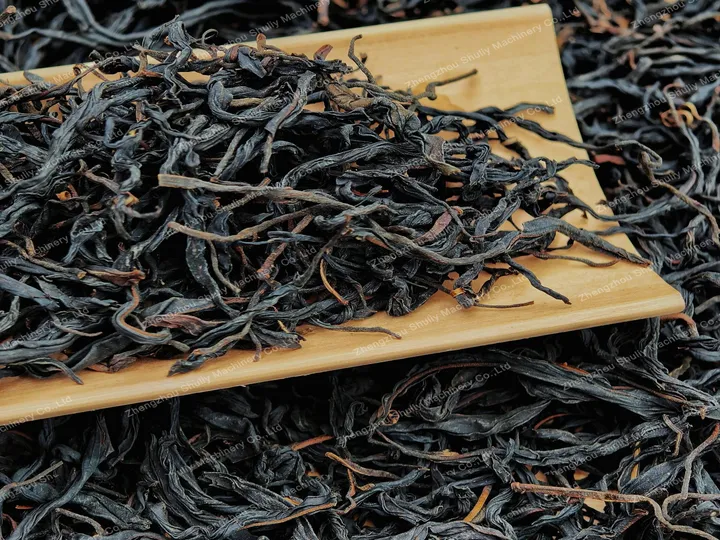
A microwave dryer suits processors whose bottleneck is drying time, not floor space. It finishes a batch in 15 minutes to 2 hours, depending on the product. Typical applications include fruit slices, herbs, tea, insects, and laboratory or pharmaceutical materials.
Throughput is usually smaller than a mesh belt line, but the extreme speed enables same-day processing of fresh material that would otherwise spoil.
Product Quality After Drying
| Quality Factor | Heat Pump Drying Room | Secador de correia de malha | Secador de microondas |
|---|---|---|---|
| Color retention | Excellent | Good | Very good |
| Nutrient retention | Excellent | Good | Excellent |
| Uniformity | Excellent (single layer on trays) | Good (depends on spreading) | Very good |
| Shape and texture | Natural shrinkage | Slightly compressed layers | Minimal shrinkage |
| Suitability for premium products | Best choice | Good for standard products | Best for heat-sensitive items |
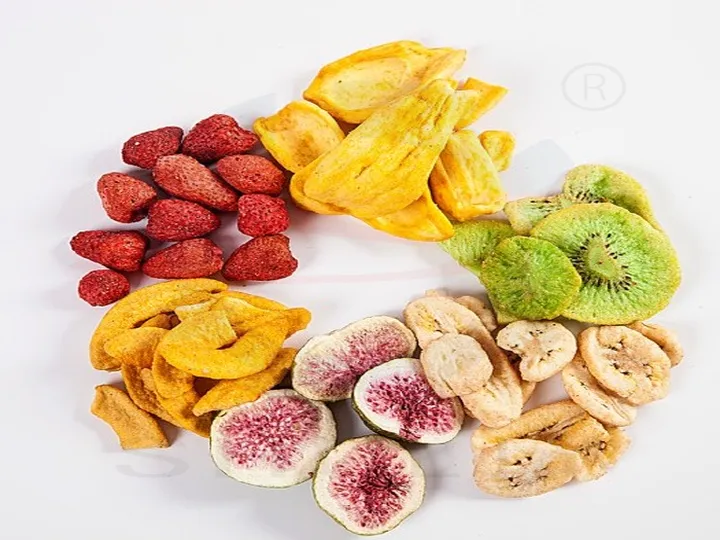
The heat pump drying room produces the best overall appearance for premium dried fruits, berries, and herbs. Low-temperature drying preserves anthocyanins, vitamins, and aroma.
The mesh belt dryer delivers consistent industrial quality suitable for mass-market products, though surface color may be slightly darker due to faster drying.
The microwave dryer excels at preserving shape and nutrients because drying happens so quickly. However, some products can develop a slightly different texture, so testing is recommended.
Energy Consumption and Operating Costs
Energy is the largest operating expense in drying. Here is how the three machines compare:
- Heat pump drying room: 1 kW of electricity produces 3–6 kW of heat. Lowest cost per kg for batch drying.
- Mesh belt dryer: Efficient when paired with heat pump or gas heating. Continuous operation spreads energy use over large volume, keeping cost per kg low.
- Microwave dryer: Uses electricity only. Fast drying reduces total energy per batch, but electricity rates heavily affect operating cost.
If your electricity is expensive, the heat pump drying room or a gas-heated mesh belt dryer will cost far less to run than a microwave system.
Dryer Price and Investment Cost
| Tipo de Secador | Typical Price Range | Notas |
|---|---|---|
| Heat pump drying room | Médio | Best value for batch processors; lower running cost |
| Secador de correia de malha | Higher | Higher upfront cost, lowest cost per kg at large volume |
| Secador de microondas | Highest | Premium technology; payback depends on product value |
The right question is not “which is cheapest” but “which delivers the lowest cost per kilogram of quality product for my specific material and volume.”
How to Choose the Right Dryer for Your Business?
Choose a Heat Pump Drying Room If:
- You process multiple products in smaller batches
- Product color and nutrition are your selling points
- You want the lowest running cost per batch
- Your daily volume is under roughly 8 tons
Choose a Secador de correia de malha If:
- You process one product in large, continuous volume
- You need 24-hour automated production
- Labor cost is a major concern
- Your daily volume exceeds 10 tons
Choose a Secador de microondas If:
- Your product is heat-sensitive and loses value at high temperature
- Drying speed is critical to your process
- You handle high-value products such as herbs, tea, or specialty foods
- Budget allows for premium equipment
Get a Custom Industrial Drying Solution
Still unsure which dryer fits your material, capacity, and budget? Shuliy’s engineers can compare all three options using your actual product and recommend the most cost-effective configuration.
Contact us today for a free quotation and drying test report.