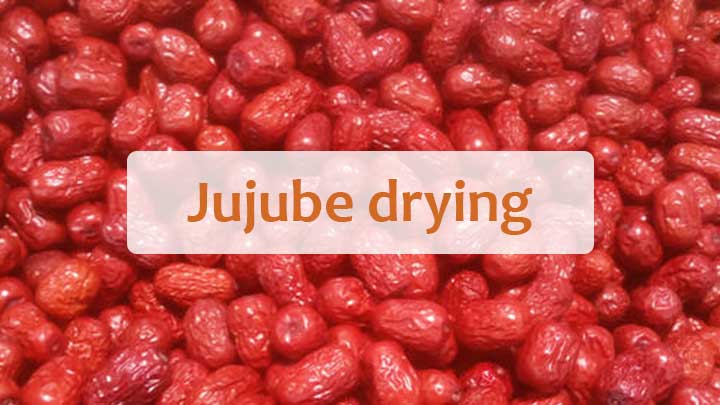
L'introduction des dates rouges
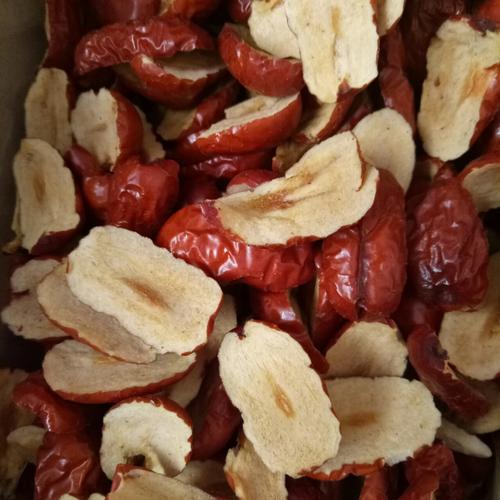
En tant qu'aliment traditionnel sain bien connu, les dates rouges contiennent de nombreux nutriments. La plupart d'entre eux sont séchés et consommés directement par les consommateurs comme fruit sec sans nettoyage. De plus, les zones de culture des dates rouges sont relativement centralisées, et la plupart des dates rouges fraîches sont récoltées en automne presque en même temps et servent tout le marché.
Comment sécher le jujube ?
Le cœur du traitement des dates rouges est le séchage. Le processus de séchage consiste en l'évaporation de l'eau et la conversion du sucre, tout en maintenant la qualité originale du jujube autant que possible. Pour le stockage, le transport, la vente, les dates rouges fraîches doivent être nettoyées, séchées, refroidies, ramollies, stérilisées, emballées.
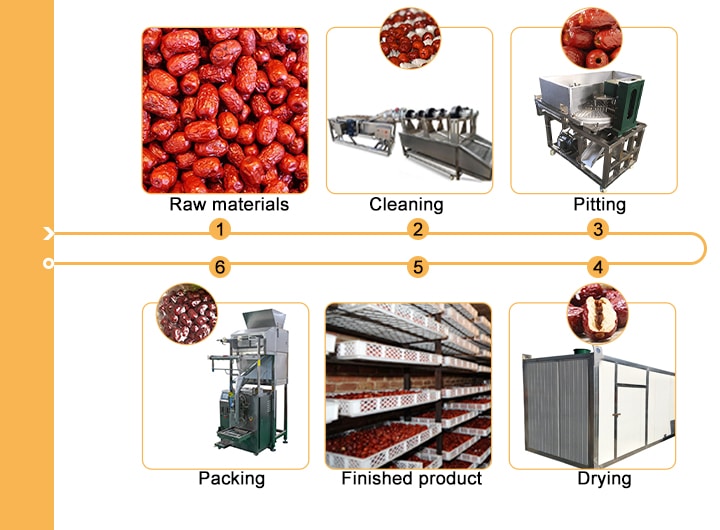
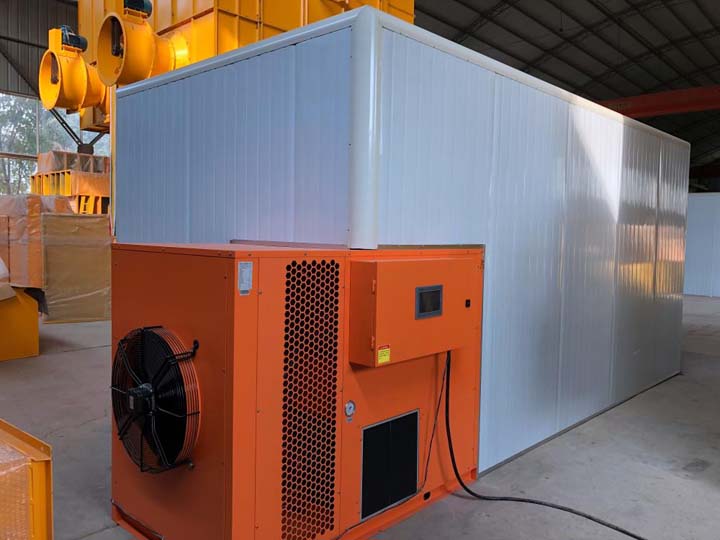
Red dates abound in sugars. Among them, the polysaccharide is not sweet and only becomes sweet after inverted into simple sugars by the function of the biological enzymes. It is the reason why cured jujube is sweet. If we want to invert sugars fully, we need to strengthen the activity of the biological enzymes. After a long time of practice in our Four à séchage, we have found the most suitable temperature for completely sugar conversion is about 60°C.
Processus de séchage des dates rouges
Dans le processus de séchage des dates rouges, de nombreux détails doivent être clarifiés. En général, le processus de séchage se divise en quatre étapes : préchauffage, évaporation, séchage, refroidissement. Voici quelques précautions et une introduction au processus lors du séchage.
Preheating: If we directly put red dates in the environment where the temperature is suitable for sugar conversion, the extreme temperature difference will make red dates set off the protective reaction. The cell orifice in the skin will shrink and the crust will become hard to prevent water from evaporating. Therefore, sufficient preheating is required in the early drying to prepare for the evaporation. First, the red dates need to be dried at 35°C for 6-10 hours. When the temperature of red dates reaches 45°C, your finger will feel hot when touching it. After drying them for 7-8 hours, use your finger to press the red date and wrinkles will appear on the surface. When the temperature is at 45°C-48°C, there will be some small water drops on their skin.
Evaporation: Raise the temperature to 65°C (Note: the temperature shall not be higher than 70°C) within 8-12 hours to evaporate most of the free water. Keep the indoor temperature stable for constant evaporation. The drying process goes well when the wrinkles appear on the surface.
Drying up: When the temperature in the red date is uniform, this step will end within 6 hours. In this phase, the moisture content of red dates is not high, and thus more attention shall be paid to temperature control. It is best to keep the temperature at 50°C. At this moment, relative humanity has been declined. As the water in the red dates is gradually balanced, the drying process is completed. Note that the dried red dates shall be taken out in time.
Cooling: Keep good ventilation and heat dissipation for dried red dates. Pile them up until being cooled. If the dried red dates are just taken out from the cabinet, and directly piled up in the warehouse, their sugars will ferment and go bad, and the pectose will be broken down into pectin and pectic acid due to high heat. Therefore, it is necessary to wait for the completely cold zone before piling up.
Les bienfaits du jujube séché
- Aliment au goût délicieux
- Riche en diverses vitamines
- Contient des nutriments tels que calcium, phosphore et fer, ce qui favorise la croissance osseuse
- Nourrit la rate, renforce le qi et nourrit le sang