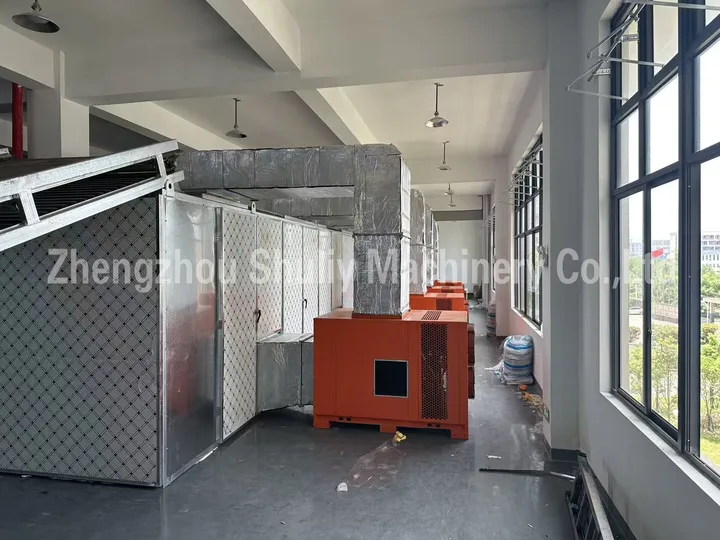
If you are planning to upgrade from sun drying to mechanical drying, the first question is cost. Based on current market prices, a cocoa bean drying machine generally ranges from 10,000 to 100,000+ USD. Small tray dryers for farms start around 10,000–20,000 USD. Commercial mesh belt dryers with 100–600 kg/h capacity typically cost 25,000–60,000 USD. Large continuous lines above 1 ton per hour can exceed 100,000 USD depending on configuration.
The exact price depends on capacity, heat source, number of drying layers, and automation level. Below is a detailed introduction to the machine itself, so you understand exactly what you are paying for.
What Is a Cocoa Bean Drying Machine?
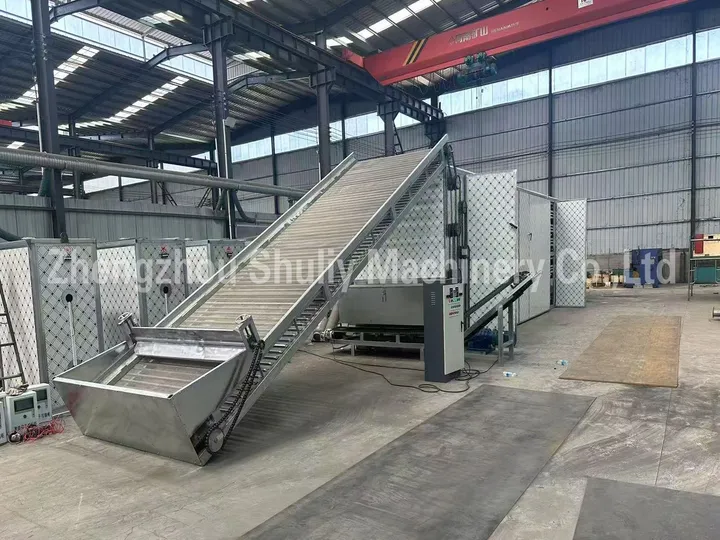
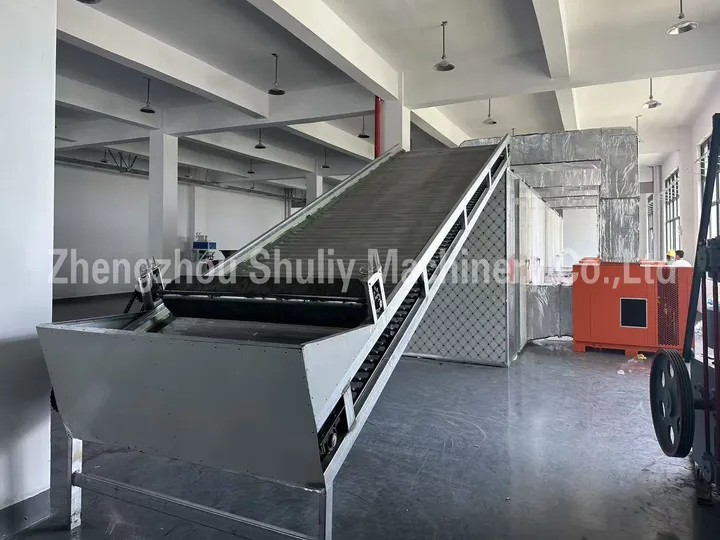
A cocoa bean drying machine is industrial equipment that removes moisture from fermented cocoa beans through controlled hot-air circulation. The most popular type for commercial processors is the mesh belt dryer, a continuous tunnel where beans move on a stainless steel conveyor through multiple heated zones.
Freshly fermented cocoa beans contain 55–60% moisture. If they are not dried to 6–8% moisture within one or two days, mold develops and the flavor is destroyed. Sun drying takes 5–14 days and depends on weather. A mechanical cocoa bean dryer finishes the job in 2–4 hours, rain or shine.
Spesifikasi Utama
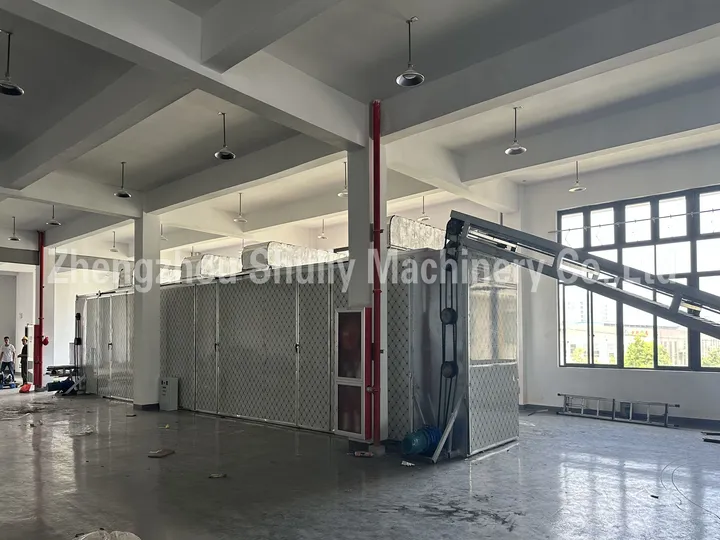
Shuliy’s standard mesh belt cocoa dryers cover the following range:
| Model | Belt Width | Drying Length | Lapisan | Capacity (kg/h) | Jumlah Kuasa (kW) |
|---|---|---|---|---|---|
| SL-1.2-8 | 1.2 m | 8 m | 4 | 60–160 | 11.4 |
| SL-1.6-10 | 1.6 m | 10 m | 5 | 95–250 | 13.6 |
| SL-2-10 | 2 m | 10 m | 5 | 120–300 | 15.8 |
| SL-2-20 | 2 m | 20 m | 10 | 240–600 | 36.8 |
For capacities above 1 ton per hour, multiple units or custom-length tunnels are available, up to 14,000 kg/h in industrial configurations.
How Does the Machine Work?
Continuous Belt Conveying
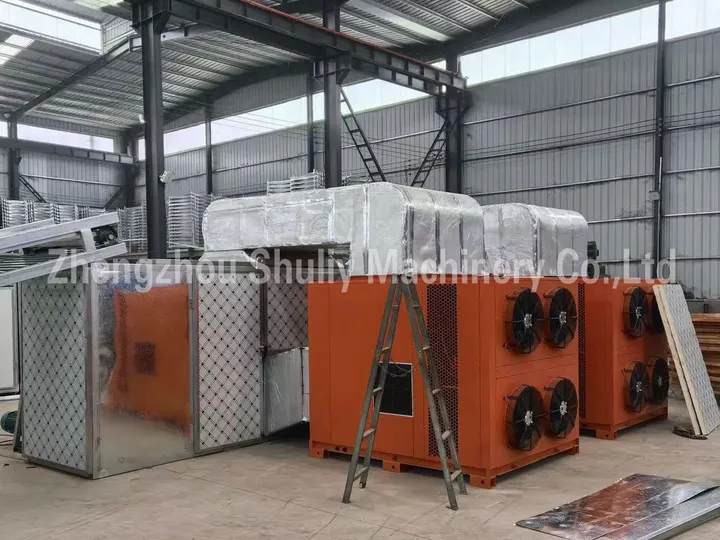
Fermented beans are fed onto the mesh belt through a hopper or elevator. The belt moves at a controlled speed, carrying beans through the drying tunnel. Multi-layer designs pass beans from the top belt down to lower belts, doubling or tripling capacity in the same footprint.
Multi-Zone Hot-Air Drying
The tunnel is divided into temperature zones. Each zone has independent heating and airflow control:
| Peringkat | Suhu | Tempoh | Moisture Change |
|---|---|---|---|
| Pre-drying | 50–60°C | 40–60 min | 55–60% → 35% |
| Main drying | 60–65°C | 60–90 min | 35% → 15% |
| Final drying | 65–70°C | 30–60 min | 15% → 6–8% |
Temperatures are kept below 75°C to protect cocoa flavor precursors and prevent case hardening.
Automatic Discharge and Cooling
Dried beans exit the final zone, pass through a cooling section, and drop into collection bins. The entire process runs 24 hours a day with one operator.
Key Features of the Cocoa Bean Dryer
Food-Grade Stainless Steel
All bean-contact surfaces use 304 stainless steel mesh belts and chamber panels. This prevents contamination and meets export food-safety standards.
Flexible Heat Sources
Choose the cheapest fuel available at your location: biomass (cocoa pod husks, firewood), natural gas, diesel, coal, steam, electric, or air-source heat pump.
PLC Automatic Control
Temperature, humidity, and belt speed are set from one touchscreen. The machine maintains conditions automatically and records production data.
Weather-Independent Operation
The enclosed chamber keeps out rain, dust, and insects. Your drying schedule no longer depends on the forecast.
Low Labor Cost
Automated feeding and discharge reduce labor to one operator per shift, compared with 5–10 workers turning beans on drying mats.
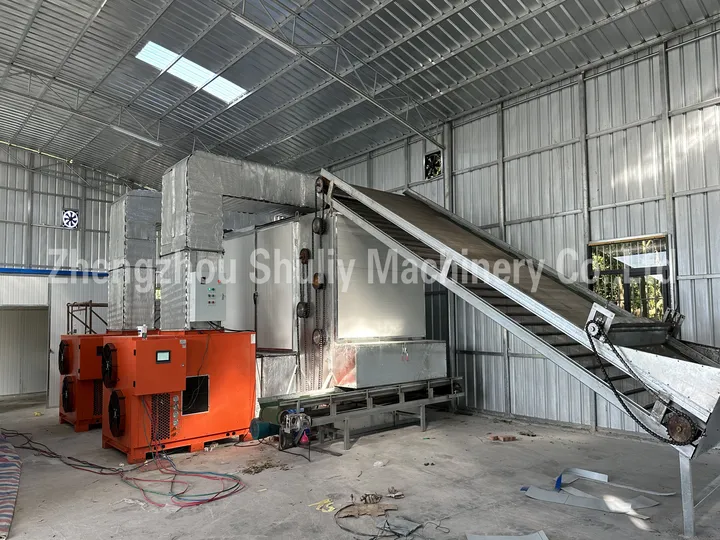
What Affects the Final Price?
Several factors explain the wide 10,000–100,000+ USD price range:
- Capacity: A 60 kg/h unit and a 600 kg/h unit differ by several times in price.
- Drying layers: Single-layer machines are cheaper; 4–10 layer designs cost more but save space.
- Heat source system: A biomass burner costs less than a full heat pump system, though running costs differ.
- Automation: Basic instrument control is cheaper than PLC touchscreens with data logging.
- Customization: Non-standard voltage, longer tunnels, and special feeding systems add cost.
- Shipping and installation: Freight to West Africa or South America typically adds 3,000–15,000 USD depending on machine size.
The right approach is to calculate cost per kilogram of dried beans, not just purchase price. A more efficient machine often pays back its price difference within one or two harvest seasons.
Mengapa Memilih Shuliy?
- 20+ years of drying equipment manufacturing experience
- Exported to 30+ countries, including major cocoa regions in Africa and Asia
- Capacities from 60 kg/h to 14,000 kg/h
- Multiple heat sources matched to local fuel prices
- 1-year warranty and lifetime technical support
- Free layout design and drying test before purchase

Get Your Cocoa Bean Drying Machine Quote
Prices vary with capacity and configuration, but the right cocoa bean drying machine typically pays for itself within one or two seasons through reduced spoilage and higher bean grades.
Contact Shuliy today with your daily volume and location. We will recommend the right model and send you a detailed USD quotation.